


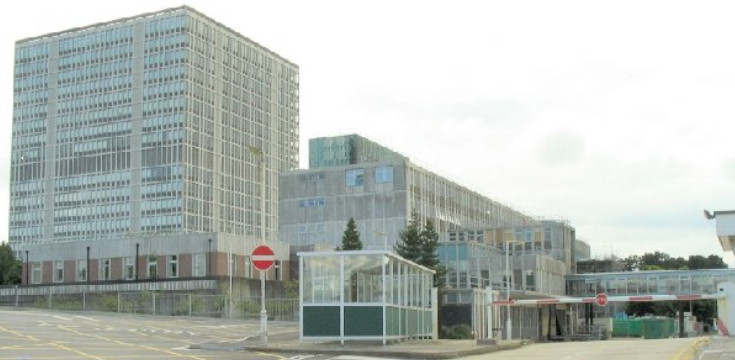
(Title Image: © Copyright Nigel Davies and licensed for reuse under Creative Commons Licence BY-SA-2.0)
At first glance, using the DVLA in Swansea as a singular argument against Welsh independence would otherwise be strange.
However, because it’s one of the largest public sector employers in the country – and makes up a sizable proportion of Swansea’s workforce – it’s perfectly fair to question how a large pan-UK branch operation (much like the Office for National Statistics in Newport or Companies House in Cardiff) fits with independence.
The Current Situation
The Driver and Vehicle Licensing Authority (DVLA) is a UK Government executive agency tasked with – as the name suggests – the administration of driving licences for the whole UK. The DVLA was founded in 1965 and has been headquartered in Morriston, Swansea ever since.
Its wider responsibilities include:
- Issuing physical driving licences and vehicle registration certificates, as well as tachographs for commercial drivers.
- Administration and registration of vehicle excise duty/car tax and MOT details.
- Recording driving licence points and other driving-related punishments handing down by the courts as well as a general duty to assist the police in driving-related investigations.
- Sale and registration of custom number plates.
According to their 2019-20 annual report (pdf), the DVLA employed the equivalent of 5,500 full-time workers at their Swansea headquarters at the end of March 2020, the vast majority of whom (61%) are women. Based on StatsWales figures, it’s the equivalent of about 6% of all employed people in the Swansea local authority area.
As a major revenue-raising authority, the DVLA often runs a surplus. The annual expenditure (pdf – p93) is around £425million, with an income of £553million, resulting in a surplus during 2019-20 of £128million. Any surplus is returned to the UK Government.
Direct running costs (pdf – p94) totalled just under £221million in 2019-20, the majority of which went on IT services, agents fees, medical services and postage.
There are two other related but separate UK executive agencies and one commissioner who are involved in the regulation of road transport.
Firstly, the Driver & Vehicle Standards Agency (DVSA) – headquartered in Bristol – which is responsible for driving tests, professional driving qualifications, driving instructors and the monitoring and upholding of vehicle standards (commercial and private)/MOT tests. There are at least 11 driving test centres in Wales.
Secondly, the Vehicle Certification Agency (VCA) – also headquartered in Bristol – which is responsible for official standards, classification and technical inspections of road vehicles, as well as having responsibility for controlling the import of road vehicles.
Additionally, the Traffic Commissioner is responsible for processing and issuing HGV and PCV licenses for commercial drivers and operators. The Traffic Commissioner for Wales – established in 2016 – is based in Bangor, Gwynedd after an excessively protracted process to open an office.
The Future of the DVLA (within the UK)
Nearly all DVLA services were consolidated in Swansea following the closure of branch offices around the UK in 2012. Although some UK branch agencies – like the Land Registry and the ONS – have dropped hints they may either be privatised or moved partially or wholly away from Wales, there are no signs yet that the DVLA would follow suit.
The only thing that may force a (physical) move would be the condition of the Morriston site, which is a landmark for all the wrong reasons. Even then, it’s highly likely the DVLA would remain in Swansea.
The biggest immediate threat to the DVLA’s workforce isn’t necessarily independence but automation. There will always be a need for human eyes to oversee the registration and administration process, but with services increasingly moved online, many customer service jobs may eventually be replaced – in part – by chatbots and artificial intelligence.
So the kind of work the DVLA does is likely to become more technologically sophisticated, requiring fewer workers. For the sake of speculation, it wouldn’t surprise me if at some point the DVLA employs maybe half the number it does presently and moves to a city centre site in Swansea.
The DVLA & Welsh Independence
The only scenario in which the DVLA would be maintained at current levels in Swansea is if, for whatever reason, vehicle licensing and administration remains standardised/the same across the former nations of the UK after independence. Because traffic laws would gradually change, this is unlikely.
The obvious comeback to that is: “See! The DVLA would close and Swansea would lose thousands of jobs.” But that’s only half an argument.
First of all, the UK Government could shut or move the DVLA tomorrow (however unlikely). Also, an independent Wales would need the equivalent of the DVLA. It would also need the equivalent of the transport agencies based outside Wales too (DVSA and VCA) and a whole host of government departments, executive agencies and services which have no or minimal presence in Wales.
While any successor agency would be significantly smaller because it would be dealing with fewer vehicles and licences, the creation of new government departments and agencies which are currently based in England or elsewhere will replace a proportion of those jobs lost from big box departments like the DVLA.
Ideally, those facing redundancy from the big UK public agencies in Wales would be given a right to first refusal for posts created by new Welsh government departments and agencies to which they are suitably qualified.
As the bulk of people employed by the DVLA in Swansea work in customer services and IT, they would be first in line for jobs in new Welsh departments and agencies that require similar skill sets. This could include the Welsh equivalent of the Foreign Office, DWP, HMRC and Home Office as well as other regulatory bodies.
The warning to Unionists is – as in Scotland with arguments over EU membership in 2014 – placing too much emphasis on one thing as a “gotcha” argument against independence won’t work if that argument suddenly has the carpet pulled under it by the UK Government’s own actions.
As for what a “Welsh DVLA” might look like:
Option One: Decentralised – While there would be a single small headquarters, most of the customer-facing roles would be spread around the country, presumably co-located with local authorities or other public buildings (such as existing driving test centres). With services moving online this perhaps isn’t needed and it would be more efficient to have a single centre, though it could be possible to carry out certain DVLA-related functions via post offices.
Option Two: Continue with three separate agencies – Responsibility for overseeing licencing, driving/vehicle standards and technical standards would be kept separate from each other in different departments. Given the size of Wales this would be excessively bureaucratic – though it makes more sense at a UK level.
Option Three: A unified agency – This option would be similar to the Republic of Ireland’s Road Safety Authority (RSA). The new body could be overseen and accountable to a Senedd-appointed Traffic Commissioner or be a subsidiary of Transport for Wales. It would have a broader remit, including:
- General responsibility for monitoring and promoting road safety.
- Drafting and maintaining the Highway Code.
- Promoting active travel and low-carbon road transport.
- Helping to draft technical/engineering guidelines for road projects.
- Licensing and standards for driving instructors, operators and professional drivers.
- Vehicle licensing and administration (including the sale of personalised plates).
- Monitoring and recording traffic offences and assisting law enforcement with traffic-related inquiries.
- Vehicle standards and technical specifications (including MOT tests) as well as the control of vehicle imports.
- Collecting vehicle tax and/or in future, the administration of road pricing and collection of fees.
Given that the DVLA usually generates an operating surplus, you would assume the same would happen with a Welsh equivalent. It would generate some commercial income from licence plate sales, as well as income from various fees and fines.
For want of comparison, Ireland’s RSA directly employs just over 300 people and in 2019 (pdf – p72) had an income of around €100million (£91.2million) and expenses of €96.4million (£87.9million). A Welsh equivalent would likely be around the same size, but if it has a broader remit it may employ more people.
According to the latest GERW figures, a Welsh equivalent of the DVLA would be responsible for (pdf – p65) collecting up to £336million in vehicle excise duty/car tax a year – though that assumes car tax would still be a “thing”. More on that next week.

