Senedd Home
Oggy Bloggy Ogwr
State of Wales
Monday, August 10, 2026
  • About & Contact
    • About State of Wales
    • Comments Policy
    • Complaints Policy
    • Contact
    • Disclaimer
  • Elections Centre
  • The Independence Index
    • The Independence Index (Full)
    • Foreign Policy
      • Relations with the former UK & Ireland
      • Relations with Europe
      • Foreign Policy (General)
      • International Organisations & Law
      • Overseas Aid
    • Defence
      • Defence Policy
      • NATO
      • Armed Forces
      • National Security
      • Civil Defence
    • Rules & Regulations
      • Safety & Standards
      • Intellectual Property
    • Economics & Money
      • Business & Economy
      • Currency
      • Tax & Spending
      • Transport & Infrastructure
    • Society
      • Communities & Housing
      • Culture & Sport
      • Education
      • Health
      • Media & Communications
      • Science & Technology
    • The State
      • Environment & Natural Resources
      • Justice
      • Local Government
  • Support & Donate
No Result
View All Result
  • About & Contact
    • About State of Wales
    • Comments Policy
    • Complaints Policy
    • Contact
    • Disclaimer
  • Elections Centre
  • The Independence Index
    • The Independence Index (Full)
    • Foreign Policy
      • Relations with the former UK & Ireland
      • Relations with Europe
      • Foreign Policy (General)
      • International Organisations & Law
      • Overseas Aid
    • Defence
      • Defence Policy
      • NATO
      • Armed Forces
      • National Security
      • Civil Defence
    • Rules & Regulations
      • Safety & Standards
      • Intellectual Property
    • Economics & Money
      • Business & Economy
      • Currency
      • Tax & Spending
      • Transport & Infrastructure
    • Society
      • Communities & Housing
      • Culture & Sport
      • Education
      • Health
      • Media & Communications
      • Science & Technology
    • The State
      • Environment & Natural Resources
      • Justice
      • Local Government
  • Support & Donate
No Result
View All Result
State of Wales
No Result
View All Result
Home Independence: Local Government

Local Government VI – Counties & Regions

The Senedd and Welsh Government have already flunked a test on local government reform, but what would some of the options be when returning to it in the future?

Owen Donovan by Owen Donovan
September 5, 2022
in Independence: Local Government, Local Government
Local Government VI – Counties & Regions

studentlets.co.uk

Share on FacebookShare on TwitterShare on RedditShare on BlueskyShare by email

In the previous piece, I looked at governance at the community level. Today, it goes up a level to counties and regions.

In practical terms, this could either retaining the current system of unitary authorities and just changing boundaries (if deemed practical):

Local Government I – The Story of Local Government in Wales
Independence: Local Government

Local Government I – The Story of Local Government in Wales

by Owen Donovan
July 20, 2022
Local Government II – How Local Government Works
How Wales Works

Local Government II – How Local Government Works

by Owen Donovan
July 25, 2022

It could also mean returning to a form of two-tier local government. Or, transforming the city regions and corporate joint committees into a more formalised tier of regional government and mixing and matching beneath it.

Once again, I’ll be looking at the financial issues, the reform process, and political/electoral implications in later parts:

Local Government VIII: The Process of Reform
Independence: Local Government

Local Government VIII: The Process of Reform

November 21, 2022
Local Government VII: Financing Local Government & Independence
Independence: Local Government

Local Government VII: Financing Local Government & Independence

November 15, 2022
Local Government IX: Local Democracy & Civic Pride
Independence: Local Government

Local Government IX: Local Democracy & Civic Pride

November 28, 2022

5. Conclusions & Summary

  • 1. The Problems: What issues should reform seek to address?
  • 2. Function: What local government powers could be exercised by counties and/or regions?
  • 3. Form: How should counties and/or regions be organised?
  • 4.
    The Map: How many counties and/or regions do we need?
  • 5. Conclusions & Summary
Previous
Next


Do we play it safe and stick with what we know – unitary authorities – or opt for something designed to last for generations? (Pic: © Ian Capper and licensed for reuse under Creative Commons Licence BY-SA-2.0).


The safest bet would be to stick with unitary authorities
– though we can quibble over the number of them and their responsibilities as much as we like. The danger is that in choosing the “easy option” we cause more problems than we intend to solve – particularly in terms of scale and capacity, which the Williams Commission aimed to address but was ultimately let down by politics.

Unitary authorities combined with more formally constituted combined authorities – headed by a directly-elected mayor – is perhaps as far as most people are willing to go.

I included special purpose boards and county commissions almost for the sake of it, but having followed my own local authority for a long period I’m coming around to the idea. They are a more intellectually honest model of how things are run already instead of pretending that “the council” runs things and you need 50-70 councillors to scrutinise it.

The drawback is the idea is a bit American – where they have a tradition of very small councils and directly-elected executives. While both feed off the romanticism Wales has for running everything by committee, you still need people who are willing to step out of line or doggedly pursue things inside the room. County commissions and special purpose boards don’t really allow for that. One thing I will say is that elected school boards might be an appropriate replacement for school governors.

Some form of two-tier local government makes sense on pretty much every level which is precisely why it was abandoned in the 1990s – because we don’t like things that work in Wales and we prefer loose collaboration and mega committees over formal fixed structures.

It deals with the demand for a local connection between councillor and their local area (and also gives the lower tier significant statutory and regulatory powers) and it deals with the issue of scale and capacity by ensuring only the larger county councils manage things like education and social care. The drawbacks are potential confusion over who does what (as if people are clear as to what the unitary authorities do now) and it potentially being more expensive because of duplicated functions – though there are ways around this such as by limiting the number of managerial positions.

The regional issue is largely separate from the rest as it’s not closely tied to a particular system of local government – commissions, unitary authorities or two-tier.

We’re experimenting with it in Wales through the Corporate Joint Committees. The jury’s out, but it’s a start. A few tweaks – such as greater transparency, clear leadership and proper scrutiny procedures – and they would become the combined authorities as set out in this piece.

A separate tier of regional authorities would be a step further and would probably the best vehicle for devolving powers from Cardiff Bay before independence.

Like it or not, that means more politicians – which is also the biggest drawback. One of the biggest plus points is that while members of a combined authority might have the needs of their own council at the forefront of their minds, members of a regional authority would need to think and act regionally.

Part V and Part VI have been based on an assumption that Wales would remain a unitary state – the Senedd retaining all law-making powers – after independence.

A more fringe position is that an independent Wales could adopt a federal system of government, or some form of internal devolution. I’ll be looking at that proposition in more detail in the next mini-series, unimaginatively titled “A Federal Wales”:

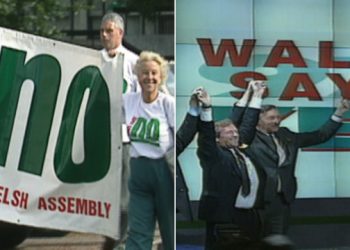
A Federal Wales I: Arguments For & Against a Federal Wales
Independence: Local Government

A Federal Wales I: Arguments For & Against a Federal Wales

by Owen Donovan
October 3, 2022
A Federal Wales II: Decentralising Wales
Independence: Local Government

A Federal Wales II: Decentralising Wales

by Owen Donovan
October 7, 2022
A Federal Wales III: Devolution & Federalism in a Welsh Constitution
Independence: Local Government

A Federal Wales III: Devolution & Federalism in a Welsh Constitution

by Owen Donovan
October 10, 2022
A Federal Wales IV: How might a decentralised Wales work?
Independence: Local Government

A Federal Wales IV: How might a decentralised Wales work?

by Owen Donovan
October 14, 2022

5. Conclusions & Summary

  • 1. The Problems: What issues should reform seek to address?
  • 2. Function: What local government powers could be exercised by counties and/or regions?
  • 3. Form: How should counties and/or regions be organised?
  • 4.
    The Map: How many counties and/or regions do we need?
  • 5. Conclusions & Summary
Previous
Next
Tags: Corporate Joint Committees & City RegionsDemocratic DeficitDenmarkDevolutionElectoral Reform & SystemsEnglandFire ServiceFiscal PolicyGermanyIaith GymraegIndependenceIrelandLocal GovernmentNational ParksPlanningPolicingPolitical TheoryPublic BodiesPublic SectorRegional Government & FederalismSchools & TeachingSeneddSocial CareUSAWelsh GovernmentWilliams Commission
Previous Post

Local Government V – The Community

Next Post

A Federal Wales I: Arguments For & Against a Federal Wales

Owen Donovan

Owen Donovan

Archive

Categories

Copyright

Creative Commons Licence

State of Wales by Owen Donovan is licensed under a Creative Commons Attribution-NonCommercial-NoDerivatives 4.0 International License.

Subscribe by Email

Search

No Result
View All Result
No Result
View All Result
  • Go To Senedd Home
  • Go To Oggy Bloggy Ogwr
  • About & Contact
    • About State of Wales
    • Comments Policy
    • Complaints Policy
    • Contact & Subscribe by Email
    • Disclaimer
  • Features
    • After the UK
    • Chinny Reckon
    • Devil’s Advocate
    • How Wales Works
    • Road to Brexit
  • The Independence Index
    • The Independence Index (full)
    • Economics & Money
      • Business & Economy
      • Currency
      • Tax & Spending
      • Transport & Infrastructure
    • Society
      • Communities & Housing
      • Culture & Sport
      • Education
      • Health
      • Media & Communications
      • Science & Technology
    • The State
      • Environment & Natural Resources
      • Justice
      • Local Government
  • Elections Centre
  • Wales FAQ
    • How is Wales funded?
    • How are laws in Wales made?
  • Support & Donate