
Image Source: National Library of Wales under Creative Commons Licence BY-SA-4.0
Donations keep this site going. If you like what I’m doing here and think this work is important to the independence movement, consider a donation. One-off or monthly; as little or as much as you want. Click the links below, or full details are available here.
What Happens Now?
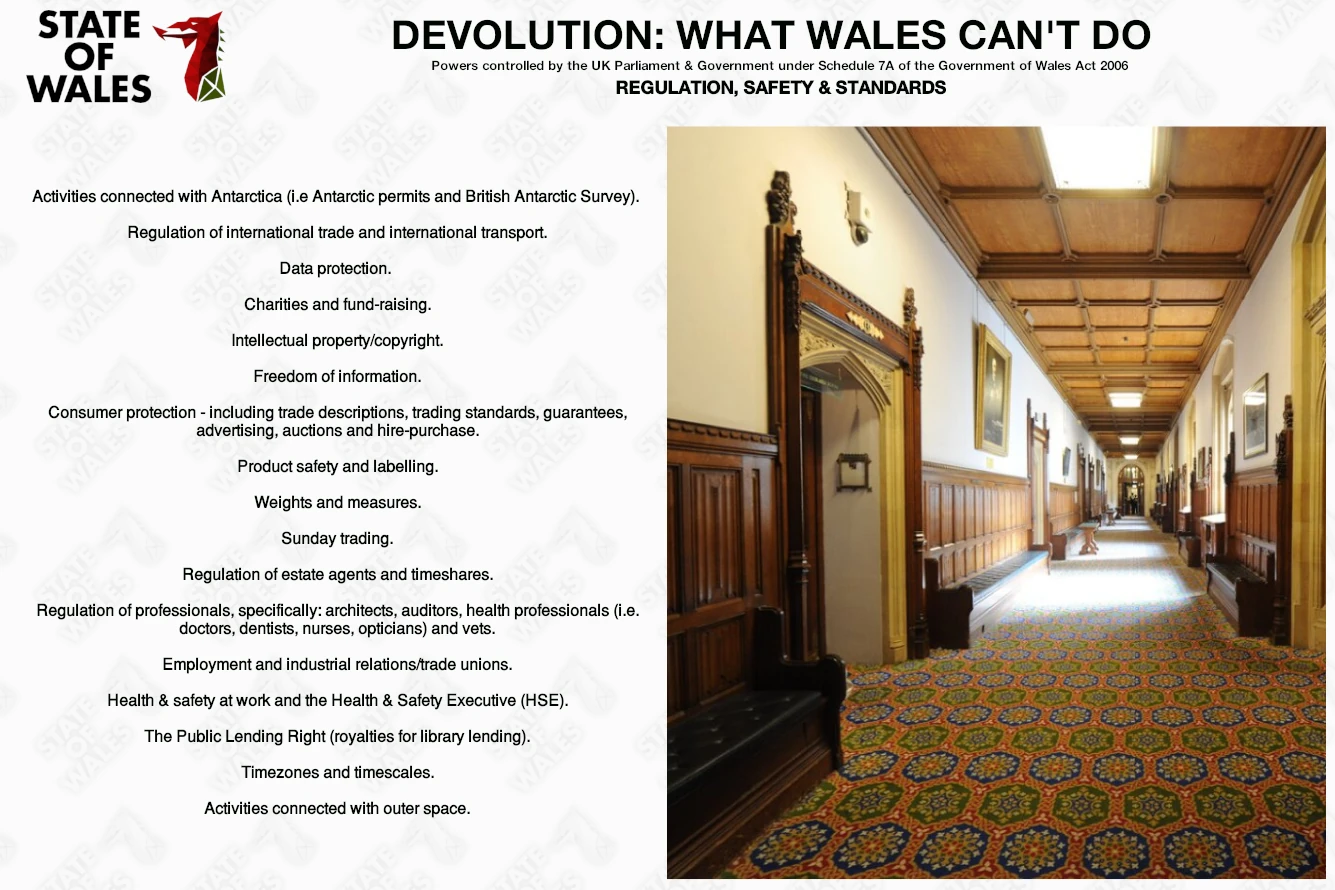
The Public Lending Right (PLR) is a royalty scheme whereby people who’ve created a work get paid to allow that work to be loaned by libraries. There’s a similar scheme for musicians.
The scheme – which has been managed by the British Library since 2013 – is enshrined in law via the Public Lending Right Act 1979.
Authors are paid a set fee per loan, which as of 2025 is set to be based on total figures from all council-run libraries. The maximum amount that an author can receive is capped at £6,600 per year, and the total amount paid out each year is £6 million as of 2024-251.
The scheme only applies to public libraries and doesn’t extend to libraries in schools, hospitals or universities.
As of 2025-26, only 8.5% of authors received a payment of £500 or more2.
Does This Work for Wales?
It’s not so much whether it works for Wales, but whether it works for authors, artists, actors, musicians, etc.
The issue is more around setting the right/fair royalty fee. That would need to balance fairness for creators with free lending to the public.
What Would Be the Pros & Cons of Independence?
It’s an administrative issue, so there are no pros or cons as such. The options will be covered in more detail later.
What Do Other Countries Do?
![]()
The Irish scheme is pretty much identical to the PLR scheme in the UK, though the loan rate is much lower and the annual cap is set at €1,000 (around £870). It’s managed by a dedicated office which is (technically) part of local government3.
![]()
Under Denmark’s scheme, authors are paid a grant based on a points system and the levels of stock at public libraries. Points are based on the language (Danish works being preferred), the number of pages, the type of work and the number of loans. Each point is worth a set amount of money. The threshold to receive a payment is around 15,00DKK (£175). There’s no cap on payments, but high payments are often reduced by 50% or more4.
![]()
The scheme is managed by the National Library of New Zealand. There are some key differences with the UK. An author needs to have a minimum of 50 copies of their work in public libraries. There are also New Zealand residency requirements. Authors are also paid per book, rather than per-loan (as in the UK)5.
What Options Does Wales Have?
Considering the small sums of money authors and contributors get, it’s worth reconsidering whether PLR is worth it. It might be better to increase the amount of money available to fund advances and grants via the Books Council instead, in exchange for works being available in Welsh libraries.
The Public Lending Right Act would remain in force, and the current scheme would continue. The only difference is that it would be managed from within Wales. There’s also the option of collaboration, with Wales making a proportional contribution to the running costs of the existing scheme.
This would be similar to Denmark and New Zealand. Instead of creators being paid for each work loaned out, the payments would be based (mainly) on the number of stock they have in public libraries. We could consider moving to a points-based system as used in Denmark, without a cap on fees – though this may be more difficult to administer.
Registered authors and creators receive a flat-rate automatic payment from the Welsh Government every time their works are loaned by a public library (with a minimum pay-out threshold and no cap on payments). This may end up costing more, but it could be fairer and lead to more accurate payments if every single loan is recorded.
What's at Stake?
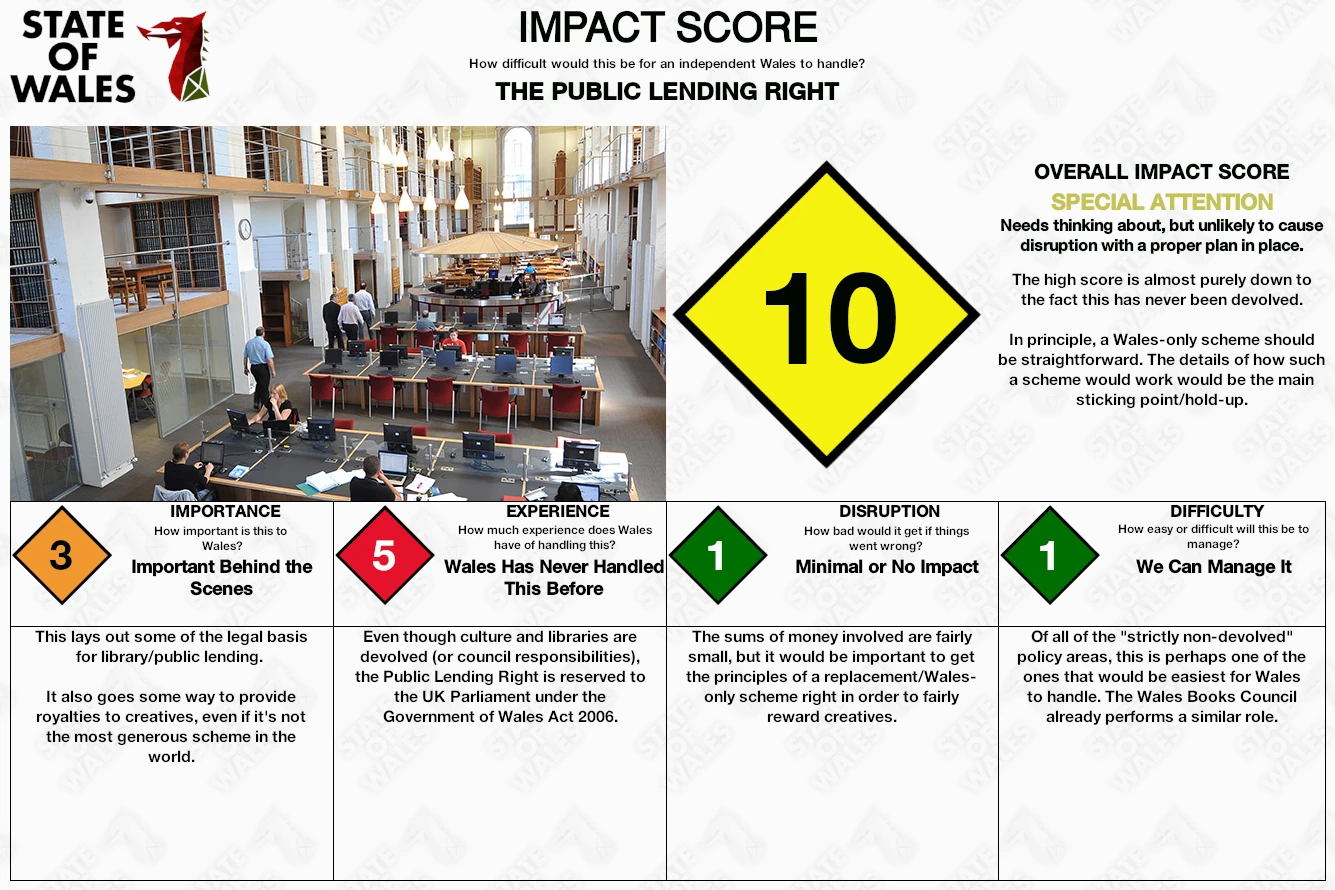
The overall score (out of 20) is the total of the scores for the four mini-categories (out of 5 each).
How Would This Be Run?
Funding would be distributed by a programme run directly by the civil service.
This would mirror what happens at the UK level, with the National Library in Aberystwyth taking over responsibility for managing a Welsh PLR scheme.
The Books Council distributes funding from the Creative Wales agency to publishers. Extending their role to include public lending royalties should be straightforward enough.
Similarly to how programmes like Rent Smart Wales are run, as libraries are a local government responsibility, a council could be delegated the responsibility to run a Wales-only scheme.
How Much Will This Cost?
Headline: An educated guess of around £300,000 per year.
That’s a 5% Welsh share of current UK Government spending. As far as I can tell, there are no statistics published relating to the PLR.
It’s possible Wales-based authors may receive a bit more than a 5% UK share because you need to factor in Welsh language books and other works.
Would any new taxes need to be introduced?
No.
Who will pay for this?
General taxation (all taxpayers). The royalty fees would likely come from the Welsh Government’s culture budget.
How Long Would This Take?
The Public Lending Right Act 1979 would remain in force in Wales (because of the common law system). It would merely be a matter of amending the law if needed. That would need time in the Senedd to do it.
It may be better to do this via regulations rather than the law, which would be quicker. Regulations can be introduced within weeks rather than months or years.
A bespoke system – such as an automated pay-out system – would take longer to roll out, with the likelihood of needing to install specialist software to record loans in libraries.
People & Work
Anyone working in the creative industries whose work could potentially wind up in a library, so authors based in Wales would be the main group impacted.
There are very few job implications, though you could see a small number of roles created (literally 1-3 jobs) to oversee a Wales-only scheme.
A more extensive scheme (similar to a Danish-style points-based system) may have a higher staffing requirement due to more complex information being handled.
UK Government, Department of Culture, Media & Sport (8th January 2026). “Consultation on the 2024-25 Public Lending Right Scheme”.
British Library, Public Lending Right. “Earnings & Payments“.
Government of Denmark, Ministry of Arts & Culture. “Library money” (translated from Danish).
National Library of New Zealand. “Public Lending Right for New Zealand Authors”.
No AI tools were used to draft this post.