


Next, a look at some of the major challenges police forces in Wales (and the UK more generally) continue to face or have had to adapt to more recently.

While most of this piece focuses on areas where the police have been victims of circumstance, it’s worth noting areas where the police haven’t helped themselves.
YouGov tracker polling has shown that people in Wales are increasingly split between those who have at least some confidence in the police to solve crimes and those who have little to no confidence. As of September 2021, only 4% of people in Wales had “a lot of confidence” and 10% had “no confidence at all”; only London and the English Midlands had less confidence in policing.
The good news is that at present more people had a fair amount of confidence in the police in Wales (47%) than not very much confidence (31%) – but the police ought to expect (and need) confidence levels to be higher than that.
The Black Lives Matter movement shone a light on police tactics, particularly concerning race. I looked at the issue of race and criminal justice in more detail over the summer (Part III), though that was more general and not specifically focused on the police. Stop and search powers are still disproportionately used against people of colour. South Wales Police’s “unlawful” deployment of facial recognition technology has also raised civil liberties issues.
Similarly, there’s the issue of women’s safety – particularly in public at night. While this would take far more than police operational changes (such as extra high-visibility patrols) to curb or deal with it, it’s the sort of thing that can undermine trust in the police and criminal justice system more generally. This is particularly true if it takes the police a long time to identify, investigate and arrest serial offenders.
The most recent statistics show that police forces in Wales are a bit use-of-force happy too. There were just under 33,000 incidents where force was used in Wales in the year to March 2020 (so pre-pandemic “normal times”) – which is by my count the sixth-highest number of incidents of the English and Welsh regions2.
While it’s worth pointing out that the vast majority of incidents of “force used” involve simple handcuffing, there were more than 1,500 incidents where tasers were at least drawn and around 780 threats to use (or uses of) irritant sprays.
Even though the Metropolitan Police is way out in front for taser use, South Wales Police would still be close to the top for taser-related incidents and have deployed (but not necessarily used) tasers a similar number of times as West Yorkshire Police – which covers a population up to twice the size of the South Wales force area.
Tasers and other equipment like batons were also disproportionately deployed against suspects with perceived mental health problems in the Dyfed-Powys and North Wales force areas compared to the other Welsh forces.
It’s a question as to whether the threat of force to get someone to do what you want – drawing a taser or baton and giving a verbal warning, which seems to be the most common practice in Wales – is any worse than using it. Scaring people into compliance hardly builds trust even if it may be necessary depending on the circumstances.
One prominent use of underhand tactics which has gotten media attention in the last few years is the Spy Cops scandal – where undercover police officers from Metropolitan Police intelligence units infiltrated protest groups and started relationships while maintaining their cover.
At worst, it could be considered a form of rape – because it’s consent under a false pretence/rape by deception (though the Crown Prosecution Service has rejected this interpretation) – and at least two victims from Wales have come forward.
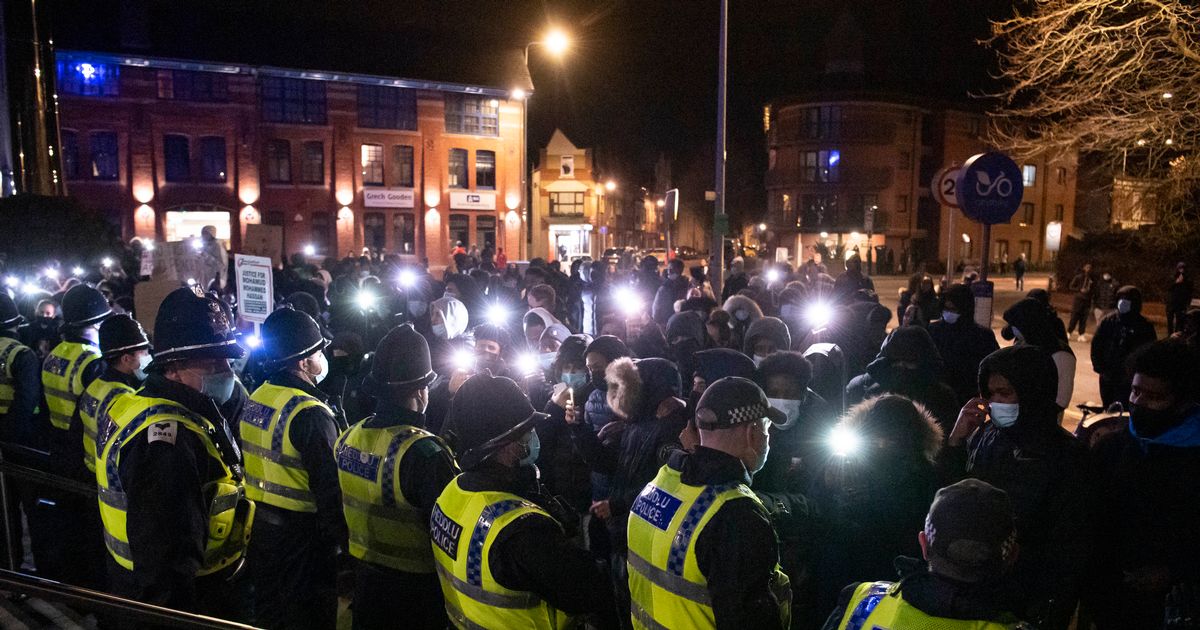
The emerging issue is the attempt by the UK Government – via their Police, Crime, Sentencing & Courts Bill – to curb what are described as “nuisance protests” (Part Va). This threatens to further undermine levels of trust in the police if otherwise peaceful protests are curtailed for no reason other than “being a bit annoying”; non-violent direct action has been one of the more successful means of protest (or awareness-raising) throughout history.
2. – UK Home Office, (December 2020). Police use of force England and Wales statistics. Data sets are available at https://www.gov.uk/government/statistics/police-use-of-force-statistics-england-and-wales-april-2019-to-march-2020

