


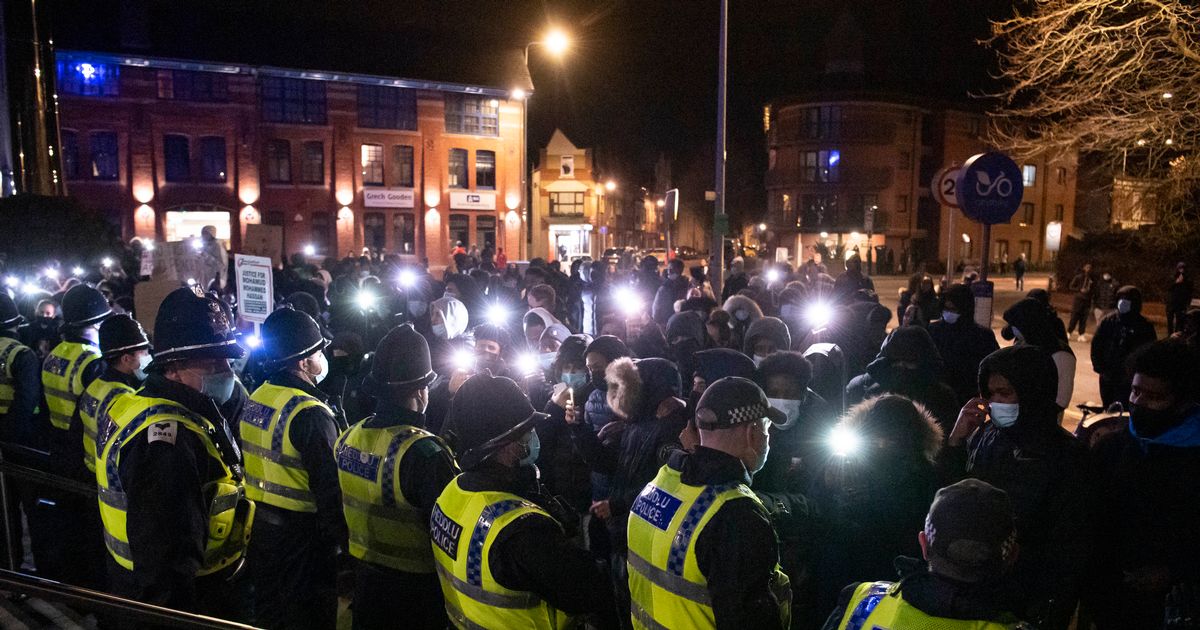
Next, a look at some of the major challenges police forces in Wales (and the UK more generally) continue to face or have had to adapt to more recently.

The police have received a mixture of praise and criticism for how they handle calls to mental health emergencies.
The police have a general power to detain anyone in a mental health crisis – with what’s called a Section 135 warrant – before they’re assessed by a medical professional. They also have a duty/power to take anyone found in a public place with a mental health problem to “a place of safety” – usually a secure hospital unit (Section 136).
Although police stations can be used for detention for mental health reasons, their use is discouraged. A Senedd Committee inquiry during the Fifth Senedd found that the number of safe places to hold people detained under the Mental Health Act was low while the number of calls to mental health emergencies were increasing5.
The Committee also heard from Mind Cymru that there was a “revolving door” of sorts when it came to mental health emergencies. The National Police Chiefs Council added that up to half of mental health emergency calls involved known mental health patients.
There was a lot of praise from third sector agencies for how the police deal with mental health patients, with The Wallich even going so far as to say that the police were more helpful than NHS mental health crisis teams. However, one of the main criticisms has been the lack of dignity afforded to those being detained – particularly the use of police vehicles as transport instead of ambulances or specialist transport.
Other criticisms include the excessive use of force, or threats of force, by police officers. Gwent Police were recently criticised for posting a picture on Twitter of a snarling dog concerning a story where they used pepper spray against a man who was threatening self-harm with a knife (harking back to my earlier point on use-of-force).
But at the same time, Gwent Police were the first police force in Wales to hire a social worker to deal with complicated welfare cases and safeguarding. Overall they have fewer incidents involving tasers6.
There’ll be situations where someone in a mental health crisis is a genuine threat to themselves and other people and needs to be restrained by force. That’s far from perfect and it looks ugly, but there’s only so much leeway you can give and you can’t talk everyone out of a crisis (in some cases it may even backfire if you try to do so). That said, one of the key planks of those campaigning under the “Defund the Police” banner is greater investment in community, youth and social services instead of law enforcement.
While the police and individual officers may rightly be criticised for how they handle mental health welfare calls involving the public, the mental health needs of frontline workers like the police are often neglected in this conversation too. The police often have to deal with some of the worst experiences and people society can throw at them.
According to Police Federation figures, 77% of police officers had some form of mental health difficulty during 2020-21 and more than 90% of those said it was due to work7. At the start of 2021, North Wales Police introduced a welfare van for frontline officers to use when they’re out on patrol for long periods or at major incidents.
5. – Senedd Cymru, Health & Social Care Committee, (October 2019). Mental health in policing & police custody. Senedd Home summary and link to the report available here.
6. – BBC Wales, (14th September 2021). ” Gwent Police stretched with calls from worried loved ones”. Available at: https://www.bbc.co.uk/news/uk-wales-58465852
7. -The Independent, (15th July 2021). “Police officers facing mental health crisis as three-quarters faced difficulties in last year, report finds”. Available at: https://inews.co.uk/news/uk/more-than-three-quarters-police-officers-struggled-with-mental-health-last-year-report-finds-1119989

