


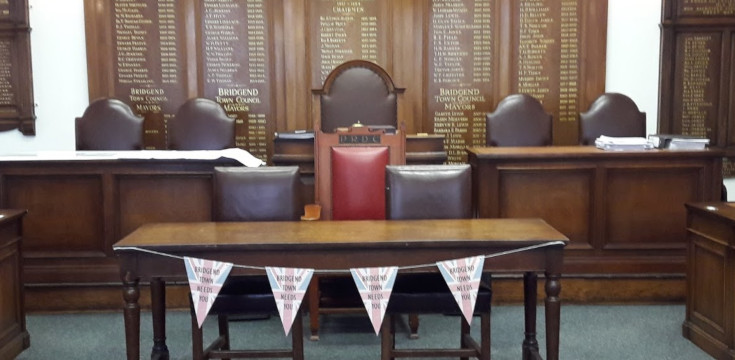
For the last decade or so, most of the focus on local government reform in Wales has centred on the 22 unitary local authorities/counties.
However, the tier of local government below them often gets sidestepped.
That’s quite honestly a difficult question to answer and it depends on where you live.
There are around 730 town and community councils in Wales and they vary massively in size and local clout. The largest is Barry Town Council, which represents more than 50,000 residents; the smallest ones may have a resident population of under 200-300 people. Some areas – notably Cardiff – only have a few community councils restricted to the outlying villages.
Generally, town and community councils are responsible for the most basic local services and – where they have the means and finances to do so – support some services that are otherwise provided by the 22 unitary authorities.
This could include things like:
- Litter and on-street bins.
- Street furniture and street naming.
- Green infrastructure (i.e. planters, grass-cutting and allotments).
- Some community councils run cemeteries and public toilets.
- Maintenance of public rights of way/footpaths.
- Bus shelters.
- Fairs and special events (i.e. Christmas decorations).
- Parks, pavilions, memorials and playgrounds.
- Community centres.
- Local cultural and arts centres/services.
Town & community councils are also statutory consultees for planning and licensing applications, but the final decision is always made by the relevant county council committee and/or officers.
Town & community councils set an annual precept on council tax, which can lead to big differences between average council tax bills within a local authority; in Bridgend, the difference between the highest and lowest precepts was £84 in 2021-22.
Unlike the 22 unitary authorities, town and community councils are corporate bodies. This means decisions are made by all members collectively, not by the largest party/group of parties – though political control will be a factor. Community councils usually don’t have a single leader or cabinet and the Mayor/Deputy Mayor is a largely ceremonial role. Despite this seemingly apolitical/non-political set up, community council politics can be highly politicised even if the stakes are very low.
Assisting the community council is the clerk. The clerk is usually a full or part-time paid employee and in the future will need to be suitably qualified for the role. The clerk acts as a “civil servant” to the council and is usually delegated certain tasks on the council’s behalf, like preparing accounts and documents.
The role of community councillor has traditionally been a voluntary/unpaid one (except expenses for the Mayor and/or Deputy Mayor), but community councillors are now eligible for between £150-£500 a year depending on their role within the council (i.e. a chair) and which of the 22 unitary authorities the community council is based in.

