Senedd Home
Oggy Bloggy Ogwr
State of Wales
Monday, August 10, 2026
  • About & Contact
    • About State of Wales
    • Comments Policy
    • Complaints Policy
    • Contact
    • Disclaimer
  • Elections Centre
  • The Independence Index
    • The Independence Index (Full)
    • Foreign Policy
      • Relations with the former UK & Ireland
      • Relations with Europe
      • Foreign Policy (General)
      • International Organisations & Law
      • Overseas Aid
    • Defence
      • Defence Policy
      • NATO
      • Armed Forces
      • National Security
      • Civil Defence
    • Rules & Regulations
      • Safety & Standards
      • Intellectual Property
    • Economics & Money
      • Business & Economy
      • Currency
      • Tax & Spending
      • Transport & Infrastructure
    • Society
      • Communities & Housing
      • Culture & Sport
      • Education
      • Health
      • Media & Communications
      • Science & Technology
    • The State
      • Environment & Natural Resources
      • Justice
      • Local Government
  • Support & Donate
No Result
View All Result
  • About & Contact
    • About State of Wales
    • Comments Policy
    • Complaints Policy
    • Contact
    • Disclaimer
  • Elections Centre
  • The Independence Index
    • The Independence Index (Full)
    • Foreign Policy
      • Relations with the former UK & Ireland
      • Relations with Europe
      • Foreign Policy (General)
      • International Organisations & Law
      • Overseas Aid
    • Defence
      • Defence Policy
      • NATO
      • Armed Forces
      • National Security
      • Civil Defence
    • Rules & Regulations
      • Safety & Standards
      • Intellectual Property
    • Economics & Money
      • Business & Economy
      • Currency
      • Tax & Spending
      • Transport & Infrastructure
    • Society
      • Communities & Housing
      • Culture & Sport
      • Education
      • Health
      • Media & Communications
      • Science & Technology
    • The State
      • Environment & Natural Resources
      • Justice
      • Local Government
  • Support & Donate
No Result
View All Result
State of Wales
No Result
View All Result
Home Feature Pieces

How Wales Works – Town & Community Councils: An overlooked reform?

Has long-overdue reform of the lowest tier of local government been neglected by successive Welsh Governments?

Owen Donovan by Owen Donovan
September 16, 2021
in Feature Pieces, How Wales Works, Local Government
How Wales Works – Town & Community Councils: An overlooked reform?
Share on FacebookShare on TwitterShare on RedditShare on BlueskyShare by email

For the last decade or so, most of the focus on local government reform in Wales has centred on the 22 unitary local authorities/counties.

However, the tier of local government below them often gets sidestepped.

4. What’s the future of town & community councils?

  • 1. Where do town & community councils fit into local government in Wales?
  • 2. What are some of the issues facing town & community councils?
  • 3. Have calls for reform been properly addressed?
  • 4. What’s the future of town & community councils?
Previous
Next

I’ve looked at local government as part of posts relating to independence back in 2013 and it’s something I’m actively considering returning to in the future – maybe as early as next year if I can bother to keep going.

If town and community councils are expected to take on more responsibilities, then the natural question is whether they’re up to it and if not what can be done – structurally- to enable them to take on a bigger role?

That could mean a combination of mergers, waiting to see if the requirement for properly qualified clerks improves the administration of community councils or introducing special measures for community councils that consistently fall foul of minimum standards.

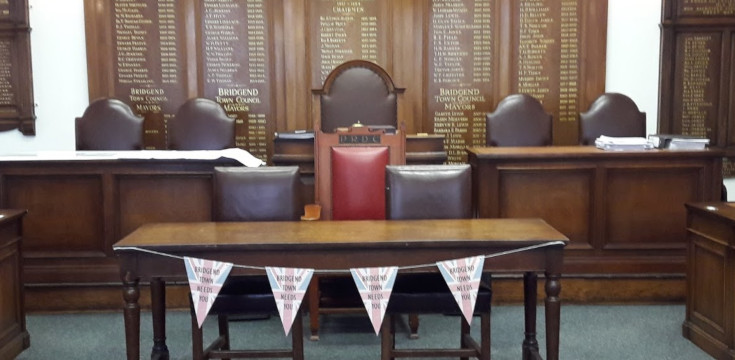
Merging community councils sounds like a simple solution of paper – Bridgend has 20 town and community councils but could probably get by with fewer than 10 – but bigger doesn’t necessarily mean better, whether that’s at community council level or county level.

I would look to the likes of Barry Town Council as a template to replicate elsewhere: it represents a sustainably large enough electorate to provide a decent tax base and sizable budget, the number of councillors is kept at a reasonable level compared to the population (roughly one councillor for every 2,200 people) , while they employ a few dozen staff of their own.

At that sort of scale, you can consider handing down additional responsibilities as standard (libraries, public toilets, parks), granting the town & community council sector extra statutory powers (i.e. some kind of veto on planning and licensing applications) and reworking how council tax and business rates function so community councils get a fair share.

For those town and community councillors hell-bent on generating bad publicity or wasting time and money, they ought to be made aware of how easy it is to abolish a community council.

Firstly, a petition needs to be signed by at least 50 electors calling for a community meeting within two months of the petition being submitted to the community council. Then, at least 300 electors need to attend the community meeting.

At that meeting, two-thirds of those present have to vote in favour of a local referendum. Finally, in that referendum at least two-thirds have to vote in favour of abolition.

In 2006, residents voted by 89.9% – 10.1% to abolish Dunvant Community Council after they proposed a significant increase in the precept to pay for a new playground. Similarly, there were moves to abolish Holyhead Town Council in 2016 but it didn’t go anywhere.

4. What’s the future of town & community councils?

  • 1. Where do town & community councils fit into local government in Wales?
  • 2. What are some of the issues facing town & community councils?
  • 3. Have calls for reform been properly addressed?
  • 4. What’s the future of town & community councils?
Previous
Next
Tags: AngleseyAudit WalesBridgendCommunity CouncilsLicensingLocal GovernmentPlanningSwanseaTaxVale of GlamorganWelsh GovernmentWelsh Law
Previous Post

Word Salad – The Best of Silly Season

Next Post

A Welsh Justice System V (a) – Policing in Wales

Owen Donovan

Owen Donovan

Archive

Categories

Copyright

Creative Commons Licence

State of Wales by Owen Donovan is licensed under a Creative Commons Attribution-NonCommercial-NoDerivatives 4.0 International License.

Subscribe by Email

Search

No Result
View All Result
No Result
View All Result
  • Go To Senedd Home
  • Go To Oggy Bloggy Ogwr
  • About & Contact
    • About State of Wales
    • Comments Policy
    • Complaints Policy
    • Contact & Subscribe by Email
    • Disclaimer
  • Features
    • After the UK
    • Chinny Reckon
    • Devil’s Advocate
    • How Wales Works
    • Road to Brexit
  • The Independence Index
    • The Independence Index (full)
    • Economics & Money
      • Business & Economy
      • Currency
      • Tax & Spending
      • Transport & Infrastructure
    • Society
      • Communities & Housing
      • Culture & Sport
      • Education
      • Health
      • Media & Communications
      • Science & Technology
    • The State
      • Environment & Natural Resources
      • Justice
      • Local Government
  • Elections Centre
  • Wales FAQ
    • How is Wales funded?
    • How are laws in Wales made?
  • Support & Donate