Senedd Home
Oggy Bloggy Ogwr
State of Wales
Monday, August 10, 2026
  • About & Contact
    • About State of Wales
    • Comments Policy
    • Complaints Policy
    • Contact
    • Disclaimer
  • Elections Centre
  • The Independence Index
    • The Independence Index (Full)
    • Foreign Policy
      • Relations with the former UK & Ireland
      • Relations with Europe
      • Foreign Policy (General)
      • International Organisations & Law
      • Overseas Aid
    • Defence
      • Defence Policy
      • NATO
      • Armed Forces
      • National Security
      • Civil Defence
    • Rules & Regulations
      • Safety & Standards
      • Intellectual Property
    • Economics & Money
      • Business & Economy
      • Currency
      • Tax & Spending
      • Transport & Infrastructure
    • Society
      • Communities & Housing
      • Culture & Sport
      • Education
      • Health
      • Media & Communications
      • Science & Technology
    • The State
      • Environment & Natural Resources
      • Justice
      • Local Government
  • Support & Donate
No Result
View All Result
  • About & Contact
    • About State of Wales
    • Comments Policy
    • Complaints Policy
    • Contact
    • Disclaimer
  • Elections Centre
  • The Independence Index
    • The Independence Index (Full)
    • Foreign Policy
      • Relations with the former UK & Ireland
      • Relations with Europe
      • Foreign Policy (General)
      • International Organisations & Law
      • Overseas Aid
    • Defence
      • Defence Policy
      • NATO
      • Armed Forces
      • National Security
      • Civil Defence
    • Rules & Regulations
      • Safety & Standards
      • Intellectual Property
    • Economics & Money
      • Business & Economy
      • Currency
      • Tax & Spending
      • Transport & Infrastructure
    • Society
      • Communities & Housing
      • Culture & Sport
      • Education
      • Health
      • Media & Communications
      • Science & Technology
    • The State
      • Environment & Natural Resources
      • Justice
      • Local Government
  • Support & Donate
No Result
View All Result
State of Wales
No Result
View All Result
Home Feature Pieces

The Senedd’s Future: No reform is better than bad reform

Politics is often the art of compromise, but is there a risk that current proposals could cause more problems than they aim to solve?

Owen Donovan by Owen Donovan
June 10, 2022
in Feature Pieces, Senedd
The Senedd’s Future: No reform is better than bad reform

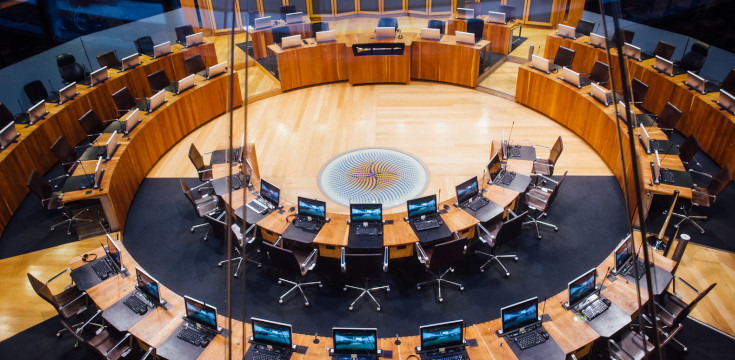
Senedd Cymru under Creative Commons Licence BY-SA-2.0

Share on FacebookShare on TwitterShare on RedditShare on BlueskyShare by email

As you’ll probably know by now, in the last few weeks the (at least) second Senedd committee set up to consider electoral reform reported back (pdf).

The headline recommendations were:

  • The number of Senedd Members should be increased from 60 to 96.
  • All MSs should be elected using closed list proportional representation via the D’Hondt method (at the moment only the 20 regional list members are).
  • The Senedd should have 16 constituencies based (initially) on pairing together the proposed 32 new UK Parliament seats. Each new Senedd constituency would elect 6 MSs. The constituency boundaries will be reviewed again by 2031.
  • There should be a statutory gender quota, which would likely mean minimum numbers of male and female candidates in each constituency. It’s also recommended that candidate diversity monitoring is improved.
  • More work should be undertaken to pave the way for future job-sharing and quotas for defining characteristics other than gender (i.e. race, disability).

On Wednesday, the Senedd backed the principles of the committee’s report by 40 votes to 14 meaning work can start on the necessary law changes.

With Labour and Plaid Cymru having a supermajority (two-thirds of MSs) between them – and a political mandate from the 2021 election to make changes to the Senedd – as long as there are no hitches, reforms ought to be in place by the next scheduled election in 2026.

The issue now is whether some of these recommendations, if enacted, could end up causing more problems than they aim to solve.

2. A Question of Ballot Papers

  • 1. A Question of Numbers
  • 2. A Question of Ballot Papers
  • 3. A Question of Choice
  • 4. Conclusion: Get as close to perfect as possible; put it to bed for a generation
Previous
Next

“The report proposes Wales uses 6-member constituencies, which seems to be abnormally small for any country using D’Hondt. It would inevitably favour the bigger parties (in Wales’ case – Labour, Plaid Cymru and the Conservatives) and sets the bar much higher for smaller parties and Independent candidates to be elected.”

I don’t think anyone has at any point in the discussions around reforming the Senedd advocated using the D’Hondt method to elect all MSs.

There’s probably been modelling done but the recommended electoral system in these reviews has almost always been single transferable vote (STV) – where individual candidates are ranked by preference. Many MSs seem to have spoken out in support of STV in the debate too.

The D’Hondt method has its advantages. Electors only vote once for their favoured party (so it’s easier to vote) and the result is usually proportional meaning the number of seats each party wins usually closely matches their share of the vote.

There are plenty of parliaments around the world that elect members this way – the Netherlands, Finland and Iceland to name but a few.

It’s applied in different ways, including national lists – where all members are elected at the same time, with no local constituencies – or separate district/constituency seats and top-up seats where each constituency elects between 7-10 members.

There are exceptions such as Spain (too complicated to go into here) and some of the smallest constituencies in Portugal.

It’s already used for Senedd elections to elect the regional list members and ensures the Senedd is at least partly proportional. As the seats won in first-past-the-post constituencies are counted in this system, each of the five regions acts like an 11 to 13-member “super constituency” which, if it wasn’t for the fact only four MSs are elected via D’Hondt in each region, would make it a bit easier for smaller parties and Independents to get elected.

The report proposes Wales uses 6-member constituencies, which seems to be abnormally small for any country using D’Hondt. It would inevitably favour the bigger parties (in Wales’ case – Labour, Plaid Cymru and the Conservatives) and sets the bar much higher for smaller parties (like the Greens) and Independent candidates to be elected.

STV would avoid this problem because you would be voting for the individual as much as the party. A popular Independent or small party candidate would stand as good a chance of being elected as anyone else if they can get a large number of first, second and third preferences.

If Wales adopted the system as proposed then you can expect continued wasted votes and results that barely change from election to election.

2. A Question of Ballot Papers

  • 1. A Question of Numbers
  • 2. A Question of Ballot Papers
  • 3. A Question of Choice
  • 4. Conclusion: Get as close to perfect as possible; put it to bed for a generation
Previous
Next
Tags: ConservativesElectoral Reform & SystemsGender EqualityLabourLib DemsPlaid CymruSeneddWelsh GovernmentWelsh Law
Previous Post

IndyWales & The Honours System

Next Post

When are referendums justified?

Owen Donovan

Owen Donovan

Archive

Categories

Copyright

Creative Commons Licence

State of Wales by Owen Donovan is licensed under a Creative Commons Attribution-NonCommercial-NoDerivatives 4.0 International License.

Subscribe by Email

Search

No Result
View All Result
No Result
View All Result
  • Go To Senedd Home
  • Go To Oggy Bloggy Ogwr
  • About & Contact
    • About State of Wales
    • Comments Policy
    • Complaints Policy
    • Contact & Subscribe by Email
    • Disclaimer
  • Features
    • After the UK
    • Chinny Reckon
    • Devil’s Advocate
    • How Wales Works
    • Road to Brexit
  • The Independence Index
    • The Independence Index (full)
    • Economics & Money
      • Business & Economy
      • Currency
      • Tax & Spending
      • Transport & Infrastructure
    • Society
      • Communities & Housing
      • Culture & Sport
      • Education
      • Health
      • Media & Communications
      • Science & Technology
    • The State
      • Environment & Natural Resources
      • Justice
      • Local Government
  • Elections Centre
  • Wales FAQ
    • How is Wales funded?
    • How are laws in Wales made?
  • Support & Donate