



The final post in this “Welsh Justice System” series focuses on the least comfortable element – prisons and prisoners – with the death penalty debate thrown in at the end for good measure.
Not everything relating to penal policy will be covered otherwise this would be twice the length and I’ve done enough already.

I first wrote about capital punishment and the issues around it back in 2013. The world’s changed a lot since then and there have been some concerning developments in the time since (if you’re against capital punishment).
The Death Penalty in Wales & Worldwide Situation
Capital punishment hasn’t been used in the UK since it was abolished in 1965 via a UK Parliament Member’s Bill, which resulted in the death penalty being gradually phased out. The last person to be executed in Wales was Vivian Teed, who was hanged at Swansea Prison in 1958.
The death penalty wasn’t an option exclusively reserved for murderers. Treason, piracy (the Jolly Roger kind), causing a fire in a naval dockyard, some military offences (like mutiny), various offences “against the crown”, and espionage were all punishable by death (legally, but not in practice) until they were removed as capital offences one-by-one.
The Crime & Disorder Act 1998 eventually abolished capital punishment in the UK completely, with the Human Rights Act 1998 making sure of it.
40 countries currently maintain the death penalty, while at least a further 48 have moratoriums or don’t use the death penalty in practice even if it remains a sentencing option.
As you might expect, there are human rights concerns around the use of the death penalty. In some Muslim countries, the death penalty is applied based on interpretations of the Quran and sharia law, meaning homosexuality, apostasy, adultery and occult practices are often capital offences. Executions are often carried out in public.
Most of the remaining “People’s Republics” retain the death penalty even if a few – like Cuba – have moratoriums. China has at least 46 capital offences ranging from smuggling, human trafficking, producing counterfeit medicines and arson as well as the expected ones like murder and rape.
Some nations in south-east Asia are merciless to drug smugglers, dealers and traffickers; Malaysia, Singapore and Indonesia mandate the death penalty for drug-related offences.
Capital punishment is currently practised on a state-by-state basis in the United States because criminal justice is largely a state, not a federal, matter. 27 states (and the federal government) use the death penalty, with Virginia the latest US state to abolish it in 2021. Execution methods are varied, though lethal injection is used as standard.
Arguments for & against the restoration of capital punishment
In terms of the arguments in favour, it might include:
- “Eye for an eye” – A conservative interpretation of religious/moral beliefs or otherwise is that if someone takes another person’s life (or performs a similarly objectionable act) then they should receive a similar punishment. You can probably see why a “like for like” punishment could be seen as justice instead of revenge. It may provide more closure for victims and their families, helping them come to terms with what happened.
- It acts as a deterrent? – Capital punishment has a 100% success rate in preventing a convict from re-offending. In principle, potentially facing the death penalty should make a rational actor think carefully about whether they should commit a capital offence or not. However, the evidence on whether it’s an effective deterrent isn’t clear cut11 and the kind of people who would commit a capital offence are not likely to be rational in the first place.
- It should be more cost-effective than a life sentence – You would think, logically, that executing a prisoner after a short period on death row would be cheaper than holding them for 30+ years in prison or until they die naturally. It might not be that clear cut though. Although the execution itself is cheap (hanging set-ups are inexpensive and execution by lethal injection costs around £800), capital murder trials are often longer and more expensive due to the need for proof of guilt “beyond reasonable doubt”. There are also appeals to figure in.
As for the arguments against:
- “Two wrongs don’t make a right” – Like “eye for an eye” this is a moral argument rather than one where there’s any hard evidence. The death penalty punishes violence with another act of violence and begs the question as to whether a jury or court that wrongly sentences someone to death is guilty of murder or manslaughter? It’s quite likely that people who’ve been the victim of high-profile miscarriages of justice or unsafe convictions – like The Birmingham Six, Barry George and Cardiff Three – would’ve been hanged under old laws.
- It’s cruel and unusual punishment – Executions themselves might not necessarily be cruel anymore and fairly instant. It’s the wait and the uncertainty that’s “cruel and unusual”. The condemned might not have a set date for execution, might only find out hours before the sentence is carried out. Appeals could give them false hope. Then some are genuinely innocent and know they’re innocent and would otherwise end up a miscarriage of justice. All this is a form of psychological torture.
- Prison may be a more fitting punishment – A person can’t be rehabilitated, show remorse or learn from their mistakes if they’re dead and it can’t be pointed out to them why they were wrong in the first place. Admittedly, that won’t always work – a prisoner might be seriously ill and have no concept of “right or wrong”. Also, trying to understand why and how people become violent, or commit certain crimes, is invaluable for early intervention in society. The whole life order is effectively a death penalty by proxy anyway.
The Politics of Reintroducing the Death Penalty
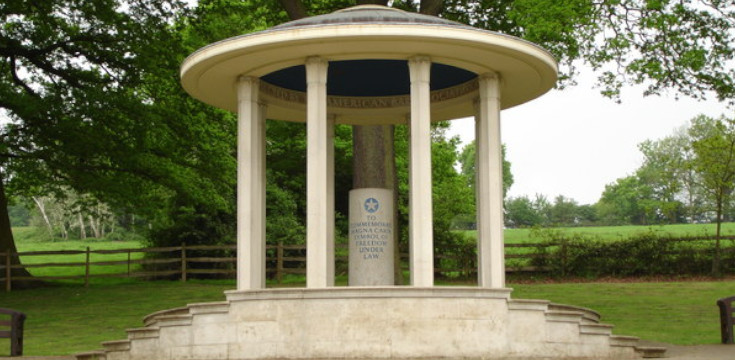

Not that long ago – and certainly when I first wrote about this in 2013 – it looked as though the reintroduction of the death penalty would be impossible.
However, developments around Brexit and a push for a “British Bill of Rights” might have radically changed the picture and set the UK on the path for the eventual reintroduction of capital punishment.
The only things preventing the death penalty from being reintroduced in the UK at the moment are:
- Protocol 6, European Convention on Human Rights (ECHR) – Explicitly restricts the use of the death penalty amongst member states of the Council of Europe to times of war or “imminent threat of war”.
- Protocol 13, European Convention on Human Rights (ECHR) – Moves towards a complete ban on the use of the death penalty. As the UK has signed and ratified Protocol 13, the death penalty is completely banned in all circumstances.
The EU also has an outright ban on capital punishment under their Charter of Fundamental Rights, but since the UK left the EU in 2020 that no longer applies here.
Theoretically, capital punishment could be reintroduced in the UK if the UK withdrew from the Council of Europe and, as a consequence, withdrew from the European Convention on Human Rights (ECHR). Russia announced they would do this last week following their invasion of Ukraine but they’ve always been half-in, half-out of it, refusing to sign or ratify some of the protocols of the ECHR.
As things stand, the proposed “British Bill of Rights” won’t cancel the ECHR, but it could make the process of going through the European Human Rights Court more difficult and expensive. There’s also the possibility that the UK Government would go “full Brexit” and withdraw from the ECHR completely – which could open the door to the death penalty being restored.
It’s worth pointing out that the reintroduction of capital punishment does enjoy public support. The latest opinion poll from April 2021 suggests that 54% of people in the UK support capital punishment and 23% were opposed.
There is no sign that any mainstream political party – including the Conservatives – support reintroducing the death penalty. However, the former UK Home Secretary, Priti Patel, has voiced support in the past and some of the hard-right on the Tory backbenches have attempted to at least debate the reintroduction of the death penalty in the UK Parliament.
Any attempt to reintroduce capital punishment would likely cause heads to explode in Cardiff Bay given the amount of time some Members of the Senedd spend discussing and campaigning for human rights. Supporting the death penalty would end the careers of anyone in Labour, Plaid Cymru or Lib Dems.
Support for reinstating capital punishment is a good example of argumentum ad populum action; just because something is popular it doesn’t mean it’s right. However, that’s how democracy works.
How could capital punishment be reintroduced in an independent Wales?
Just imagine for a moment that we live in an alternate universe – the somehow-even-worse-timeline-than-the-one-we’re-in-now – and the following things happened:
- The UK withdraws from the ECHR (and presumably the Council of Europe) and the new British Bill of Rights is passed in legislation that repeals previous laws abolishing the death penalty.
- Wales becomes independent – or is granted powers over criminal justice – after this and decides not to make any changes or rejoin the ECHR or Council of Europe.
- Wales decides not to enact its own Constitution or Bill of Rights and continues with the UK’s unwritten constitution.
Those three things would pave the way for Wales – constitutionally – to reintroduce capital punishment.
The first question would be, “What counts as a capital crime?” This would presumably be left to the judiciary/sentencing council (Part XI). I’d imagine it would include crimes such as:
- Pre-meditated murder(s), and/or murders that involve torture, sexual abuse, sadism or some effort to conceal or destroy the remains/evidence.
- Acts of terrorism.
- Certain crimes during wartime (i.e. treason, espionage, sabotage, willingly aiding a foreign power).
Then there are those crimes which are probably serious enough to warrant an execution but barring some cast iron evidence would be difficult to seek the death penalty for, including rape, child sexual exploitation and potentially some offences around organised crime (arranging for a witness to be murdered, for example). There would also need to be an extensive appeals process and the bar would need to be set very high in terms of proof to condemn someone.
Presuming there’s political and public support for the move, legislation would need to be drafted. It would be a long, drawn-out – potentially violent – process attracting criticism worldwide and within Wales from human rights groups. So just getting a law through the Senedd would be a challenge in itself.
Then there’s the question of how the execution would be carried out – something that would need to be debated in the Senedd, making the 2016 Brexit referendum and its fallout look like a student union debate.
Lethal injection seems to be the most common means of execution in developed countries and is often considered humane as the prisoner is usually knocked unconscious before their heart is stopped.
Another humane option is a high altitude chamber filled with nitrogen. The amount of oxygen would be gradually reduced until the condemned dies from hypoxia, which would cause a pleasant “high” before death.
Then there’s good old fashioned hanging – which is still used in India, Japan and South Korea.
The number of prisoners potentially being handed a death penalty in Wales would likely be very low anyway – maybe no more than 2 or 3 a year.
It’s quite possible that even if the death penalty was on the statute book as a sentencing option, judges would opt for life imprisonment and only reserve capital punishment for “the worst of the worst” where there can be no doubts about their guilt.
As to where the executions would be carried out, it would need to be a fairly modern, high-security facility with good access to mortuary facilities and away from built-up areas. Parc Prison in Bridgend or Berwyn Prison in Wrexham would be the obvious choices.
11: Daniel S. Nagin; John V. Pepper, National Research Council (2012). Deterrence and the Death Penalty. Available at: https://www.ojp.gov/ncjrs/virtual-library/abstracts/deterrence-and-death-penalty

