Senedd Home
Oggy Bloggy Ogwr
State of Wales
Sunday, August 9, 2026
  • About & Contact
    • About State of Wales
    • Comments Policy
    • Complaints Policy
    • Contact
    • Disclaimer
  • Elections Centre
  • The Independence Index
    • The Independence Index (Full)
    • Foreign Policy
      • Relations with the former UK & Ireland
      • Relations with Europe
      • Foreign Policy (General)
      • International Organisations & Law
      • Overseas Aid
    • Defence
      • Defence Policy
      • NATO
      • Armed Forces
      • National Security
      • Civil Defence
    • Rules & Regulations
      • Safety & Standards
      • Intellectual Property
    • Economics & Money
      • Business & Economy
      • Currency
      • Tax & Spending
      • Transport & Infrastructure
    • Society
      • Communities & Housing
      • Culture & Sport
      • Education
      • Health
      • Media & Communications
      • Science & Technology
    • The State
      • Environment & Natural Resources
      • Justice
      • Local Government
  • Support & Donate
No Result
View All Result
  • About & Contact
    • About State of Wales
    • Comments Policy
    • Complaints Policy
    • Contact
    • Disclaimer
  • Elections Centre
  • The Independence Index
    • The Independence Index (Full)
    • Foreign Policy
      • Relations with the former UK & Ireland
      • Relations with Europe
      • Foreign Policy (General)
      • International Organisations & Law
      • Overseas Aid
    • Defence
      • Defence Policy
      • NATO
      • Armed Forces
      • National Security
      • Civil Defence
    • Rules & Regulations
      • Safety & Standards
      • Intellectual Property
    • Economics & Money
      • Business & Economy
      • Currency
      • Tax & Spending
      • Transport & Infrastructure
    • Society
      • Communities & Housing
      • Culture & Sport
      • Education
      • Health
      • Media & Communications
      • Science & Technology
    • The State
      • Environment & Natural Resources
      • Justice
      • Local Government
  • Support & Donate
No Result
View All Result
State of Wales
No Result
View All Result
Home Culture & Sport

IndyWales & City Status

How city status is granted in the UK is not without controversy, so what could an independent Wales do?

Owen Donovan by Owen Donovan
November 30, 2022
in Culture & Sport, Independence: Culture & Sport, Independence: Local Government, Local Government
IndyWales & City Status

BBC Wales

Share on FacebookShare on TwitterShare on RedditShare on BlueskyShare by email

This is a re-write of a piece from a few years ago and something a bit more gentle to round off the series on local government & independence: city status.

Right, it’s not the most important thing in the world – but in the UK it’s just another one of those odd things that doesn’t make much sense.

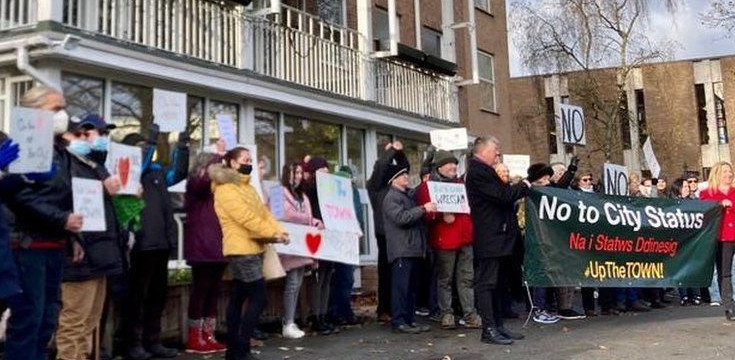
Though given the furore around Wrexham’s (ultimately successful) bid for city status in 2022, it’s clearly important to many people.

1. What is a “city”?

  • 1. What is a “city”?
  • 2. The problems with UK city status
  • 3. Does city status matter?
  • 4. City Status & Independence
Previous
Next

There’s no set definition of what a city is and different nations have different approaches.

What we might consider in Wales to be a minor provincial town or very big village would likely be considered a city in the United States or Canada, for example.

I suppose it boils down to a hierarchy of settlements.

A “city” would have a sizable travel-to-work area and would be less dependent on other settlements in the wider region for services – what the Institute of Welsh Affairs’ “Understanding Welsh Places” project would label as an “Independent” place.

“Independent places have a high number of assets in relation to their population; a strong diversity of jobs; and residents travel shorter distances to travel to work and services. These places will attract people from neighbouring places to access their assets and jobs.”

Once a town has expanded to such an extent that it acts as a sub-regional hub, providing services for a collection of smaller satellite towns and villages, it’s probably earned the right to be called a city – but that doesn’t mean a city has to be a minimum size.

What would immediately spring to mind when a European thinks “city” (a very large, densely-populated urban area with a population in the high hundred thousand/millions) is usually a conurbation – a group of several cities and towns that have merged into a single highly-urbanised settlement.

Great Britain and Ireland only have perhaps a dozen true conurbations: Greater London, Glasgow, West Yorkshire, Greater Manchester, West Midlands, Merseyside, Tyne-Wear and Dublin

Each one of these areas is made up of individual metropolitan boroughs or city councils. For example, Salford – within Greater Manchester – is itself a city. It’s the same case for Westminster and the City of London within Greater London.

1. What is a “city”?

  • 1. What is a “city”?
  • 2. The problems with UK city status
  • 3. Does city status matter?
  • 4. City Status & Independence
Previous
Next
Tags: Head of StateIndependenceIndependence MinutiaeLocal GovernmentReligion & BeliefThe MonarchyUniversitiesWrexham
Previous Post

Local Government IX: Local Democracy & Civic Pride

Next Post

Chinny Reckon: Is the Welsh deficit only £2.6billion?

Owen Donovan

Owen Donovan

Archive

Categories

Copyright

Creative Commons Licence

State of Wales by Owen Donovan is licensed under a Creative Commons Attribution-NonCommercial-NoDerivatives 4.0 International License.

Subscribe by Email

Search

No Result
View All Result
No Result
View All Result
  • Go To Senedd Home
  • Go To Oggy Bloggy Ogwr
  • About & Contact
    • About State of Wales
    • Comments Policy
    • Complaints Policy
    • Contact & Subscribe by Email
    • Disclaimer
  • Features
    • After the UK
    • Chinny Reckon
    • Devil’s Advocate
    • How Wales Works
    • Road to Brexit
  • The Independence Index
    • The Independence Index (full)
    • Economics & Money
      • Business & Economy
      • Currency
      • Tax & Spending
      • Transport & Infrastructure
    • Society
      • Communities & Housing
      • Culture & Sport
      • Education
      • Health
      • Media & Communications
      • Science & Technology
    • The State
      • Environment & Natural Resources
      • Justice
      • Local Government
  • Elections Centre
  • Wales FAQ
    • How is Wales funded?
    • How are laws in Wales made?
  • Support & Donate