


This is a re-write of a piece from a few years ago and something a bit more gentle to round off the series on local government & independence: city status.
Right, it’s not the most important thing in the world – but in the UK it’s just another one of those odd things that doesn’t make much sense.
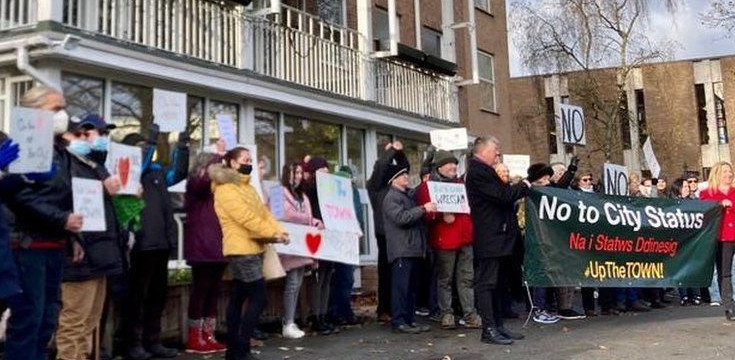
Though given the furore around Wrexham’s (ultimately successful) bid for city status in 2022, it’s clearly important to many people.

TL;DR – It’s another completely outdated nonsense tradition.
Traditionally, settlements in the UK which have an Anglican (or in Wales, Church in Wales) diocesan cathedral have a right to call themselves a city for “time immemorial”. That’s why the likes of St David’s and St Asaph are cities. In fact, St Asaph was an anomaly in not being formally recognised as a city until it was granted city status in 2012.
For everywhere else, city status is granted via letters patent – one of the few executive powers retained by the monarch (based on recommendations from the Lord Chancellor).
Letters patent conferring city status are usually issued to coincide with a celebration, normally a royal jubilee – though Swansea’s city status was granted off the back of the investiture of the “Prince of Wales” in 1969. No settlement can call itself a city without this royal proclamation.
Assuming Charles III lives into his mid-to-late-90s as his mother and father did, then it’s possible that there won’t be another jubilee until the 2040s at the earliest.
Additionally, local authorities can lose city status through local government reorganisation. Rochester in Kent lost its city status in 1998 when the previous district council (Rochester-upon-Medway, which had city status) merged into a new unitary authority (Medway).
Towns/local authorities often have to bid to be considered for city status and that process can be time-consuming and comes at a cost; Doncaster’s city status project cost £50,000.
There may be other associated costs such as re-branding/re-titling the local authority’s name.

