


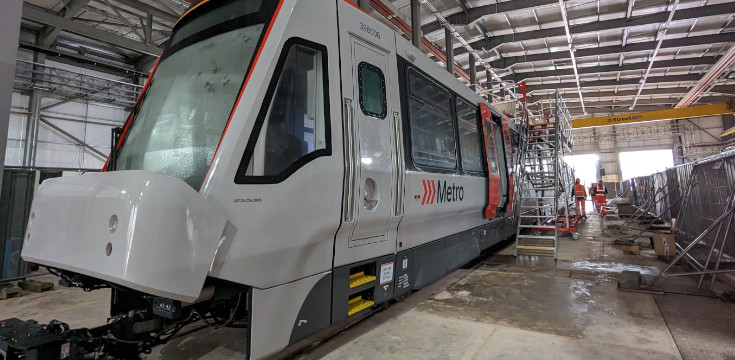
After looking at some of the blunders and missed opportunities when it comes to transport, it’s time for the “good news” – strategies and policies that the Welsh and UK governments have successfully pursued over the years.
There’ll be a break of a few weeks before the next part, so you can go through the previous pieces to catch up here:


One of the key planks of the Llwybr Newydd transport strategy is that decisions on new transport infrastructure will be based on a sustainable transport hierarchy (above).
Cars have been at the top of the transport “food chain” for as long as most of the people reading this have been alive. Switching to a new hierarchy based on the impact each method of transport has will, in the longer term and with the right investment, tip things on its head – something that’s long overdue.
That doesn’t mean that people will, or must, stop driving – there are some types of journeys for which driving is the only practical option. Though if walking, cycling and public transport are prioritised from now on – and the Welsh Government’s Road Review hints that we’re heading in that direction – then we might, stress might (I’m still sceptical), be on the way to a Dutch-style transport network in principle. The big downside is that such a network would probably be confined to areas with higher population densities and Wales has only a few of those.
In practice, it’ll be much harder to deliver. For one there’s the capital funding issue. There’s no bottomless pit of money. I mentioned issues with active travel in Part III too and new public transport infrastructure comes at a cost.
There’ll be pushback from drivers if they don’t get their own way (for once). That presents political problems as populists rub their hands at the prospect of picking up more votes off the back of it; we’ve already seen it from the Conservatives regarding the 20mph default limit in built-up areas, even though most of them backed it in the previous term (Senedd Home: “Senedd says ‘Twenty’s Plenty’).
The alternative is that we just keep building new roads regardless of their worth and value, while offering indirect subsidies to drivers (such as free parking). Bus and rail networks would be run into the ground, while pedestrians and cyclists fend for themselves against increasingly heavier and quieter electric vehicles – zero emissions, but the same traffic jams.
Maybe it should’ve been done 20 years ago, but it’s better late than never and at least (in spirit) the Welsh Government’s intentions are in the right place.

