


Last week, the Senedd (Members & Elections) Bill was tabled.
It comes after the best part of 20 years of consultations, commissions, backroom talks and committees to get to a point where the Senedd will finally be considered to be (so-called) “fit for purpose”.

I don’t cover the Senedd that often anymore (if ever), but this is a “constitutional” matter with a broader impact on democracy. It’s also a far more significant electoral reform than those passed in the previous term.
As for my own opinions, the whole thing is yet another wasted opportunity – but there are some positives. A few tweaks as the Bill goes through the law-making process would take it something closer to acceptable, even good.
The number of additional members
While the practical case for more members is open-and-shut in favour, a 60% increase is hard to justify.
One of the biggest fibs being told about this reform is that the Senedd has accumulated loads of new powers that require far more members to scrutinise. In reality, the only sizable change came in 2011 with full law-making powers in devolved policy areas. The range and depth of powers hasn’t changed that much.
The current Senedd has significantly fewer powers than the Northern Ireland Assembly, yet an increase to 96 members would mean it becomes the larger legislature. Comparisons were also made with other devolved/sub-national legislatures that have more powers than Wales.
A proportional increase based on workload and lack of powers might take membership up to 75-80. 96 members is at the upper end of all of the previous recommendations.
While it would future-proof the Senedd to handle more powers (extra transport powers, welfare administration, policing & criminal justice) there’s no sign that any new powers are going to be devolved to Wales for the foreseeable future.
The constituencies
Under the proposals, Wales would have 16 new Senedd constituencies formed by pairing together the 32 new UK Parliament constituencies in Wales.
That’s a simple way to do it so I understand the attraction. It would also go some way towards ensuring all of the constituencies have similarly-sized electorates and elect the same number of members.
It’s not a bad idea in principle, but it could lead to some abnormally large constituencies, as well as constituencies that cross multiple local authority and health board boundaries.
My favourite option, examined in detail during the McAllister Review, would have been constituencies based (at least partly) on the 22 local authorities, even if that results in some constituencies electing different numbers of members. People recognise them, it’s clear where members represent and, in most cases, they’ll align with health board boundaries, etc.
The cost (and value) of the reforms
The changes are expected to cost an additional £14-18million a year from 2026 onwards (when the changes are expected to come into effect).
This is about twice the original estimate in 2017 (up to £10million a year). Though taking current inflation (as of 2022-23) into account then it’s probably not that different.
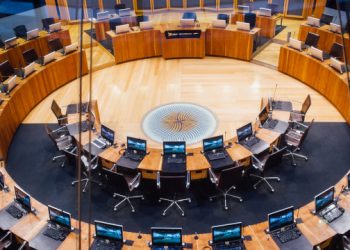
The biggest capital costs would be an expansion of the Senedd chamber and providing all the additional backroom stuff an MS needs to work (office space etc.).
You can argue that “good scrutiny costs money” but I’m not buying that. We were told that increases to MSs pay would attract higher calibre candidates to the Senedd and that’s not happened.
We’ve also been told that investing in scrutiny will lead to savings for taxpayers. That’s because problems would be picked up earlier or discussed in more detail by MSs who aren’t trying to balance multiple plates by sitting on several committees etc. – but we’ve never been given any examples or research to back that argument.
As noted, I haven’t been following the Senedd closely. What I have seen so far this term suggests that the quality of scrutiny, conduct and debate is no better than it was in the Fifth Senedd if not a little worse. There have been Senedd-related posts (20mph changes, tourist tax, the Senedd reporter, second homes, some Bridgend-related issues) I’ve wanted to cover here and Oggy Bloggy Ogwr that I’ve had to abandon because the quality of the questions and answers was so poor that it wouldn’t have provided anything informative if I had published them.
One thing that might get people on board is a substantial pay cut for MSs seeing as they’re going to share work amongst more members. That’s fair, isn’t it?

