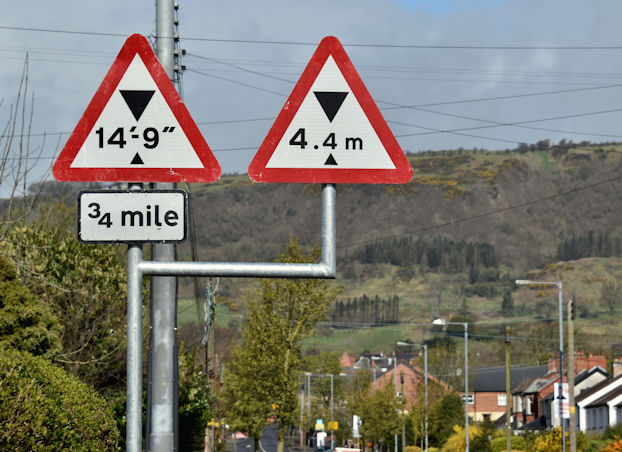
Image Source: © Copyright Albert Bridge and licensed for reuse under Creative Commons Licence BY-SA-2.0
Donations keep this site going. If you like what I’m doing here and think this work is important to the independence movement, consider a donation. One-off or monthly; as little or as much as you want. Click the links below, or full details are available here.
What Happens Now?
The majority of the world uses metric units for measurement (centimetres, metres, kilometres, kilograms etc).
The UK is one of the few remaining countries in the world that still uses imperial units, having used a mix of imperial and metric units since the 1970s.
The UK generally uses imperial units for height (feet and inches), weight (stones and pounds), distance (miles and yards) and speed (miles-per-hour). Imperial units are also used for certain drinks (pints, half-pints).
The UK then tends to use metric for temperature (celsius), food (grams/kilograms), standardised construction measurements (millimetres, centimetres and metres) and liquids (millilitres/litres). Light rail and high-speed rail also use metric, while heavy/standard rail uses imperial.
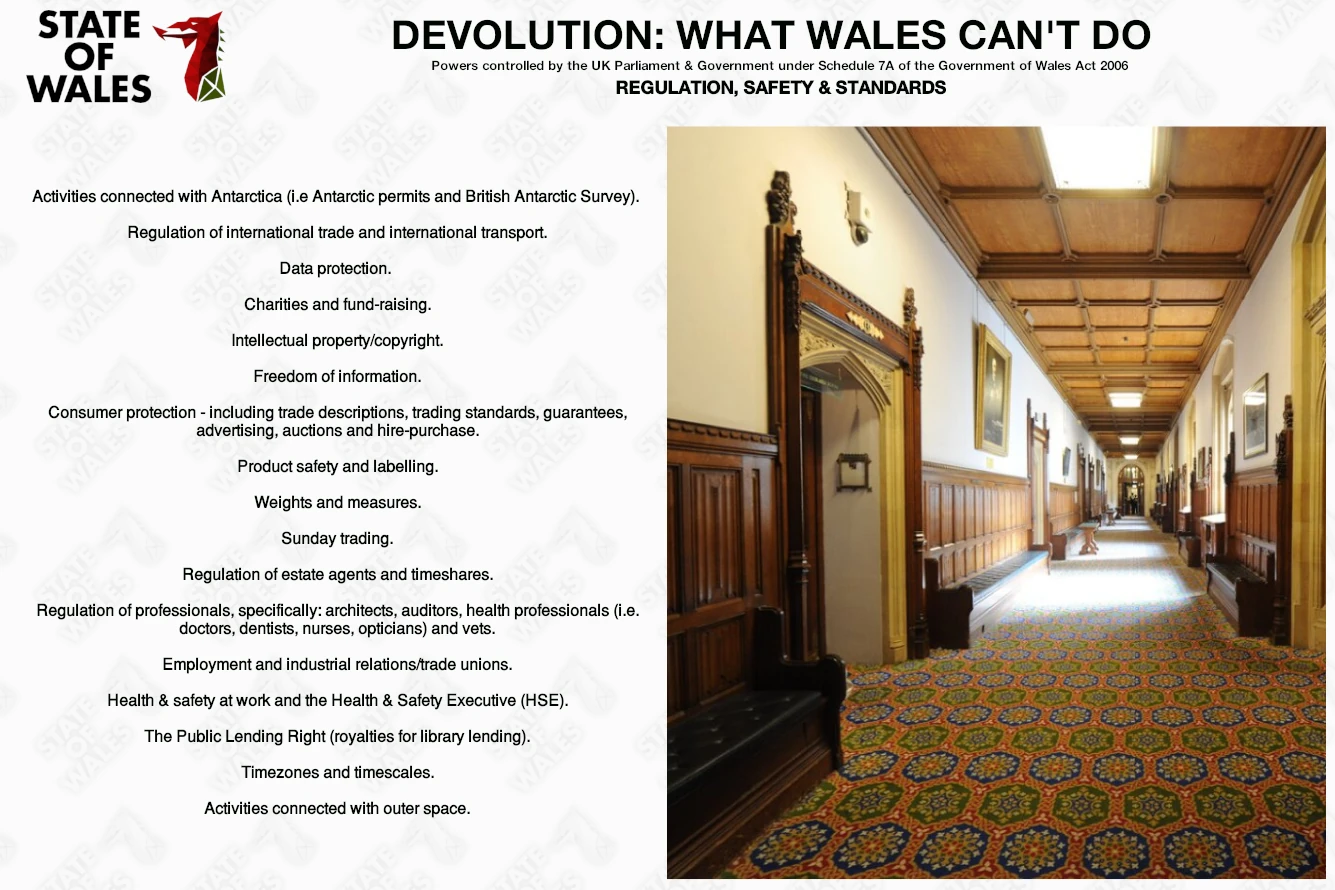
Metric units are legally required on packaged goods in England, Scotland and Wales1– though nothing prevents imperial measures from being included alongside them.
Since Brexit and the introduction of the Internal Market Act 2020, weights and measures in the UK have broadly kept in line with EU rules.
Does This Work for Wales?
As metric and imperial units are displayed alongside each other, there’s no big issue here. Wales isn’t at a particular advantage or disadvantage.
It’s more down to whether we want Wales to be part of the global mainstream or stick with a tradition.
UK law is currently being updated through the Product Regulation and Metrology Bill – parts of which the Senedd has been asked to consent to as certain aspects cross into devolved areas (i.e. animal and plant health). This law will make it easier for the UK Government to keep in line with EU laws to ensure smooth trade.
Independence: Weights & Measures - Pros & Cons
We would be able to decide for ourselves whether to stick with the current mix of imperial and metric instead of having the decision made for us.
Metric measurements are the global standard. Using metric measurements would be more familiar to (non-British or American) foreign visitors and drivers.
The imperial system is irrational and based on a series of random standardised measurements that don’t make any real sense and are not easily converted.
Metric measurements are consistent and are easy to work with and convert to other measurements (i.e. centimetres to metres).
Most modern road vehicles sold in Wales come with speedometers that have both metric and imperial units.
“If it ain’t broke, don’t fix it”. The UK has managed to stay in line with EU requirements without abandoning imperial units altogether. Current UK laws on weight & measures would remain in effect in Wales after independence.
There’s no need to make any change as imperial measurements will die out naturally. The last remaining imperial units (i.e. feet and inches) will only carry on because people want them to.
Changing road signs to metric measurements for speed and distance would be an expensive measure for little benefit. Similarly, rail and maritime transport use imperial measures as standard.
Some imperial measurements are more useful than their metric equivalents. Fahrenheit is usually easier to work with if you want a quick idea of how warm or cold it is outside.
Switching to metric measurements for speed limits would increase or decrease speed limits. When Ireland switched to metric speed limits, the speed limit on motorways increased from 70mph to 75mph (120 km/h). Some drivers may consider this a good thing, but it also meant that the lowest speed limit on public roads in built-up areas dropped to 18-19mph (30 km/h).
What Do Other Countries Do?
![]()
They are in a similar position as the UK, except the metric system isn’t used as often. You will find imperial units on packaged goods in a way that you wouldn’t in the UK or the rest of Europe. Fahrenheit is the preferred temperature unit.
![]()
Ireland gradually switched from UK imperial units to metric. Ireland retains imperial units for certain measurements (i.e. pints), but has gone further than the UK in converting all road distance and speed units to metric (km/km-per-hour). Imperial units are no longer taught in schools.
![]()
Hong Kong uses traditional Chinese units, British imperial measurements and the metric system. Metric is the only measurement system with official backing and road signs use metric measurements for speed and distance.
What Options Does Wales Have?
There are only two options, really.
The first is to keep things as they are – using both imperial and metric units depending on what’s being measured.
The second is to gradually switch to only using the metric system. The one obvious area in public life where this would have the biggest impact would be roads – switching from miles to kilometres (as happened in Ireland).
What's at Stake?
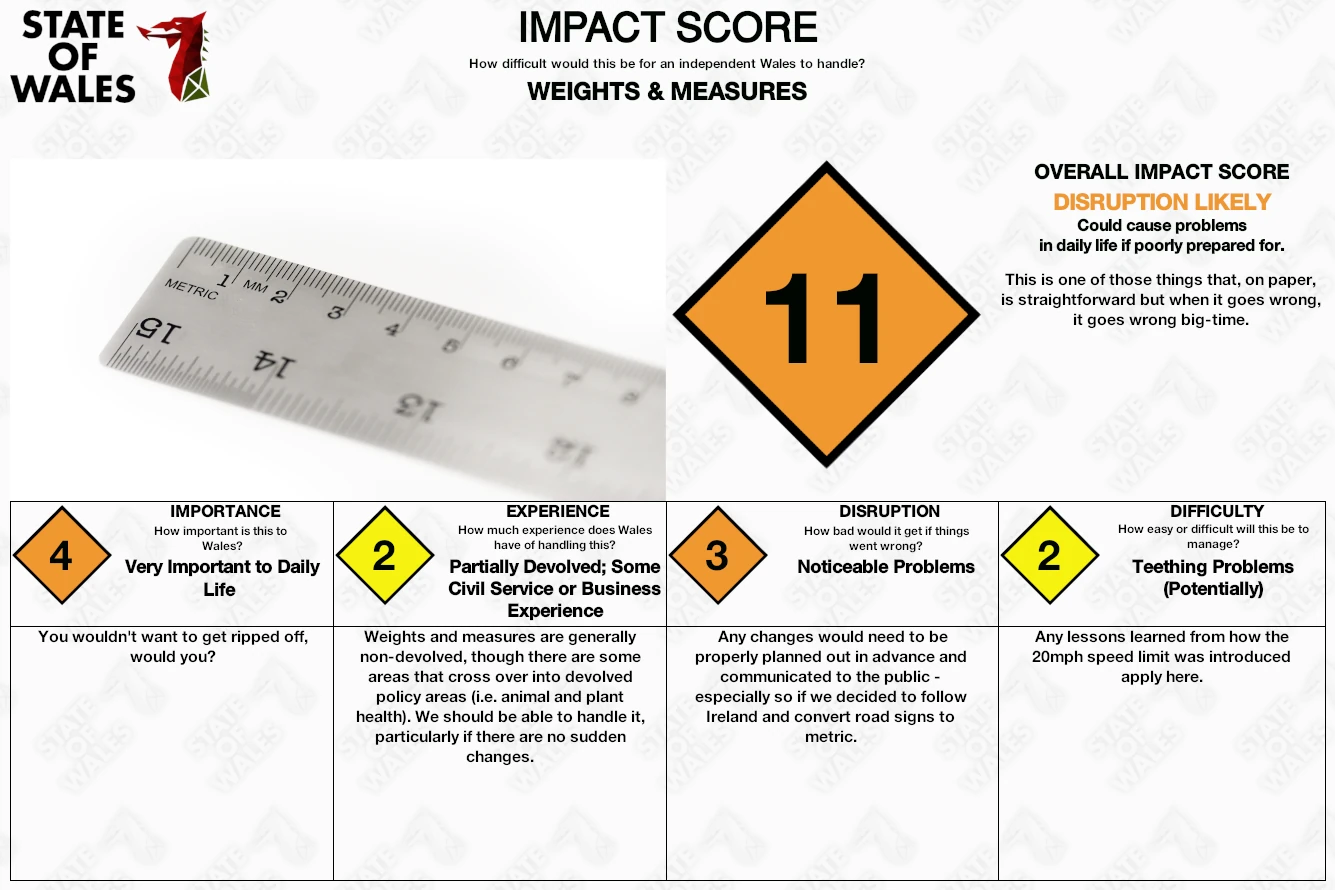
The overall score (out of 20) is the total of the scores for the four mini-categories (out of 5 each).
How Would This Be Run?
Weights and measures would likely fall under the Welsh government minister responsible for the economy and/or business.
How Much Will This Cost?
If things remain as is (imperial and metric alongside each other) it wouldn’t cost anything.
It’s difficult to estimate how much it would cost to change all speed and distance road signs in Wales to metric, but it would be tens of millions of pounds. The cost of switching 35,000 road signs in Ireland to metric was estimated to be €30 million in 20042 (€47 million/£39.5 million in 2025).
Would any new taxes need to be introduced?
No.
Who will pay for this?
Costs for labelling etc. fall on businesses and may or may not be passed onto consumers through increased prices (though this is unlikely).
If road signs were to be switched to metric this would probably be undertaken by local councils funded by a Welsh Government grant – as happened with the introduction of the 20 mph speed limit in built-up areas in 2023.
How Long Would This Take?
If we stick with the current system, then things carry on as usual.
If we decide to change (i.e. switching more measurements to metric, such as changing road signs) then this will likely require a law in the Senedd, that would probably take up to a year to pass.
Based on Ireland’s example, changing road signs took place gradually over 10 years. They started with distance signs, then finished with speed limit signs in 2005. When Australia switched to metric measurements in the 1970s, new signs were built next to the old ones so the switch could happen overnight3.
People & Work
All Welsh residents, but it would be a more obvious change for drivers if road measurements switched to metric.
Unlikely, other than additional work created by metrication (i.e. switching road signs).
Weights & Measures Act 1985.
Irish Times (11th February 2004). “Change to kph speed limit to cost €30m”.
UK Metric Association (2009) “Metric signs ahead” (p 33-34).
No AI tools were used to draft this post.