


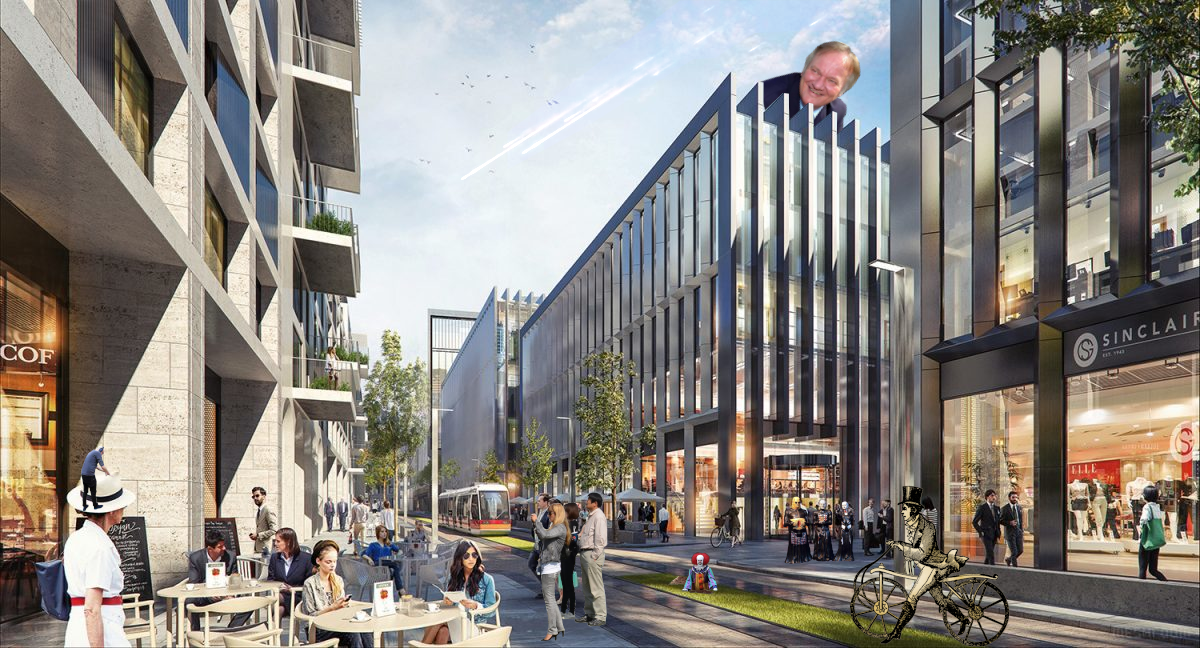
If there’s anything you can say about Wales and the Welsh economy over the last 20-30 years it’s that we love an artist’s impression.
We can’t get enough of them. They’re usually accompanied by carefully prepared spiel about how the artist’s impression promises to create X hundred or thousand jobs and put (insert town/city/county name here) on the map.
There have been at least three in Bridgend alone I can think of – a proposed redevelopment of the Rhiw Centre in the early 2000s, the Island Farm Sports Village and the Ineos factory.
The beauty of it is that nothing has to get built. The artist’s impression is in itself hailed as a sign of progress. The main drawback of “never making it off the drawing board” is that continued failures engender a sense of cynicism and even outright hostility towards any new project no matter how small.
That’s not to say that failing to transition from an artist’s impression to reality is always a bad thing. In some cases, it’s a sign that the powers that be aren’t so easily taken in by PR or promises of jam tomorrow for the sake of a flashy image or promise – usually involving people riding bikes, buying coffee or, more recently, using ziplines. Cars and traffic jams don’t exist in the world of artist impressions and the high-end handbag shop on the ground floor of the new tower block almost always ends up being a Tesco Express.
What follows is a selection of some of my favourites down the years – though that shouldn’t be interpreted as an endorsement of any of them. Does it also beg the question, “Which developments being proposed now will suffer the indignity of being added to this list in the future?”

Plans to create a new airport to rival the larger London airports emerged in the 1990s around the same time several new artificial island airports in Hong Kong and Japan.
Bristol and Cardiff airports compete for passengers in the same catchment area and, by and large, it’s a fight Bristol Airport won hands down. The proposed Severnside Airport would effectively have replaced both of them.
In most versions of the plan, it would have been built on an artificial island or reclaimed land off the Gwent Levels with the capacity to carry anything up to 40million passengers a year – about four times the annual passenger numbers of Cardiff and Bristol airports combined (pre-Covid).
Even if it would have been a wider airport for southern Wales and southwest England, if things went as planned it could’ve been a major international travel hub and – for all intents and purposes – “Heathrow West”.
Environmentally, however, it may have ended up being significantly more destructive than the Newport bypass given the impact of air travel on climate change and the fact it would have been built in the middle of one of the most important nesting and breeding sites in Great Britain.

