


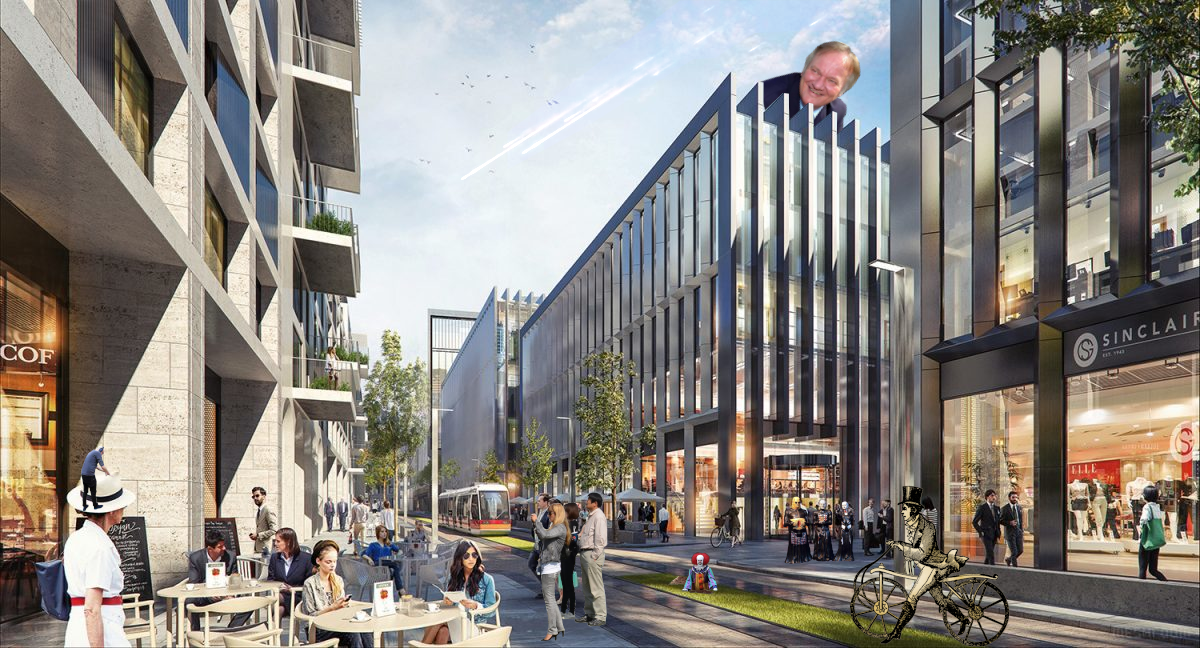
If there’s anything you can say about Wales and the Welsh economy over the last 20-30 years it’s that we love an artist’s impression.
We can’t get enough of them. They’re usually accompanied by carefully prepared spiel about how the artist’s impression promises to create X hundred or thousand jobs and put (insert town/city/county name here) on the map.
There have been at least three in Bridgend alone I can think of – a proposed redevelopment of the Rhiw Centre in the early 2000s, the Island Farm Sports Village and the Ineos factory.
The beauty of it is that nothing has to get built. The artist’s impression is in itself hailed as a sign of progress. The main drawback of “never making it off the drawing board” is that continued failures engender a sense of cynicism and even outright hostility towards any new project no matter how small.
That’s not to say that failing to transition from an artist’s impression to reality is always a bad thing. In some cases, it’s a sign that the powers that be aren’t so easily taken in by PR or promises of jam tomorrow for the sake of a flashy image or promise – usually involving people riding bikes, buying coffee or, more recently, using ziplines. Cars and traffic jams don’t exist in the world of artist impressions and the high-end handbag shop on the ground floor of the new tower block almost always ends up being a Tesco Express.
What follows is a selection of some of my favourites down the years – though that shouldn’t be interpreted as an endorsement of any of them. Does it also beg the question, “Which developments being proposed now will suffer the indignity of being added to this list in the future?”

The Severn Barrage is an idea that’s at least 170 years old. While earlier proposals were mainly related to providing a convenient crossing point of the Severn or offering additional flood protection, from the 1920s onwards the Severn Estuary’s natural tidal range made it one of the best places in the world for tidal energy infrastructure.
Despite that, it’s never happened. Much like any of the other proposed developments in and around the Gwent Levels, the environment has generally won out over the economy while there have long been questions over the scale of the project and whether it would provide genuine value for money.
The most recent proposal – in the early-2010s – became something of a pet project for the then Welsh Secretary, Peter Hain, and would’ve cost anything up to £25billion at the time. Over-optimism regarding job projections (said to be up to 50,000), strike prices and the environmental impact saw the project quietly dropped and gradually evolve into tidal lagoons (….nothing’s happened there either).

