


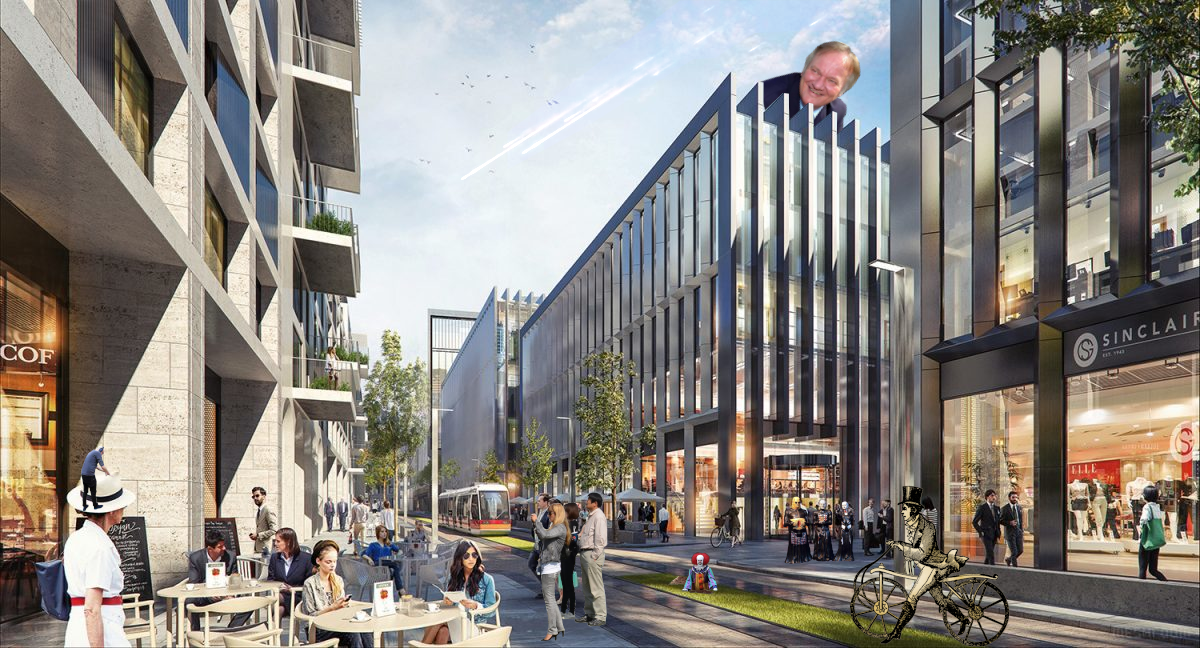
If there’s anything you can say about Wales and the Welsh economy over the last 20-30 years it’s that we love an artist’s impression.
We can’t get enough of them. They’re usually accompanied by carefully prepared spiel about how the artist’s impression promises to create X hundred or thousand jobs and put (insert town/city/county name here) on the map.
There have been at least three in Bridgend alone I can think of – a proposed redevelopment of the Rhiw Centre in the early 2000s, the Island Farm Sports Village and the Ineos factory.
The beauty of it is that nothing has to get built. The artist’s impression is in itself hailed as a sign of progress. The main drawback of “never making it off the drawing board” is that continued failures engender a sense of cynicism and even outright hostility towards any new project no matter how small.
That’s not to say that failing to transition from an artist’s impression to reality is always a bad thing. In some cases, it’s a sign that the powers that be aren’t so easily taken in by PR or promises of jam tomorrow for the sake of a flashy image or promise – usually involving people riding bikes, buying coffee or, more recently, using ziplines. Cars and traffic jams don’t exist in the world of artist impressions and the high-end handbag shop on the ground floor of the new tower block almost always ends up being a Tesco Express.
What follows is a selection of some of my favourites down the years – though that shouldn’t be interpreted as an endorsement of any of them. Does it also beg the question, “Which developments being proposed now will suffer the indignity of being added to this list in the future?”

As the UK – via the National Lottery and Millennium Commission – was gearing up to shortlist projects to celebrate the new millennium, a competition was held to design a new home for the Welsh National Opera.
The winning design – by Zaha Hadid – actually looks similar(ish) to the current Senedd building, but was opposed by the local council and city council and eventually rejected by the UK Government for supposedly being too financially risky.
The arguments then turned a bit uglier. On the one hand, the project was written off as being “elitist” and possibly threatening a separate bid for a new National Stadium (which was successful, obviously). On the other hand, the decision was deemed to be parochial and resulted in Wales losing a “groundbreaking piece of architecture”.
In the end, the powers that be opted for the more mass-market, multi-purpose Millennium Centre – which, ironically, houses the Welsh National Opera and has become an important architectural landmark in its own right. So it worked itself out in the end?

