Senedd Home
Oggy Bloggy Ogwr
State of Wales
Wednesday, September 30, 2026
  • About & Contact
    • About State of Wales
    • Comments Policy
    • Complaints Policy
    • Contact
    • Disclaimer
  • Elections Centre
  • The Independence Index
    • The Independence Index (Full)
    • Foreign Policy
      • Relations with the former UK & Ireland
      • Relations with Europe
      • Foreign Policy (General)
      • International Organisations & Law
      • Overseas Aid
    • Defence
      • Defence Policy
      • NATO
      • Armed Forces
      • National Security
      • Civil Defence
    • Rules & Regulations
      • Safety & Standards
      • Intellectual Property
    • Economics & Money
      • Business & Economy
      • Currency
      • Tax & Spending
      • Transport & Infrastructure
    • Society
      • Communities & Housing
      • Culture & Sport
      • Education
      • Health
      • Media & Communications
      • Science & Technology
    • The State
      • Environment & Natural Resources
      • Justice
      • Local Government
  • Support & Donate
No Result
View All Result
  • About & Contact
    • About State of Wales
    • Comments Policy
    • Complaints Policy
    • Contact
    • Disclaimer
  • Elections Centre
  • The Independence Index
    • The Independence Index (Full)
    • Foreign Policy
      • Relations with the former UK & Ireland
      • Relations with Europe
      • Foreign Policy (General)
      • International Organisations & Law
      • Overseas Aid
    • Defence
      • Defence Policy
      • NATO
      • Armed Forces
      • National Security
      • Civil Defence
    • Rules & Regulations
      • Safety & Standards
      • Intellectual Property
    • Economics & Money
      • Business & Economy
      • Currency
      • Tax & Spending
      • Transport & Infrastructure
    • Society
      • Communities & Housing
      • Culture & Sport
      • Education
      • Health
      • Media & Communications
      • Science & Technology
    • The State
      • Environment & Natural Resources
      • Justice
      • Local Government
  • Support & Donate
No Result
View All Result
State of Wales
No Result
View All Result
Home Business & Economy

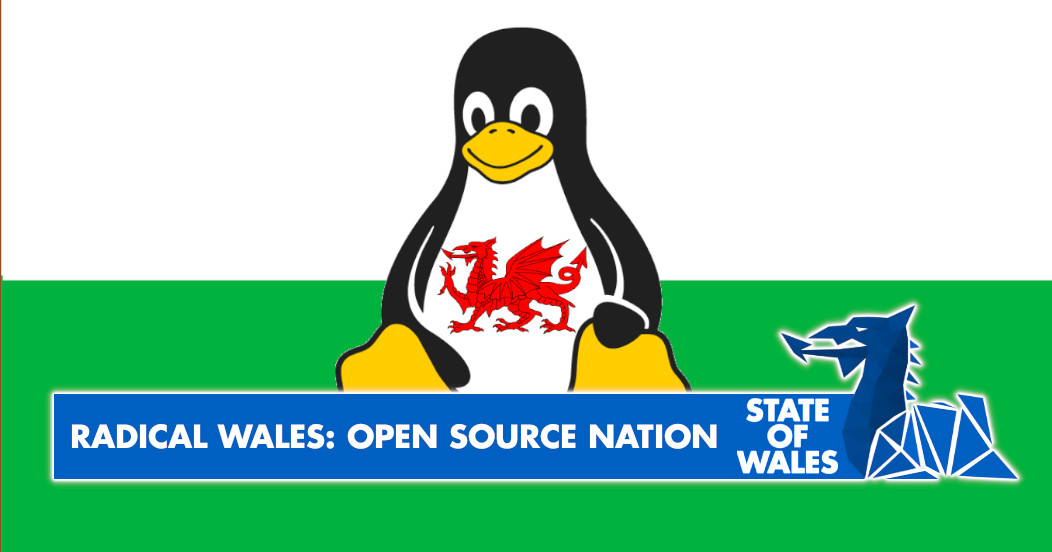
Radical Wales: Open Source Nation

Would the public sector turning its back on closed-off (and often expensive) licenced software present as many challenges as opportunities?

Owen Donovan by Owen Donovan
January 20, 2025
in Business & Economy, Independence: Business & Economy, Independence: Science & Technology, Science & Technology
Radical Wales: Open Source Nation
Share on FacebookShare on TwitterShare on RedditShare on BlueskyShare by email

Image Source: Own work/public domain

This site is best viewed in landscape mode on smartphones.
Support IndyWales? Support State of Wales!

Donations keep this site going. If you like what I’m doing here and think this work is important to the independence movement, consider a donation. One-off or monthly; as little or as much as you want. Click the links below, or full details are available here.

What Do We Mean By An Open Source Mandate?

In 2024, Switzerland enacted a law requiring federal public agencies to publish the source code of any software developed by them.

Could this be something for Wales to consider?

This isn’t necessarily independence related; any agency in the Welsh public sector could announce they want to do it tomorrow. UK Government guidance doesn’t mandate the use of open source software but puts it on a level playing field with licenced/proprietery software.

Firstly, it’s worth clarifying what open source software actually is:

  • Open source software is software where the underlying source code is publicly available (via platforms such as GitHub) and changes can be proposed by anyone. Open source software is usually available for free but can be paid-for and still meet the definition as long as the source code is open to all.
  • Proprietery software (aka. closed source software) is only distributed on (a usually paid) licence under copyright, or via a subscription (“Software as a Service/SaaS”). The source code is only available and accessible to the developers. The licence may be restricted to one person or machine at any given time.

The Linux operating system is one of the more well-known examples of open source software, with scores (far too many to mention) of spin-off versions/”distros”. These range from decentralised/community-focused (i.e. Arch Linux), to user friendly versions cated for those more familiar with Windows or Mac (Linux Mint, Zorin, Fedora) and business-focused (Ubuntu, Red Hat, SUSE).

Most people use open source software without realising it. Many GPS systems use open source software. The Firefox browser and WordPress is open source. The vast majority of internet servers use Linux-based operating systems, while Android and Steam OS are Linux-based too.

An open source mandate would – whether backed by the law or not – compel public agencies/the public sector to use and develop open source software unless they have no other option.

In itself that doesn’t sound very radical. Though consider how many computers (and other equipment) in the Welsh public sector (government, councils, schools, NHS) use licenced software from the likes of Microsoft, Adobe and Apple.

It’s the kind of thing that may be easy to want to do but much harder to do in practice.

Open Source Mandate: Case Studies

Switzerland
National Agencies & Governments
Local Government
Switzerland

As noted at the beginning, as of 2024 – by federal law – all federal public agencies in the country are required to publish the source code of any software developed by or for them.

Some third party software is exempt from the requirement, but it would likely lead to all software being used at a federal level being open source at some point in the future. The development of new open source software is a core part of the Swiss federal government’s digital strategy.

National Agencies & Governments


As of 2022, open source software is the default option for public procurement of IT services in Germany. The gendarme force of France uses a bespoke operating system based on Ubuntu.

One of the biggest clients of Red Hat – one of the commercial-focused Linux IT companies mentioned earlier – is the US Department of Defence.

Estonia – considered to be one of the most tech-savvy countries in the world – has had a presumption in favour of using open source software in the public sector since independence. It has a similar open source public software policy as Switzerland.

Within the wider EU, the approach to open source has been mixed. On the surface, the EU has a healthy scepticism of big tech companies, with the Digital Markets Act aiming to break monopolies and control “tech gatekeepers“. At the other end, some of the EU’s cybersecurity regulations have previously been said to have the potential to seriously damage open source software.

Local Government

Several German state and local governments have swapped propritary software like Microsoft office for free and open source alternatives like OpenOffice and LibreOffice. In 2012, Iceland moved to switch the main operating system on school computers to Linux (but it’s unclear whether they’ve stuck to that).

Some local governments – such as Munich City Council – have attempted to create their own Linux-based operating systems, with mixed success.

Open Source Manadate: Arguments For & Against

Arguments For
Arguments Against
Arguments For

Digital sovereignty – Open source software gives the end user more control over their data and software choices, granting them the right to act independently. With proprietery software you will always be dependent, to varying degrees, on the developer and distributor. Open source software would give the public sector greater wriggle room to make changes whenever and however they see fit without being reliant on any external players.

Customisation, stability & flexibility – Although requiring time and investment, new software can be developed from the ground-up. As the source code is publicly available it can be chopped and changed to suit whatever requirements there are of it. This lends open source software a great deal of flexibility too as users aren’t locked in to one system, or one piece of software, from one company as part of a contract or licence (known as “vendor lock-in”).

For example, the Welsh Government could (hypothetically) invest in developing a Linux-based operating system for use across the entire public sector with features like Welsh language support and translation built in from the very start. You would also assume that public services that depend on working closely with each other – GPs and hospital care in the NHS, for example – may find things easier if they were all working with similar software.

Open source software is often stable; unless you specifically go out to break it it’s usually very reliable. Another bonus is while there are security vulnerabilities, there are very few viruses targeting Linux. As there are more people inspecting the code, security risks and flaws are often picked up and fixed relatively quickly even if the overall development of open source software may take longer.

Cost savings – Most (but not all) open source software is free – though of course there would be costs associated with switching (such as extra work for IT staff). In certain circumstances tech support is free (i.e the Arch Linux wiki). In many cases, open source software requires lower hardware specification, meaning they can run on older or lower-powered computers.

If the public sector is going to expect us all to use more digital services, then being able to build things from the ground up could make that switch easier – as has been the case in Estonia.

This might also make it far easier and cheaper to give (for argument’s sake) all school children in Wales a tablet, or to combat digital exclusion amongst groups that find it difficult to get online or use online-based services.

Arguments Against

Fractured nature of open source software & licences – If you use a Windows or Apple PC or laptop, pretty much all of the software you need usually comes pre-installed with the hardware and it’s far easier to find and install new software if you need to.

If we were to go full hog and adopt Linux in the public sector, then there are several different ways to install packages/”apps” (i.e. Deb, Flatpak, Snaps) and nobody can seemingly agree on which method is the best. That’s before you weigh up the pros and cons of each individual Linux distribution and the different desktop environments – but at least you get a choice, right? Too much choice can be a bad thing if you’re focused on tasks and productivity.

Familiarity and training – For most people and companies, Windows and Mac are what they know and what they’ve been trained to use. Also, commerical software is often easier to use because it has to be in order for people to part with cash for them. Open source software like GIMP and Kdenlive, while fine by themselves, are nowhere near as user-friendly as the Adobe Creative Suite.

While there are some very good compatability programmes like Proton and Wine which enable you to run things like games and some Microsoft programmes underneath Linux, there are still things you can’t do.

You can’t use Adobe suite software and certain workplace collaboration tools on Linux, for example. While the likes of Libre Office and Open Office come very close to replicating Microsoft 365, they’re still different and don’t work in exactly the same way. Losing access to popular applications, and force of habit in using them, present big barriers to switching to open source alternatives.

Hidden costs and risks – Even if security vulnerabilities within open source software get picked up more quickly, they still exist. Some open source software may only be maintained by a few people or even just one person. Projects come and go; some may even switch from open source to proprietery licences. Migrating data and systems from one type of software to another would be time consuming and present potential technical challenges.

As well as the previously mentioned issue around training and familiarity, a presumption in favour of open source software could breach certain procurement rules and lead to legal challenges. There would be a similar issue if contracts were ended early. Hardware designed to be used with a specific vendor (i.e. Macs and Windows workstations) may not be compatible with open source software.

Should Wales Become An Open Source Nation?

There are already many advocates for this at a Welsh level. If you want to read more about open source in Wales then I recommend David Clubb.

It’s not an issue that’s been raised in the Senedd very often. Though if we’re entering a renewed period of austerity then it’s worth considering whether public sector IT contracts provide value for money given it’s likely to make up a significant share of administration spending.

Mike Hedges MS (Lab, Swansea West) is on record as having advocated for the use of open source software as a cost-saving measure in 2023. The then First Minister, Mark Drakeford, said that advice to the public sector is to view open source as a first option, but it might not always be the right option when it comes to security or reliability.

Public agencies would have to weigh up the training and technical requirements, what software is used for what, as well as the whole package of support (IT support, hardware support, regular upgrades and updates).

In many situations that means sticking with proprietery/licenced software (which, in most cases, means Microsoft, Adobe or Mac). There’s nothing inherently wrong with that – as noted in the arguments against – but it might not be the most cost-effective option.

In terms of digital security, sovereignty and control, being overly-reliant on proprietery software is unlikely to be a good thing in the long run – but big tech is far more effective at lobbying, sales and marketing than any open source equivalents. The Welsh Government, Senedd and local councils seem pretty well integrated into Microsoft contracts and might prefer to stick with what they know than consider any changes.

At the very least, investing in and developing homegrown open source software could/should form a key part of our digital strategy; it currently doesn’t. However, a lot of the language in the Welsh Government’s Digital Service Standards does point towards open source (or doesn’t specifically exclude its use or development) without specifically mentioning it.

If we were to do this, it would likely have to be trialled first and scaled up once any teething problems or issues are resolved. The Senedd and Welsh Government themselves might be a decent place to start, or a sizable local authority whose IT contract is coming to an end.


You Might Also Like....

Radical Wales: No Military
Armed Forces

Radical Wales: No Military

by Owen Donovan
December 10, 2025
0

...

Read moreDetails
Radical Wales: Conscription/National Service

Radical Wales: Conscription/National Service

December 10, 2025
Radical Wales: Liquid Democracy

Radical Wales: Liquid Democracy

November 11, 2024
Radical Wales: Democracy by Lottery

Radical Wales: Democracy by Lottery

November 4, 2024
Radical Wales: Legalise Drugs

Radical Wales: Legalise Drugs

July 15, 2024
Radical Wales: Direct Democracy

Radical Wales: Direct Democracy

May 13, 2024
Radical Wales: Transport Megaprojects

Radical Wales: Transport Megaprojects

February 26, 2024
Load More
Use of AI

No AI tools were used to draft this post.

Donations Welcome
Tags: AusterityCybersecurityEstoniaEuropean UnionGermanyIndependenceInternetLocal GovernmentPublic SectorRadical WalesSeneddSwitzerlandTechnologyUSAWelsh Government
Previous Post

IndyWales, Smoking & Vaping

Next Post

IndyWales & Gambling

Owen Donovan

Owen Donovan

Archive

Categories

Copyright

Creative Commons Licence

State of Wales by Owen Donovan is licensed under a Creative Commons Attribution-NonCommercial-NoDerivatives 4.0 International License.

Subscribe by Email

Search

No Result
View All Result
No Result
View All Result
  • Go To Senedd Home
  • Go To Oggy Bloggy Ogwr
  • About & Contact
    • About State of Wales
    • Comments Policy
    • Complaints Policy
    • Contact & Subscribe by Email
    • Disclaimer
  • Features
    • After the UK
    • Chinny Reckon
    • Devil’s Advocate
    • How Wales Works
    • Road to Brexit
  • The Independence Index
    • The Independence Index (full)
    • Economics & Money
      • Business & Economy
      • Currency
      • Tax & Spending
      • Transport & Infrastructure
    • Society
      • Communities & Housing
      • Culture & Sport
      • Education
      • Health
      • Media & Communications
      • Science & Technology
    • The State
      • Environment & Natural Resources
      • Justice
      • Local Government
  • Elections Centre
  • Wales FAQ
    • How is Wales funded?
    • How are laws in Wales made?
  • Support & Donate