Senedd Home
Oggy Bloggy Ogwr
State of Wales
Sunday, August 16, 2026
  • About & Contact
    • About State of Wales
    • Comments Policy
    • Complaints Policy
    • Contact
    • Disclaimer
  • Elections Centre
  • The Independence Index
    • The Independence Index (Full)
    • Foreign Policy
      • Relations with the former UK & Ireland
      • Relations with Europe
      • Foreign Policy (General)
      • International Organisations & Law
      • Overseas Aid
    • Defence
      • Defence Policy
      • NATO
      • Armed Forces
      • National Security
      • Civil Defence
    • Rules & Regulations
      • Safety & Standards
      • Intellectual Property
    • Economics & Money
      • Business & Economy
      • Currency
      • Tax & Spending
      • Transport & Infrastructure
    • Society
      • Communities & Housing
      • Culture & Sport
      • Education
      • Health
      • Media & Communications
      • Science & Technology
    • The State
      • Environment & Natural Resources
      • Justice
      • Local Government
  • Support & Donate
No Result
View All Result
  • About & Contact
    • About State of Wales
    • Comments Policy
    • Complaints Policy
    • Contact
    • Disclaimer
  • Elections Centre
  • The Independence Index
    • The Independence Index (Full)
    • Foreign Policy
      • Relations with the former UK & Ireland
      • Relations with Europe
      • Foreign Policy (General)
      • International Organisations & Law
      • Overseas Aid
    • Defence
      • Defence Policy
      • NATO
      • Armed Forces
      • National Security
      • Civil Defence
    • Rules & Regulations
      • Safety & Standards
      • Intellectual Property
    • Economics & Money
      • Business & Economy
      • Currency
      • Tax & Spending
      • Transport & Infrastructure
    • Society
      • Communities & Housing
      • Culture & Sport
      • Education
      • Health
      • Media & Communications
      • Science & Technology
    • The State
      • Environment & Natural Resources
      • Justice
      • Local Government
  • Support & Donate
No Result
View All Result
State of Wales
No Result
View All Result
Home Environment & Natural Resources

Wales on the Move VI: Wales on the Road

The difficult balancing act of reducing car dependency whilst improving and decarbonising travel by car, bike or on foot.

Owen Donovan by Owen Donovan
August 21, 2023
in Environment & Natural Resources, Independence: Environment & Natural Resources, Independence: Transport & Infrastructure, Transport & Infrastructure
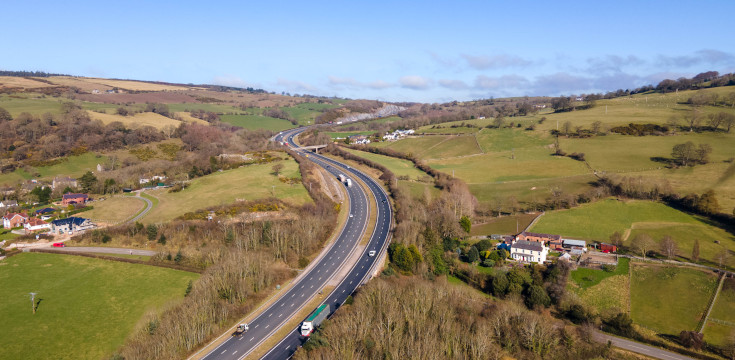
Wales on the Move VI: Wales on the Road

DronePics.Wales

Share on FacebookShare on TwitterShare on RedditShare on BlueskyShare by email

The first half of this series focused on general transport issues – not only those that need to be addressed under devolution but are key to managing transport after independence too.

These final five parts are what you’ve been waiting for. It’s time for specifics, including a look at some of the transport policies available to us after independence.

The first stop on that journey is roads and active travel.

4. Roads & Independence – Priorities for Change: Driving Standards & Road Safety

  • 1. What are some of the main issues?
  • 2. How do road networks in other countries compare to Wales?
  • 3. Roads & Independence: What could remain the same?
  • 4. Roads & Independence – Priorities for Change: Driving Standards & Road Safety
  • 5. Roads & Independence – Priorities for Change: Reducing Car Dependency
  • 6. Roads & Independence – Priorities for Change: Car Tax & Fuel Duty
  • 7. Road Project Shortlist: Post-Roads Review Version
  • 8. Road Project Shortlist: “F**k the Planet” Version
  • 9. Roads, Independence & Decarbonisation
Previous
Next

The Traffic Hierarchy & “Strict Liability”

Click to enlarge, best viewed in a new tab or window


We’ve moved towards the above through changes to the highway code implemented during 2022; whether anyone will pay attention is another matter. A new transport hierarchy is also part of the Welsh Government’s transport policies (Part IV).

The hierarchy above concerns liability for accidents. This is based on the level of impact a transport method has, how vulnerable a person who uses that form of transport is compared to other road users and the level of training required to use a transport method responsibly.

This would introduce “strict liability” similar to the Netherlands and Denmark. Transport users higher up the hierarchy will be considered liable for an accident by default because they’re using a more impactful form of transport. So if there was an accident between a van and a cyclist and the cyclist or authorities sought compensation or prosecution, the van driver would need to prove the cyclist caused the accident.

The goal would be to force drivers to think even more carefully about vulnerable road users – going a bit further than changes to the highway code.


Should the way in which driving licence points are applied be changed to be more flexible? (Pic: jafvans.com)


Learning to drive & driving licenses

  • Age requirements: Lower the age to apply for a provisional licence/learn to drive a car or motorbike to 16 (as in Iceland, the US, Canada and New Zealand) – though some may (rightly) argue that it should be increased to 18 or even 21. The argument in favour of a lower age would be that in rural areas driving is a necessity and young people may have further to travel to work or further/higher education in areas where public transport is difficult to provide. This ought to only happen with a strict probationary period though (more shortly).
  • Higher vehicle categories: Lower the age to learn to drive a high-powered motorbike, HGV or bus to 18 as long as the driver has completed an advanced driving course (it can currently be as high as 24).
  • Older drivers: There could be a voluntary scheme for drivers aged 70 and over to take an observational/refresher course similar to Pass Plus every 5-10 years. Drivers who do this wouldn’t need to reapply for their licence unless medically required to do so; everyone else would continue to reapply every 3 years.

Driver training

  • Compulsory Basic Training (CBT): Introduce or maintain mandatory CBT training for power-limited electric quadricycles (i.e. Renault Ami), mobility scooters above a certain power range, large trailers (like a caravan) and to use autonomous vehicles without a full driving licence (i.e. a person with mobility problems).
  • Probationary period for drivers who’ve just passed their test: Keep a 2-year post-driving test probationary period, where drivers are restricted on what they can do. Make “P-plates” mandatory during this period.
  • Advanced driving courses: Lift the probationary period early if a new driver passes an accredited advanced driving course (i.e. a beefed-up Pass Plus scheme) a minimum of 6 months after passing their test.

Penalties for driving offences.

  • Greater use of variable driving licence points: In most, not all, circumstances driving licence points are issued as mutliples of 3. With a more variable system, drivers receive a lower minimum of points for proportionally less dangerous rulebreaking (i.e. a car driver getting 2 points instead of 3 for going 80mph on a motorway during a clear summer night) and a higher minimum number of points for more dangerous rulebreaking (i.e. 4 points instead of 3 for breaking a 20mph limit outside a school; 6 points for 30mph+).
  • Longer driving bans: Minimum driving bans could be longer (1 year; up from 6 months). Existing requirements to reapply for a licence for bans longer than 56 days, and take an extended driving test, could remain.
  • Make it easier to ban consistently bad drivers for life: Someone banned from driving more than twice in three years (i.e. collecting too many licence points) could, for example, get banned for life on the third instance (currently it’s a 2-year ban).
  • Deaths by dangerous/careless driving: Keep the new maximum prison sentence (as of June 2022) for causing death by dangerous driving as life imprisonment; increase the maximum and minimum sentences for causing death by careless driving.
  • “Zero” drink drive limit: Even a “passing” level of alcohol (without good reason) results in a fine and licence points.
  • Update “dangerous cycling” laws: Only to cover the most serious offences, such as causing death or serious injury by dangerous cycling.

4. Roads & Independence – Priorities for Change: Driving Standards & Road Safety

  • 1. What are some of the main issues?
  • 2. How do road networks in other countries compare to Wales?
  • 3. Roads & Independence: What could remain the same?
  • 4. Roads & Independence – Priorities for Change: Driving Standards & Road Safety
  • 5. Roads & Independence – Priorities for Change: Reducing Car Dependency
  • 6. Roads & Independence – Priorities for Change: Car Tax & Fuel Duty
  • 7. Road Project Shortlist: Post-Roads Review Version
  • 8. Road Project Shortlist: “F**k the Planet” Version
  • 9. Roads, Independence & Decarbonisation
Previous
Next
Tags: Active TravelAir Quality & PollutionCivil ServiceClimate & Climate ChangeDenmarkDisabilityFranceIcelandIndependenceIrelandJudicial SystemNetherlandsNew ZealandNorwayPublic SectorRoad SafetyRoad TransportScotlandSwitzerlandTaxWelsh GovernmentWelsh Law
Previous Post

Wales on the Move V: Wales’ Missing Connections

Next Post

Wales on the Move VII: Wales on the Buses

Owen Donovan

Owen Donovan

Archive

Categories

Copyright

Creative Commons Licence

State of Wales by Owen Donovan is licensed under a Creative Commons Attribution-NonCommercial-NoDerivatives 4.0 International License.

Subscribe by Email

Search

No Result
View All Result
No Result
View All Result
  • Go To Senedd Home
  • Go To Oggy Bloggy Ogwr
  • About & Contact
    • About State of Wales
    • Comments Policy
    • Complaints Policy
    • Contact & Subscribe by Email
    • Disclaimer
  • Features
    • After the UK
    • Chinny Reckon
    • Devil’s Advocate
    • How Wales Works
    • Road to Brexit
  • The Independence Index
    • The Independence Index (full)
    • Economics & Money
      • Business & Economy
      • Currency
      • Tax & Spending
      • Transport & Infrastructure
    • Society
      • Communities & Housing
      • Culture & Sport
      • Education
      • Health
      • Media & Communications
      • Science & Technology
    • The State
      • Environment & Natural Resources
      • Justice
      • Local Government
  • Elections Centre
  • Wales FAQ
    • How is Wales funded?
    • How are laws in Wales made?
  • Support & Donate