Senedd Home
Oggy Bloggy Ogwr
State of Wales
Sunday, August 16, 2026
  • About & Contact
    • About State of Wales
    • Comments Policy
    • Complaints Policy
    • Contact
    • Disclaimer
  • Elections Centre
  • The Independence Index
    • The Independence Index (Full)
    • Foreign Policy
      • Relations with the former UK & Ireland
      • Relations with Europe
      • Foreign Policy (General)
      • International Organisations & Law
      • Overseas Aid
    • Defence
      • Defence Policy
      • NATO
      • Armed Forces
      • National Security
      • Civil Defence
    • Rules & Regulations
      • Safety & Standards
      • Intellectual Property
    • Economics & Money
      • Business & Economy
      • Currency
      • Tax & Spending
      • Transport & Infrastructure
    • Society
      • Communities & Housing
      • Culture & Sport
      • Education
      • Health
      • Media & Communications
      • Science & Technology
    • The State
      • Environment & Natural Resources
      • Justice
      • Local Government
  • Support & Donate
No Result
View All Result
  • About & Contact
    • About State of Wales
    • Comments Policy
    • Complaints Policy
    • Contact
    • Disclaimer
  • Elections Centre
  • The Independence Index
    • The Independence Index (Full)
    • Foreign Policy
      • Relations with the former UK & Ireland
      • Relations with Europe
      • Foreign Policy (General)
      • International Organisations & Law
      • Overseas Aid
    • Defence
      • Defence Policy
      • NATO
      • Armed Forces
      • National Security
      • Civil Defence
    • Rules & Regulations
      • Safety & Standards
      • Intellectual Property
    • Economics & Money
      • Business & Economy
      • Currency
      • Tax & Spending
      • Transport & Infrastructure
    • Society
      • Communities & Housing
      • Culture & Sport
      • Education
      • Health
      • Media & Communications
      • Science & Technology
    • The State
      • Environment & Natural Resources
      • Justice
      • Local Government
  • Support & Donate
No Result
View All Result
State of Wales
No Result
View All Result
Home Environment & Natural Resources

Wales on the Move VI: Wales on the Road

The difficult balancing act of reducing car dependency whilst improving and decarbonising travel by car, bike or on foot.

Owen Donovan by Owen Donovan
August 21, 2023
in Environment & Natural Resources, Independence: Environment & Natural Resources, Independence: Transport & Infrastructure, Transport & Infrastructure
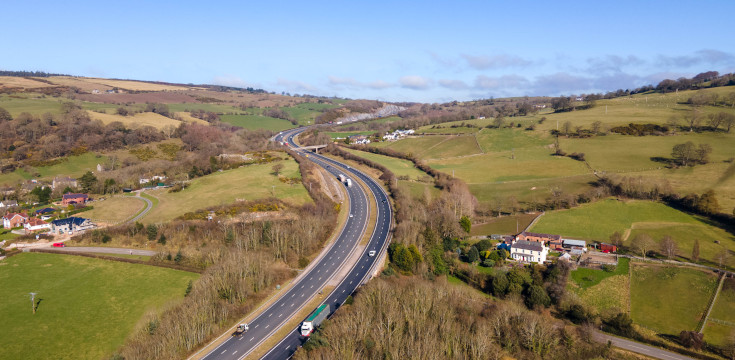
Wales on the Move VI: Wales on the Road

DronePics.Wales

Share on FacebookShare on TwitterShare on RedditShare on BlueskyShare by email

The first half of this series focused on general transport issues – not only those that need to be addressed under devolution but are key to managing transport after independence too.

These final five parts are what you’ve been waiting for. It’s time for specifics, including a look at some of the transport policies available to us after independence.

The first stop on that journey is roads and active travel.

9. Roads, Independence & Decarbonisation

  • 1. What are some of the main issues?
  • 2. How do road networks in other countries compare to Wales?
  • 3. Roads & Independence: What could remain the same?
  • 4. Roads & Independence – Priorities for Change: Driving Standards & Road Safety
  • 5. Roads & Independence – Priorities for Change: Reducing Car Dependency
  • 6. Roads & Independence – Priorities for Change: Car Tax & Fuel Duty
  • 7. Road Project Shortlist: Post-Roads Review Version
  • 8. Road Project Shortlist: “F**k the Planet” Version
  • 9. Roads, Independence & Decarbonisation
Previous
Next

According to the Welsh Government1, in 2016 carbon emissions from cars made up 55% of emissions from transport. Light trucks, HGVs and buses made up an additional 30% combined. In isolation, road transport made up 11.9% of all Welsh emissions in 2016.

The UK Government has already announced that the sale of new petrol and diesel cars and vans will be banned from 2030, with only hybrids or zero-emission vehicles allowed to be sold between 2030-2035. After that point, all new cars will need to be zero emission.

At the end of 20222, there were just over 23,000 electric or hybrid vehicles registered in Wales. Of those, 21,700 were cars or motorbikes (and nearly all of those were cars).

However, this is only 1.3% of the just under 1.7million cars and motorbikes registered in Wales in the same period3.

Some countries have been more successful, while others – like the Republic of Ireland – are in a similar position to Wales.

Click to enlarge, best viewed in a new tab/window


There’s EU coordination on this anyway, but even then the approach taken in non-EU states (like Norway) is similar. There are some common themes:

  • 2030-2035 seems to be the most common target date for a ban on petrol and diesel car sales.
  • Most governments have set targets for EVs as a share of all vehicles.
  • There’s often a subsidy or tax incentive for new EV purchases (though the likes of Germany also offer them for used purchases) and these are being gradually withdrawn as market share increases.
  • There are usually some localised benefits and incentives such as toll reductions or free parking.

Early adopters have had far more success in boosting EV uptake than slower countries.

Also, as noted in the graphic, Iceland has an advantage in abundant renewable energy sources, while Norway has (ironically) sovereign wealth from oil and gas exports to underwrite new investments.

As major car producers, France and Germany have closely tied EV uptake to industrial strategies; the UK has too but its commitments are pretty vague in comparison.

In terms of new EV sales, the UK isn’t doing that badly – though the UK Government withdrew its subsidies in 2022 to focus on infrastructure rollout.

As for Wales, new detailed guidance has been issued for EV infrastructure and the Welsh Government’s strategy predicts up to 55,000 fast chargers and 4,000 rapid chargers being required by 20304.

To meet this target, the Welsh Government expects 50% of vehicles on the road to be EVs by 2030 and 100% by 2040. We’re nowhere near that at the moment.

So, what should we consider?

  • The time has probably long passed to offer subsidies to switch to zero-emission cars – and under devolution, the Welsh Government couldn’t do so anyway. We’re not likely to be independent before the 2030-35 phased petrol and diesel ban comes into effect, regardless.
  • Any vehicle subsidies are perhaps best aimed at those which are difficult-to-decarbonise (buses, diesel taxis, HGVs, LGVs) but they’re likely to come at a higher cost.
  • Subsidising charging infrastructure may be a better use of money given there’s now a cut-off point for petrol and diesel. The bulk of this ought to be aimed at rural areas and the freight industry where travelling by road is the only realistic option; we shouldn’t chase numbers but think more about the length and necessity of EV car journeys.
  • Given how much land car parks waste, more attention could be focused on converting them into solar carports. There also needs to be clear standards/guidance for home charging as some charging infratructure can pose a risk to pedestrians more generally, as well as the elderly and disabled (i.e. trip hazards).
  • Cutting car use in urban areas ought to remain a priority regardless of how “green” they might be. If car use isn’t addressed, we’ll end up with the same congestion and particulate air pollution issues.
  • Pure EVs are likely to be more dangerous to pedestrians and cyclists due to their higher weight, quietness and fast acceleration. There ought to be consideration of future weight limits for new car purchases (i.e. an electric SUV ban).
  • The broader issue of moving more freight from road to rail (Part VIII) – a long-held ambition in Wales, but there’s only been hot air to date.

1. Welsh Government (June 2019). “Transport: Sector emission pathway” (p2). Available here: https://www.gov.wales/sites/default/files/publications/2019-06/transport-sector-emission-pathway-factsheet.pdf
2. UK Department of Transport (15th June 2023) “Vehicle licensing statistics” (Table VEH0101a)
3. UK Department of Transport (15th June 2023) “Vehicle licensing statistics” (Table VEH0141a)
4. Welsh Government (June 2021). “Electric vehicle charging strategy for Wales” (p24 -27). Available here: https://www.gov.wales/sites/default/files/publications/2021-03/electric-vehicle-charging-strategy-wales.pdf

9. Roads, Independence & Decarbonisation

  • 1. What are some of the main issues?
  • 2. How do road networks in other countries compare to Wales?
  • 3. Roads & Independence: What could remain the same?
  • 4. Roads & Independence – Priorities for Change: Driving Standards & Road Safety
  • 5. Roads & Independence – Priorities for Change: Reducing Car Dependency
  • 6. Roads & Independence – Priorities for Change: Car Tax & Fuel Duty
  • 7. Road Project Shortlist: Post-Roads Review Version
  • 8. Road Project Shortlist: “F**k the Planet” Version
  • 9. Roads, Independence & Decarbonisation
Previous
Next
Tags: Active TravelAir Quality & PollutionCivil ServiceClimate & Climate ChangeDenmarkDisabilityFranceIcelandIndependenceIrelandJudicial SystemNetherlandsNew ZealandNorwayPublic SectorRoad SafetyRoad TransportScotlandSwitzerlandTaxWelsh GovernmentWelsh Law
Previous Post

Wales on the Move V: Wales’ Missing Connections

Next Post

Wales on the Move VII: Wales on the Buses

Owen Donovan

Owen Donovan

Archive

Categories

Copyright

Creative Commons Licence

State of Wales by Owen Donovan is licensed under a Creative Commons Attribution-NonCommercial-NoDerivatives 4.0 International License.

Subscribe by Email

Search

No Result
View All Result
No Result
View All Result
  • Go To Senedd Home
  • Go To Oggy Bloggy Ogwr
  • About & Contact
    • About State of Wales
    • Comments Policy
    • Complaints Policy
    • Contact & Subscribe by Email
    • Disclaimer
  • Features
    • After the UK
    • Chinny Reckon
    • Devil’s Advocate
    • How Wales Works
    • Road to Brexit
  • The Independence Index
    • The Independence Index (full)
    • Economics & Money
      • Business & Economy
      • Currency
      • Tax & Spending
      • Transport & Infrastructure
    • Society
      • Communities & Housing
      • Culture & Sport
      • Education
      • Health
      • Media & Communications
      • Science & Technology
    • The State
      • Environment & Natural Resources
      • Justice
      • Local Government
  • Elections Centre
  • Wales FAQ
    • How is Wales funded?
    • How are laws in Wales made?
  • Support & Donate