Senedd Home
Oggy Bloggy Ogwr
State of Wales
Sunday, August 16, 2026
  • About & Contact
    • About State of Wales
    • Comments Policy
    • Complaints Policy
    • Contact
    • Disclaimer
  • Elections Centre
  • The Independence Index
    • The Independence Index (Full)
    • Foreign Policy
      • Relations with the former UK & Ireland
      • Relations with Europe
      • Foreign Policy (General)
      • International Organisations & Law
      • Overseas Aid
    • Defence
      • Defence Policy
      • NATO
      • Armed Forces
      • National Security
      • Civil Defence
    • Rules & Regulations
      • Safety & Standards
      • Intellectual Property
    • Economics & Money
      • Business & Economy
      • Currency
      • Tax & Spending
      • Transport & Infrastructure
    • Society
      • Communities & Housing
      • Culture & Sport
      • Education
      • Health
      • Media & Communications
      • Science & Technology
    • The State
      • Environment & Natural Resources
      • Justice
      • Local Government
  • Support & Donate
No Result
View All Result
  • About & Contact
    • About State of Wales
    • Comments Policy
    • Complaints Policy
    • Contact
    • Disclaimer
  • Elections Centre
  • The Independence Index
    • The Independence Index (Full)
    • Foreign Policy
      • Relations with the former UK & Ireland
      • Relations with Europe
      • Foreign Policy (General)
      • International Organisations & Law
      • Overseas Aid
    • Defence
      • Defence Policy
      • NATO
      • Armed Forces
      • National Security
      • Civil Defence
    • Rules & Regulations
      • Safety & Standards
      • Intellectual Property
    • Economics & Money
      • Business & Economy
      • Currency
      • Tax & Spending
      • Transport & Infrastructure
    • Society
      • Communities & Housing
      • Culture & Sport
      • Education
      • Health
      • Media & Communications
      • Science & Technology
    • The State
      • Environment & Natural Resources
      • Justice
      • Local Government
  • Support & Donate
No Result
View All Result
State of Wales
No Result
View All Result
Home Environment & Natural Resources

Wales on the Move VI: Wales on the Road

The difficult balancing act of reducing car dependency whilst improving and decarbonising travel by car, bike or on foot.

Owen Donovan by Owen Donovan
August 21, 2023
in Environment & Natural Resources, Independence: Environment & Natural Resources, Independence: Transport & Infrastructure, Transport & Infrastructure
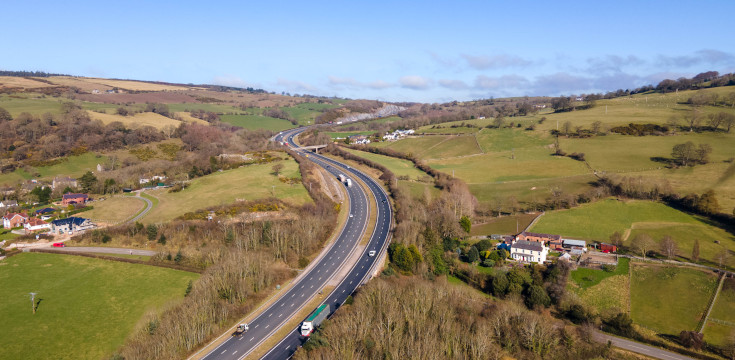
Wales on the Move VI: Wales on the Road

DronePics.Wales

Share on FacebookShare on TwitterShare on RedditShare on BlueskyShare by email

The first half of this series focused on general transport issues – not only those that need to be addressed under devolution but are key to managing transport after independence too.

These final five parts are what you’ve been waiting for. It’s time for specifics, including a look at some of the transport policies available to us after independence.

The first stop on that journey is roads and active travel.

5. Roads & Independence – Priorities for Change: Reducing Car Dependency

  • 1. What are some of the main issues?
  • 2. How do road networks in other countries compare to Wales?
  • 3. Roads & Independence: What could remain the same?
  • 4. Roads & Independence – Priorities for Change: Driving Standards & Road Safety
  • 5. Roads & Independence – Priorities for Change: Reducing Car Dependency
  • 6. Roads & Independence – Priorities for Change: Car Tax & Fuel Duty
  • 7. Road Project Shortlist: Post-Roads Review Version
  • 8. Road Project Shortlist: “F**k the Planet” Version
  • 9. Roads, Independence & Decarbonisation
Previous
Next
The carrot vs the stick.


The Carrot

Improved public transport: Most of this will be looked at in. “Improved” would cover reliability, price, convenience and route coverage. A long-term solution, but not cheap.
Wales on the Move VII: Wales on the Buses
Independence: Transport & Infrastructure

Wales on the Move VII: Wales on the Buses

by Owen Donovan
August 28, 2023
Wales on the Move VIII: Wales on the Rails
Independence: Transport & Infrastructure

Wales on the Move VIII: Wales on the Rails

by Owen Donovan
September 4, 2023

Consistent street design rules: As mentioned in Part III, while active travel infrastructure guidance is comprehensive, it’s not applied consistently and too few older streets are “retro-designed” to higher standards. You also have to properly balance the utility of a new bus lane or cycle route with the impact it has on the streets around it (i.e. removing trees or green spaces to build cycle lanes). We currently have the UK Department of Transport’s Manual for Streets (pdf) to guide this, but it still heavily leans towards prioritising cars.

Remote and home working: The Welsh Government has an open-ended target of 30% of workers regularly working at or near home. If this was approached as a transport issue too, then Transport for Wales and local authorities could back co-working spaces near public transport hubs as part of town centre regeneration efforts.

Improved cycle storage/parking and ancilliary facilities: It’s a case as to whether you can only do this based on demand or whether you induce demand by providing it. A cycle hub opened in Newport in November 2022 that could form the basis for similar projects elsewhere.

Half-carrot; half-stick

Higher density housing: Usually this means “building up”/apartment blocks but it also means a return to grid streets, or making better use of wasted space (i.e. building housing over car parks). Areas near public transport hubs are ideal. It may discourage car ownership but has to be offset by a commitment to provide accessible open space.

“There’s no such thing as bad weather, only a poor choice of clothes”: Considering we live in a country where it rains a lot, we’re remarkably unprepared for it. It’s probably one of the go-to excuses for not walking or cycling more regularly for short distances, as well as the school run. Public information can only go so far, though there are design considerations too (i.e. improved drainage, rain gardens, free or subsidised waterproof clothing for school children, tree planting to provide more shelter over pavements and footpaths).

Low traffic neighbourhoods: The new conspiracy theory of choice, but it shouldn’t be solely about blocking off rat runs. It’s more about rethinking how space is used to naturally reduce traffic and traffic speeds. That includes tree planting, sustainable draining, micro-parks and cycle/pedestrian priority.

The Stick

Charges and taxes: There’s a whole host of possible additional charges, levies and fees to encourage modal shift: a carbon tax, congestion charging, emissions charging, car parking space levies and possibly even council tax surcharges for driveways.

More use of one-way systems and speed tables: Self-explanatory, but would need to factor in the needs of the disabled (i.e. crossing points at the same level as the carriageway could be difficult for people with sight problems).

Residential parking permits as standard: Some drivers have the mistaken impression “car tax” pays for the roads when it’s a tax on vehicle emissions. So given the limited road space and increased road safety problems caused by multi-vehicle households and inconsiderate parking, it’s reasonable to ask residents to pay to access it. Bristol City Council’s system uses a car’s emissions ratings to set the price, though this could include things like a vehicle’s weight and size.

Targeted insurance uplifts/levies: A ban on multi-car insurance discounts, for example, could be relaxed if the cars are zero-emission or for other reasonable exemptions (i.e. disability, living in a rural postcode). Insurance prices could also be based on the weight of the vehicle and where its registered owner lives, with heavier and oversized vehicles in urban areas – which present a serious road safety risk – paying more.

Helping drivers (and other road users)

There are some situations where drivers and other road users are genuinely hard done by. Yes, really:

Keep free parking in certain circumstances: This could include park & rides, railway stations, hospitals & medical centres (perhaps time-limited for non-staff) and possibly town centres (on a case-by-case basis). There should be stronger protections for blue badge holders too.

Better regulation of private parking companies: There’s an existing code of practice, backed by the law, but there are questions as to whether it goes far enough. In A Welsh Judiciary I suggested a Traffic & Transport Tribunal (a successor to the existing Traffic Penalty Tribunal) to hear appeals against lower level summary traffic offences (like parking fines). There’s also an argument that only public authorities and agencies should be allowed to run car parks used by the public.

No mandatory helmets for cyclists: It’s a good idea to wear one, regardless. But the lower down the “traffic hierarchy” you are, the fewer restrictions there should be. Given their powerful acceleration, e-bikes might be a worthwhile exception.

Legalise/legitimise e-scooters for use on public roads: This is probably going to happen at some point anyway.

Should low-powered motorbikes and scooters be allowed to use cycle lanes?: It’s allowed in certain circumstances in the Netherlands, but understandably there would be safety concerns – particularly for pedestrians on shared-surface tracks. I’m thinking more of fully segregated cycle lanes.

5. Roads & Independence – Priorities for Change: Reducing Car Dependency

  • 1. What are some of the main issues?
  • 2. How do road networks in other countries compare to Wales?
  • 3. Roads & Independence: What could remain the same?
  • 4. Roads & Independence – Priorities for Change: Driving Standards & Road Safety
  • 5. Roads & Independence – Priorities for Change: Reducing Car Dependency
  • 6. Roads & Independence – Priorities for Change: Car Tax & Fuel Duty
  • 7. Road Project Shortlist: Post-Roads Review Version
  • 8. Road Project Shortlist: “F**k the Planet” Version
  • 9. Roads, Independence & Decarbonisation
Previous
Next
Tags: Active TravelAir Quality & PollutionCivil ServiceClimate & Climate ChangeDenmarkDisabilityFranceIcelandIndependenceIrelandJudicial SystemNetherlandsNew ZealandNorwayPublic SectorRoad SafetyRoad TransportScotlandSwitzerlandTaxWelsh GovernmentWelsh Law
Previous Post

Wales on the Move V: Wales’ Missing Connections

Next Post

Wales on the Move VII: Wales on the Buses

Owen Donovan

Owen Donovan

Archive

Categories

Copyright

Creative Commons Licence

State of Wales by Owen Donovan is licensed under a Creative Commons Attribution-NonCommercial-NoDerivatives 4.0 International License.

Subscribe by Email

Search

No Result
View All Result
No Result
View All Result
  • Go To Senedd Home
  • Go To Oggy Bloggy Ogwr
  • About & Contact
    • About State of Wales
    • Comments Policy
    • Complaints Policy
    • Contact & Subscribe by Email
    • Disclaimer
  • Features
    • After the UK
    • Chinny Reckon
    • Devil’s Advocate
    • How Wales Works
    • Road to Brexit
  • The Independence Index
    • The Independence Index (full)
    • Economics & Money
      • Business & Economy
      • Currency
      • Tax & Spending
      • Transport & Infrastructure
    • Society
      • Communities & Housing
      • Culture & Sport
      • Education
      • Health
      • Media & Communications
      • Science & Technology
    • The State
      • Environment & Natural Resources
      • Justice
      • Local Government
  • Elections Centre
  • Wales FAQ
    • How is Wales funded?
    • How are laws in Wales made?
  • Support & Donate