


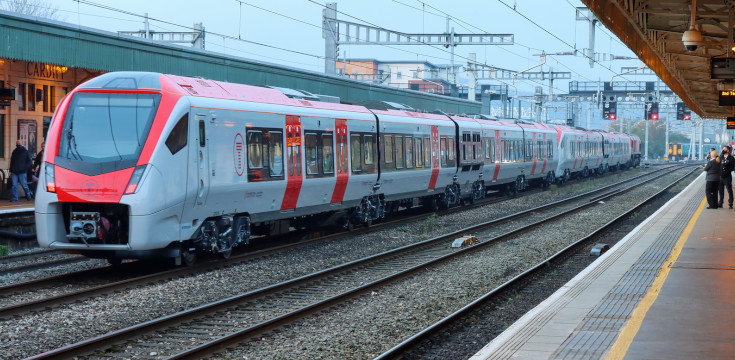
Now, onto what I’m expecting to be the most popular post in this series: the rail network.
This was a nightmare to write to the point that I considered packing it in halfway through. Constructive criticism is welcome but keep that in mind.

The main thing to note is that rail infrastructure (tracks, signals etc.) is publicly owned pretty much everywhere – even in Wales and the rest of the UK, despite privatisation.
The main differences arise with rail services. Public ownership (whether that’s through arms-length companies, regional transport authorities or local/regional government) seems to be the main model for delivery.
In some countries (like Ireland) there may be a state-backed monopoly with no private rail operators. In others, a public provider might be dominant with other services provided by private companies (including Wales). There are very few examples anywhere in the world where all passenger services are provided privately.
Rail freight is mixed. It leans more towards private/commercial operation than passenger rail. Nonetheless, there are examples of publicly owned monopolies (Ireland and New Zealand), as well as commercial railfreight arms of publicly-owned operators (SBB Cargo in Switzerland).
Rail freight often appears to be more financially lucrative than passenger services, generating sizable profit margins in Switzerland and New Zealand. Freight services are proportionally under-developed in Ireland, with Wales performing OK in terms of tonne-kilometres (with room for improvement).
Wales and Ireland notably lag when it comes to electrification. The Irish Government recently published a €37billion plan for rail investment until 2050 which will include extended electrified lines beyond the Dublin commuter network.
The proportion of electrified rail routes in Wales will increase as part of the South Wales Metro, though once that’s completed it’ll fall short of Scotland and would only just be ahead of New Zealand.


