


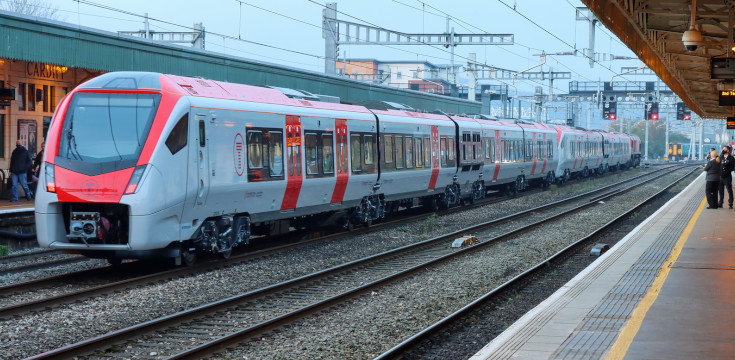
Now, onto what I’m expecting to be the most popular post in this series: the rail network.
This was a nightmare to write to the point that I considered packing it in halfway through. Constructive criticism is welcome but keep that in mind.

The above two are based on plans that are already in place, or where the track is still there and used (i.e. freight-only branch line) and could be reopened to passengers.
Some of this will have been costed by various consultants and alike; some of it won’t have been.
Now for completely new lines.
I’ve put most of the commentary on the graphics alongside a rough cost estimate. This is to give you an idea of how expensive these projects are – though the figures are likely to be an overestimate (I’ve done that deliberately because I don’t want to be accused of presenting pie-in-the-sky numbers).
The cost of the track is based on the capital cost-per-route-km of the £117million Levenmouth branch reopening scheme in Scotland (£12.4million-per-km).
Station costs have been working out using the mean capital cost of three recently-opened stations: Portway Parkway in Bristol, Bow Street in Ceredigion and Inverness Airport station.
A 20% allowance for contingencies has been added, with the final figure rounded up to the nearest five million pounds.


Some railways can’t be reinstated. That’s either because too much has been built over the former route, the engineering requirements massively outweigh the possible benefits, or alternatives (like Bus Rapid Transit or BRT lite – Part VII) would be just as effective if not more so.
This likely includes Porthcawl, Blackwood (and cross-valley from Quaker’s Yard to Pontypool), the former Carmarthen–Llandeilo branch and the Brecon-Merthyr line.
Which ones are more realistic?
My estimate of the total capital cost of all of the above proposals for brand new lines is at least £4.8billion (conveniently, with regard to the HS2 row). Most of them would likely fail a cost-benefit analysis (Part V). Though of the ten proposals, in my opinion the most “realistic”/quick win ones are the Mold branch line, Gorsenion spur, Caerphilly-Newport and possibly Bangor-Caernarfon (if a decent route can be found). That’s mainly because they provide flexibility to the current rail network by offering additional paths between lines, tie in with local metro proposals and link high population areas.
The same could be said regardling flexibility with the Mid Wales Line, but that would probably provide very poor value for money. Meanwhile, reopening the Gobowen-Welshpool branch would require close cross-border cooperation which might not be forthcoming.
Building a new railway adds to ongoing maintenance costs, as well as the costs to deliver a passenger service (capital and running costs of new trains etc.).
Network Rail spent £105,000 per route km on maintenance and track renewals in Wales as of 2020-2111. If all of the above proposals were built – totalling 296km – then it would add at least £31million (at 2020-21 prices) to the annual running costs of the railway.
11. Office of Rail & Road (30th July 2021). “Cost benchmarking of Network Rail’s maintenence and renewals expenditure” (p16-19). Available at: https://www.orr.gov.uk/sites/default/files/2021-07/cost-benchmarking-of-network-rail-annual-report-year-2-of-cp6.pdf

