Senedd Home
Oggy Bloggy Ogwr
State of Wales
Monday, August 17, 2026
  • About & Contact
    • About State of Wales
    • Comments Policy
    • Complaints Policy
    • Contact
    • Disclaimer
  • Elections Centre
  • The Independence Index
    • The Independence Index (Full)
    • Foreign Policy
      • Relations with the former UK & Ireland
      • Relations with Europe
      • Foreign Policy (General)
      • International Organisations & Law
      • Overseas Aid
    • Defence
      • Defence Policy
      • NATO
      • Armed Forces
      • National Security
      • Civil Defence
    • Rules & Regulations
      • Safety & Standards
      • Intellectual Property
    • Economics & Money
      • Business & Economy
      • Currency
      • Tax & Spending
      • Transport & Infrastructure
    • Society
      • Communities & Housing
      • Culture & Sport
      • Education
      • Health
      • Media & Communications
      • Science & Technology
    • The State
      • Environment & Natural Resources
      • Justice
      • Local Government
  • Support & Donate
No Result
View All Result
  • About & Contact
    • About State of Wales
    • Comments Policy
    • Complaints Policy
    • Contact
    • Disclaimer
  • Elections Centre
  • The Independence Index
    • The Independence Index (Full)
    • Foreign Policy
      • Relations with the former UK & Ireland
      • Relations with Europe
      • Foreign Policy (General)
      • International Organisations & Law
      • Overseas Aid
    • Defence
      • Defence Policy
      • NATO
      • Armed Forces
      • National Security
      • Civil Defence
    • Rules & Regulations
      • Safety & Standards
      • Intellectual Property
    • Economics & Money
      • Business & Economy
      • Currency
      • Tax & Spending
      • Transport & Infrastructure
    • Society
      • Communities & Housing
      • Culture & Sport
      • Education
      • Health
      • Media & Communications
      • Science & Technology
    • The State
      • Environment & Natural Resources
      • Justice
      • Local Government
  • Support & Donate
No Result
View All Result
State of Wales
No Result
View All Result
Home Independence: Transport & Infrastructure

Wales on the Move VIII: Wales on the Rails

Rail is the focus for a lot of current transport investment in Wales, but is it always the answer?

Owen Donovan by Owen Donovan
September 4, 2023
in Independence: Transport & Infrastructure, Transport & Infrastructure
Wales on the Move VIII: Wales on the Rails

Jeremy Segrott under Creative Commons Licence BY-SA-2.0

Share on FacebookShare on TwitterShare on RedditShare on BlueskyShare by email

Now, onto what I’m expecting to be the most popular post in this series: the rail network.

This was a nightmare to write to the point that I considered packing it in halfway through. Constructive criticism is welcome but keep that in mind.

7. Light Rail: Is it worth it?

  • 1. What are the main issues?
  • 2. How are railways run in other countries?
  • 3. Rail, Devolution & Independence: What could stay the same?
  • 4. Rail, Devolution & Independence: Policy Changes
  • 5. Rail, Devolution & Independence: Enhancing the existing rail network
  • 6. Rail, Devolution & Independence: New railway lines
  • 7. Light Rail: Is it worth it?
  • 8. Rail & Decarbonisation
Previous
Next

Previous sections have been focused on heavy rail, so what about light rail?

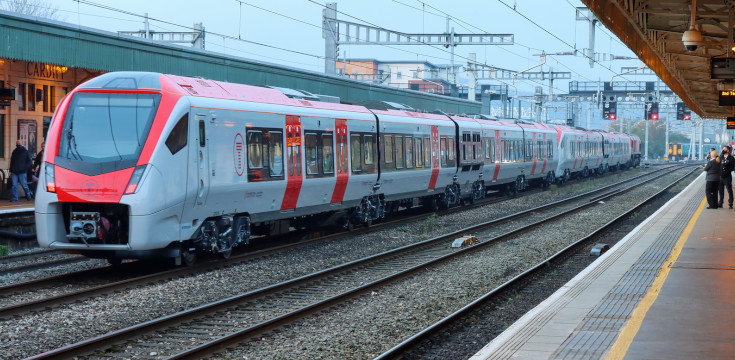
Great Orme tram aside, some aspects of the South Wales Metro are light rail – namely the introduction of Class 398 tram-trains – which will enable on-street running. The first section is set to be between Cardiff Central and Cardiff Bay.

Click to enlarge, best viewed in a new window/tab


Light rail isn’t the solution to everything. Certainly, it works where the track is easy to covert or where you can extend lines on-street into inner city areas and town centres.

The proposal from Prof. Mark Barry for a Cardiff Crossrail under the South Wales Metro would, in itself, be a light rail line in principle. As would a circle line running in a loop around the current City and Coryton branches.

Much like full Bus Rapid Transit (Part VII), there are only a few places in Wales that have enough road space for a decent light rail network.

Would narrow gauge lines be better than light rail in some cases?

Narrow gauge could provide additional flexibility in difficult terrains, making reopening Carmarthen-Aberystwyth, for example, a more realistic option. (Pic: pxfuel.com, copyright free)


When you think “narrow gauge” what would probably immediately come to mind are heritage steam railways like the Snowdon Mountain Railway, Brecon Mountain Railways and Welsh Highland Railway.

Narrow gauge is a fully integrated part of the rail networks in Switzerland, Japan, parts of Australia (particularly Queensland) and New Zealand. They use modern trains running to standard timetables and aren’t aimed at tourists.

One of the benefits of a “heavy duty” narrow gauge is it works very well where there are steep gradients or the route is winding due to hills, rivers etc. Also relevant is the requirement for specific types of trains, meaning the maintenance, signalling, depots etc. would need to be located close to the route.

With independence, Wales could change regulations concerning narrow gauge. For example, level crossings could still be allowed, track clearance requirements could be relaxed, on-street running could be allowed, while electrification equipment (like catenaries) could be more basic and lightweight than those used on heavy rail.

This would make narrow gauge a practical choice for rural lines that are difficult to reopen as a standard gauge railway (i.e. Aberystwyth-Carmarthen). Also, narrow gauge conversion could make an existing rural rail line more efficient (i.e. making it easier to build passing loops to allow more frequent services as the track takes up less room).

There are downsides too.

Regauging a railway and putting in the new infrastructure would likely require its complete closure for months, if not a year or two. Narrow gauge railways usually run at lower speeds (though on some rural routes, trains don’t reach high speeds anyway); everything would need to be custom built; passengers would need to change at each end of the line to connect with standard gauge service; standard gauge trains would no longer be able to run.


Click to enlarge, best viewed in a new window/tab


7. Light Rail: Is it worth it?

  • 1. What are the main issues?
  • 2. How are railways run in other countries?
  • 3. Rail, Devolution & Independence: What could stay the same?
  • 4. Rail, Devolution & Independence: Policy Changes
  • 5. Rail, Devolution & Independence: Enhancing the existing rail network
  • 6. Rail, Devolution & Independence: New railway lines
  • 7. Light Rail: Is it worth it?
  • 8. Rail & Decarbonisation
Previous
Next
Tags: Bus ServicesCivil ServiceClimate & Climate ChangeCorporate Joint Committees & City RegionsDenmarkEnglandGermanyIndependenceIrelandNationalisationNew ZealandPrivatisationProperty & ConstructionPublic SectorRail TransportRoad TransportScotlandSwitzerlandTourismTradeUK GovernmentWelsh Government
Previous Post

Wales on the Move VII: Wales on the Buses

Next Post

Wales on the Move IX: Wales on the Water

Owen Donovan

Owen Donovan

Archive

Categories

Copyright

Creative Commons Licence

State of Wales by Owen Donovan is licensed under a Creative Commons Attribution-NonCommercial-NoDerivatives 4.0 International License.

Subscribe by Email

Search

No Result
View All Result
No Result
View All Result
  • Go To Senedd Home
  • Go To Oggy Bloggy Ogwr
  • About & Contact
    • About State of Wales
    • Comments Policy
    • Complaints Policy
    • Contact & Subscribe by Email
    • Disclaimer
  • Features
    • After the UK
    • Chinny Reckon
    • Devil’s Advocate
    • How Wales Works
    • Road to Brexit
  • The Independence Index
    • The Independence Index (full)
    • Economics & Money
      • Business & Economy
      • Currency
      • Tax & Spending
      • Transport & Infrastructure
    • Society
      • Communities & Housing
      • Culture & Sport
      • Education
      • Health
      • Media & Communications
      • Science & Technology
    • The State
      • Environment & Natural Resources
      • Justice
      • Local Government
  • Elections Centre
  • Wales FAQ
    • How is Wales funded?
    • How are laws in Wales made?
  • Support & Donate