Senedd Home
Oggy Bloggy Ogwr
State of Wales
Monday, August 17, 2026
  • About & Contact
    • About State of Wales
    • Comments Policy
    • Complaints Policy
    • Contact
    • Disclaimer
  • Elections Centre
  • The Independence Index
    • The Independence Index (Full)
    • Foreign Policy
      • Relations with the former UK & Ireland
      • Relations with Europe
      • Foreign Policy (General)
      • International Organisations & Law
      • Overseas Aid
    • Defence
      • Defence Policy
      • NATO
      • Armed Forces
      • National Security
      • Civil Defence
    • Rules & Regulations
      • Safety & Standards
      • Intellectual Property
    • Economics & Money
      • Business & Economy
      • Currency
      • Tax & Spending
      • Transport & Infrastructure
    • Society
      • Communities & Housing
      • Culture & Sport
      • Education
      • Health
      • Media & Communications
      • Science & Technology
    • The State
      • Environment & Natural Resources
      • Justice
      • Local Government
  • Support & Donate
No Result
View All Result
  • About & Contact
    • About State of Wales
    • Comments Policy
    • Complaints Policy
    • Contact
    • Disclaimer
  • Elections Centre
  • The Independence Index
    • The Independence Index (Full)
    • Foreign Policy
      • Relations with the former UK & Ireland
      • Relations with Europe
      • Foreign Policy (General)
      • International Organisations & Law
      • Overseas Aid
    • Defence
      • Defence Policy
      • NATO
      • Armed Forces
      • National Security
      • Civil Defence
    • Rules & Regulations
      • Safety & Standards
      • Intellectual Property
    • Economics & Money
      • Business & Economy
      • Currency
      • Tax & Spending
      • Transport & Infrastructure
    • Society
      • Communities & Housing
      • Culture & Sport
      • Education
      • Health
      • Media & Communications
      • Science & Technology
    • The State
      • Environment & Natural Resources
      • Justice
      • Local Government
  • Support & Donate
No Result
View All Result
State of Wales
No Result
View All Result
Home Independence: Transport & Infrastructure

Wales on the Move VIII: Wales on the Rails

Rail is the focus for a lot of current transport investment in Wales, but is it always the answer?

Owen Donovan by Owen Donovan
September 4, 2023
in Independence: Transport & Infrastructure, Transport & Infrastructure
Wales on the Move VIII: Wales on the Rails

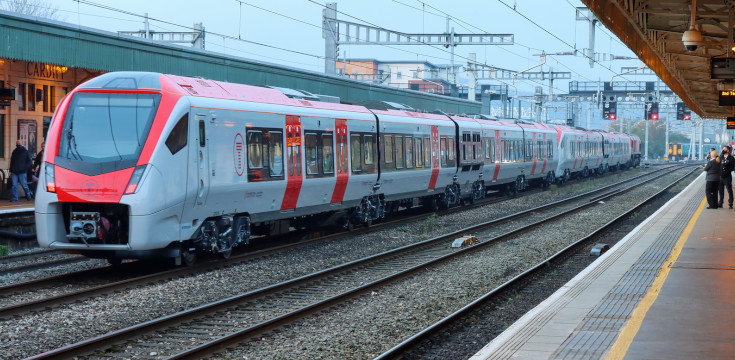
Jeremy Segrott under Creative Commons Licence BY-SA-2.0

Share on FacebookShare on TwitterShare on RedditShare on BlueskyShare by email

Now, onto what I’m expecting to be the most popular post in this series: the rail network.

This was a nightmare to write to the point that I considered packing it in halfway through. Constructive criticism is welcome but keep that in mind.

5. Rail, Devolution & Independence: Enhancing the existing rail network

  • 1. What are the main issues?
  • 2. How are railways run in other countries?
  • 3. Rail, Devolution & Independence: What could stay the same?
  • 4. Rail, Devolution & Independence: Policy Changes
  • 5. Rail, Devolution & Independence: Enhancing the existing rail network
  • 6. Rail, Devolution & Independence: New railway lines
  • 7. Light Rail: Is it worth it?
  • 8. Rail & Decarbonisation
Previous
Next

I’m going to let the graphics do most of the work here.

The “core” heavy rail network providing longer-distance intercity services would be:

  • South Wales mainline (Severn Tunnel – Haverfordwest).
  • Marches line (Newport – Chester).
  • Gloucester – Newport line.
  • Cambrian line (Shrewsbury – Aberystwyth).
  • North Wales mainline (Chester – Holyhead).

These would have the most frequent rail services travelling at higher speeds, aiming for a passenger train at least every 10-15 minutes in each direction in urban areas and a half-hourly service in rural areas. This could be made up of a mix of the current hourly and two-hourly cross-border services and short-running regional stopping services.

Together with this, you have the three regional metros based on a mix of rail, tram-trains and limited-stop bus services/BRT lite (Part VII). These would offer the highest frequencies and would be aimed at regional commuters.

  • South Wales Metro.
  • Swansea Bay Metro.
  • North Wales Metro.

Everything else would consist of local and regional branch lines. There ought to be an aim for a minimum hourly passenger service on all regional branch lines (through short-running and passing loops).

There would need to be an ongoing series of enhancements similar to Network Rail’s control periods, aimed at:

  • Routine track renewal and modernisation of signals and communications equipment.
  • Increasing line speeds to cut journey times (where possible).
  • A rolling programme of accessibility improvements for disabled passengers.
  • Improving station facilities (i.e. toilets at metro stations) and integration with buses.
  • Removing the most dangerous or problematic level crossings.
  • Upgrading junctions to enable higher speeds and to allow more bay platforms to be constructed or brought back for increased short-running regional services along branch lines (i.e. Whitland, Carmarthen, Bridgend-Vale of Glamorgan, Llandudno Junction, Bangor).

The amount spent on this kind of work in Wales by Network Rail was £571million during 2021-2210. That gives you a ballpark figure.

Click to enlarge, best viewed in a new tab/window


The first map are the stations that are either already in the pipeline or form part of immediate medium-term proposals by the Welsh Government, senior transport experts like Prof. Mark Barry and Prof. Stuart Cole, Transport for Wales or the Corporate Joint Committees/Regional Transport Authorities.

The second map is more of a long list of where a station could be opened in the longer term (but with no set plan).

I’m not suggesting all of these need to be built. As it costs between £8-10million (or more) for a basic one or two platform station, they’re not something you should build without proven need. There are all sorts of processes used to determine that (WelTag, cost-benefit analysis etc.).

For example, if there was a limited stop bus service running between Grange Hospital and Abercynon (Part VII) then the case for building a bus-rail interchange station at Crumlin (where the two routes would likely cross each other) is stronger.

10. Office of Rail & Road (29th November 2022). “Rail industry finances for the latest financial year by country and Network Rail region, Great Britain, annual data, April 2021 to March 2022”. Available at: https://dataportal.orr.gov.uk/statistics/finance/rail-industry-finance/

5. Rail, Devolution & Independence: Enhancing the existing rail network

  • 1. What are the main issues?
  • 2. How are railways run in other countries?
  • 3. Rail, Devolution & Independence: What could stay the same?
  • 4. Rail, Devolution & Independence: Policy Changes
  • 5. Rail, Devolution & Independence: Enhancing the existing rail network
  • 6. Rail, Devolution & Independence: New railway lines
  • 7. Light Rail: Is it worth it?
  • 8. Rail & Decarbonisation
Previous
Next
Tags: Bus ServicesCivil ServiceClimate & Climate ChangeCorporate Joint Committees & City RegionsDenmarkEnglandGermanyIndependenceIrelandNationalisationNew ZealandPrivatisationProperty & ConstructionPublic SectorRail TransportRoad TransportScotlandSwitzerlandTourismTradeUK GovernmentWelsh Government
Previous Post

Wales on the Move VII: Wales on the Buses

Next Post

Wales on the Move IX: Wales on the Water

Owen Donovan

Owen Donovan

Archive

Categories

Copyright

Creative Commons Licence

State of Wales by Owen Donovan is licensed under a Creative Commons Attribution-NonCommercial-NoDerivatives 4.0 International License.

Subscribe by Email

Search

No Result
View All Result
No Result
View All Result
  • Go To Senedd Home
  • Go To Oggy Bloggy Ogwr
  • About & Contact
    • About State of Wales
    • Comments Policy
    • Complaints Policy
    • Contact & Subscribe by Email
    • Disclaimer
  • Features
    • After the UK
    • Chinny Reckon
    • Devil’s Advocate
    • How Wales Works
    • Road to Brexit
  • The Independence Index
    • The Independence Index (full)
    • Economics & Money
      • Business & Economy
      • Currency
      • Tax & Spending
      • Transport & Infrastructure
    • Society
      • Communities & Housing
      • Culture & Sport
      • Education
      • Health
      • Media & Communications
      • Science & Technology
    • The State
      • Environment & Natural Resources
      • Justice
      • Local Government
  • Elections Centre
  • Wales FAQ
    • How is Wales funded?
    • How are laws in Wales made?
  • Support & Donate