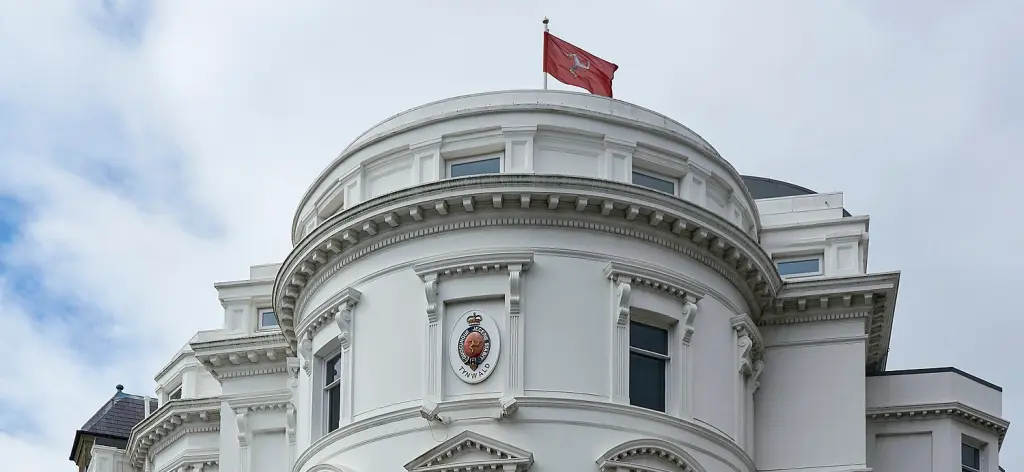
Image Source: Virtual-Pano under Creative Commons Licence BY-SA-4.0
Donations keep this site going. If you like what I’m doing here and think this work is important to the independence movement, consider a donation. One-off or monthly; as little or as much as you want. Click the links below, or full details are available here.
What Happens Now?
There are currently three Crown Dependencies and fourteen British Overseas Territories, which are separate from the UK but are run by the UK Government in certain ways.
The Crown Dependencies are self-governing and the larger British Overseas Territories (Gibraltar, Bermuda etc.) largely look after their own affairs too.
Guernsey, Jersey and the Isle of Man are part of the Common Travel Area – meaning they have free movement with the UK and Ireland. They also take part in the British-Irish Council.
Citizens of the British Overseas Territories have a separate category of citizenship following the passing of a law in 20021. Anyone holding British Overseas Territory citizenship (BOTC) before the Act became law automatically became a British citizen with the associated rights and privileges.
The UK is obligated under the UN Charter2 to provide aid and assistance to its non-self-governing territories.
Does This Work for Wales?
There are disputes over the sovereignty/”ownership” of certain British Overseas Territories. These include disputes with Spain over Gibraltar, as well as the 1982 Falklands War – where there were a significant number of soldiers from Wales killed in action.
Some of the smaller British Overseas Territories are important because they’re located in places that make them useful as staging posts. The British Antarctic Territory is an important research area too.
Wales’ proportional contribution to the UK’s annual aid to the British Overseas Territories is around £4 million3.
Welsh Independence & The Overseas Territories: Pros & Cons
Having access to British Overseas Territories – as a parent country – may be useful for aid and rescue missions after independence.
There’s shouldn’t be any issues around the status of nationals of the Crown Dependencies (Isle of Man, Channel Islands) due to the Common Travel Area.
The British Antarctic Territories are important for climate research and it would be beneficial for Welsh universities to have access to them.
Maintaining ties with the Falkland Islands will be important for Welsh Falklands War veterans and the families and friends of those killed in action.
The status of British Overseas Territory Citizens living in Wales (if any do) would need clarification. It’s complicated.
We could be a party to international disputes over the sovereignty/ownership of British Overseas Territories.
We might end up voiding UK agreements over issues such as offshore tax avoidance (which has been an issue with some British Overseas Territories). We might need to seek agreements ourselves, which would take time.
We would have to contribute (financially and personnel-wise) to the defence and upkeep of military facilities in places like the Falkland Islands and Cyprus if we want to maintain ties and access as a “parent country”.
What Do Other Countries Do?
![]()
Greenland and the Faroe Islands are self-governing territories, similar in status to the Crown Dependencies. There are movements supporting independence for both.
![]()
France considers some of its overseas territories to be part of France proper, while others have a partially self-governing status similar to British Overseas Territories.
![]()
Svalbard and Jan Mayen have a special status where they are considered part of Norway and Norwegian law applies. In the case of Svalbard, it’s governed by a treaty which grants the citizens of countries that signed it the right to move and work there visa-free.
![]()
The Cook Islands and Niue are in a free association with New Zealand. This means New Zealand can act in certain areas (such as defence) when the governments of the territories request they do so. Other than that, they’re self-governing. Cook Islanders and Niueans are considered New Zealand citizens. Tokelau is a dependency, while New Zealand also has defence agreements with Samoa and Kiribati.
What Options Does Wales Have?
The Crown Dependencies (Isle of Man, Channel Islands) are unlikely to be affected either way as they are self-governing and take part in the British-Irish Council in their own right.
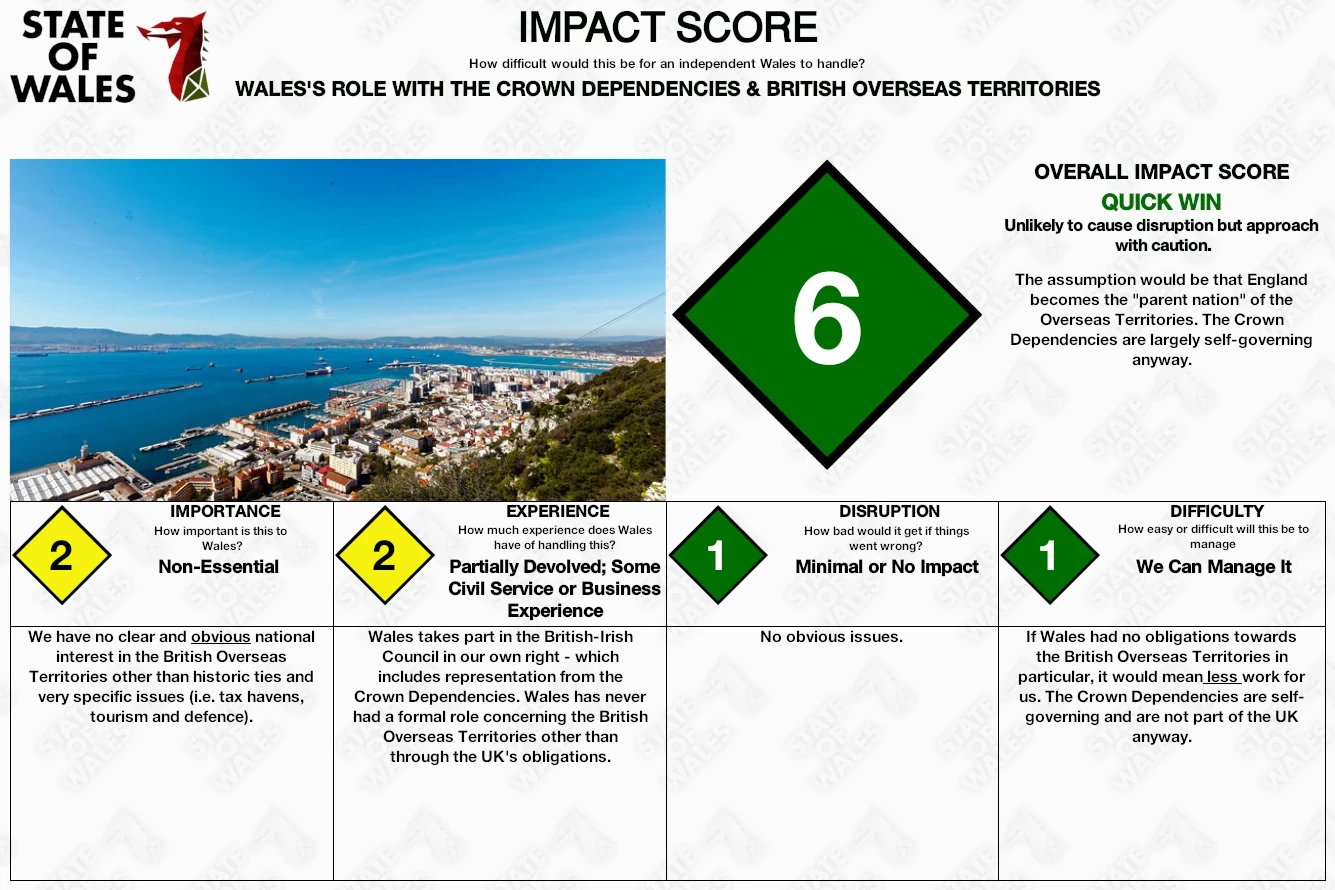
The most likely outcome is that England – as the successor state to the UK – takes over the UK’s responsibilities towards the British Overseas Territories. In doing so, Wales would waive any right to access or association with overseas territories.
British Overseas Territory Citizenship would, therefore, likely change to “English Overseas Territory Citizenship”. If an independent Wales joined the Commonwealth, then people with this status would count as Commonwealth citizens.
What's at Stake?
The overall score (out of 20) is the total of the scores for the four mini-categories (out of 5 each).
How Would This Be Run?
Responsibility for defence and foreign affairs would pass to the English Government as the UK’s “successor state”. The Crown Dependencies would still enjoy rights in Wales under the Common Travel Area.
Responsibility would lie with the English Government (as successor state to the UK).
How Much Will This Cost?
Headline: No direct costs, but could save an independent Wales £4 million a year3.
That’s the proportional saving if Wales gave up our responsibilities towards the Overseas Territories under the UN Charter. That gives you an idea of how much it would cost Wales to retain a role or access with them.
There would be an indirect cost if an independent Wales had to contribute towards the defence of the Overseas Territories or to help out following a natural disaster.
Would any new taxes need to be introduced?
No.
Who will pay for this?
Not applicable, though indirect spending would come out of general government spending (all taxpayers).
How Long Would This Take?
Wales’ role (if any) with the British Overseas Territories would be a minor part of independence negotiations.
People & Work
According to the 2021 Census4, there were 173 people resident in Wales who identified as being from either Guernsey, Jersey or Isle of Man, and the vast majority of these (89%) identified as Manx.
There are seemingly no figures for the British Overseas Territories (which includes Gibraltar).
Not really. The Welsh jobs market is already open to citizens of the Crown Dependencies through the Common Travel Area. “English Overseas Territories Citizens” may have certain rights and benefits as Commonwealth citizens too.
You Might Also Like....
British Overseas Territories Act 2002.
UN Charter, Chapter XI, Article 73.
UK House of Commons Research Briefing (22nd March 2023). “UK aid and the Overseas Territories” (p10). Calculated as a Welsh population-based share (5%) of the £80 million budget for 2022-23.
Office of National Statistics, Census 2021 (29th November 2022).“National identity (detailed)”.
No AI tools were used to draft this post.