Senedd Home
Oggy Bloggy Ogwr
State of Wales
Sunday, August 16, 2026
  • About & Contact
    • About State of Wales
    • Comments Policy
    • Complaints Policy
    • Contact
    • Disclaimer
  • Elections Centre
  • The Independence Index
    • The Independence Index (Full)
    • Foreign Policy
      • Relations with the former UK & Ireland
      • Relations with Europe
      • Foreign Policy (General)
      • International Organisations & Law
      • Overseas Aid
    • Defence
      • Defence Policy
      • NATO
      • Armed Forces
      • National Security
      • Civil Defence
    • Rules & Regulations
      • Safety & Standards
      • Intellectual Property
    • Economics & Money
      • Business & Economy
      • Currency
      • Tax & Spending
      • Transport & Infrastructure
    • Society
      • Communities & Housing
      • Culture & Sport
      • Education
      • Health
      • Media & Communications
      • Science & Technology
    • The State
      • Environment & Natural Resources
      • Justice
      • Local Government
  • Support & Donate
No Result
View All Result
  • About & Contact
    • About State of Wales
    • Comments Policy
    • Complaints Policy
    • Contact
    • Disclaimer
  • Elections Centre
  • The Independence Index
    • The Independence Index (Full)
    • Foreign Policy
      • Relations with the former UK & Ireland
      • Relations with Europe
      • Foreign Policy (General)
      • International Organisations & Law
      • Overseas Aid
    • Defence
      • Defence Policy
      • NATO
      • Armed Forces
      • National Security
      • Civil Defence
    • Rules & Regulations
      • Safety & Standards
      • Intellectual Property
    • Economics & Money
      • Business & Economy
      • Currency
      • Tax & Spending
      • Transport & Infrastructure
    • Society
      • Communities & Housing
      • Culture & Sport
      • Education
      • Health
      • Media & Communications
      • Science & Technology
    • The State
      • Environment & Natural Resources
      • Justice
      • Local Government
  • Support & Donate
No Result
View All Result
State of Wales
No Result
View All Result
Home Defence

What would an independent Wales’ defence budget and equivalent of the MoD be?

Potential for a big cash saving? It depends.

Owen Donovan by Owen Donovan
September 30, 2025
in Defence, Defence Policy
If an independent Wales joined the EU, what would that mean for Welsh defence policy?

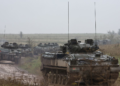
Defence Imagery via Flickr under Creative Commons Licence BY-NC-ND-2.0

Share on FacebookShare on TwitterShare on RedditShare on BlueskyShare by email

Image Source: Defence Imagery via Flickr under Creative Commons Licence BY-NC-ND-2.0

This site is best viewed in landscape mode on smartphones.
Support IndyWales? Support State of Wales!

Donations keep this site going. If you like what I’m doing here and think this work is important to the independence movement, consider a donation. One-off or monthly; as little or as much as you want. Click the links below, or full details are available here.

What Happens Now?

Defence isn’t devolved. Defence policy is decided and set by the UK Government. Political responsibility for defence lies with the UK’s Secretary of State for Defence, who heads the UK’s Ministry of Defence (MoD).

Political responsibility for national security – which includes things like intelligence gathering and counter-terrorism – is divided between a mix of the MoD, the UK’s Foreign Office, the UK’s Home Office and a special UK Cabinet committee (National Security Council).

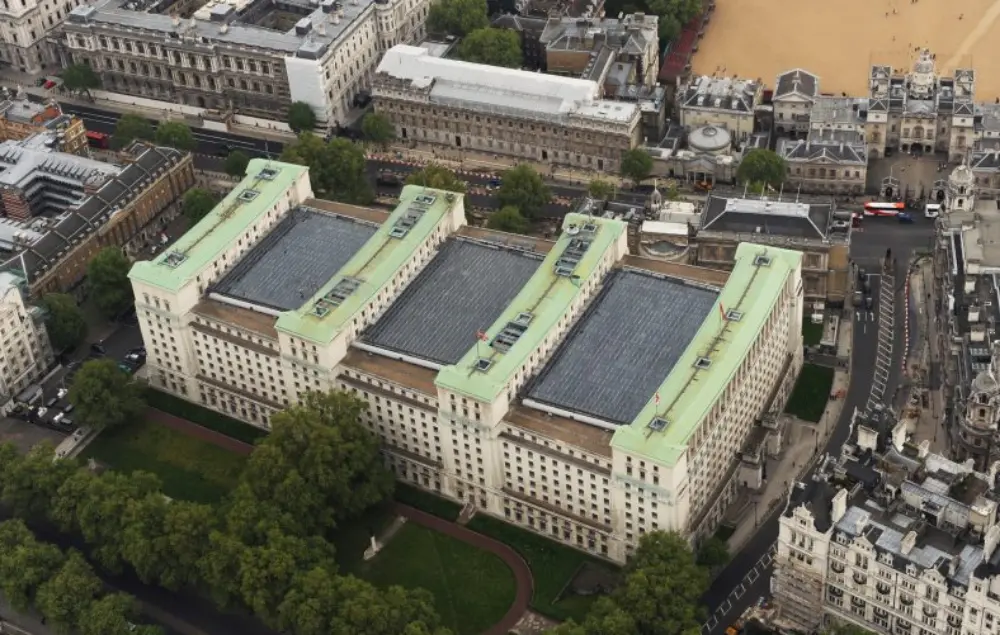
The MoD – headquartered at Whitehall in London – is politically responsible for1:

  • Protecting the UK, the Crown Dependencies and Overseas Territories.
  • Countering threats from state/government and non-state actors (as part of a broader national security role).
  • Promoting the UK’s national interests globally.
  • Contributing to the UK national resilience, economy and industry.

These goals are broadly in line with the core and enabling roles of the UK’s Armed Forces, as set out in the latest Strategic Defence Review.

Does This Work for Wales?

As a UK Government department, the MoD has a limited presence in Wales (if at all). The military itself has a bit more of a presence, obviously. But that’s just like the police having more of a presence in Wales than the UK Home Office.

As an investor (i.e. procurement), there’s more of an impact2. As stated previously, in 2021-22, defence procurement spending in Wales was worth £744 million, supporting up to 5,400 jobs in the wider supply chain. Even then, the amount spent per head in Wales (£240) was less than the UK average (£310) at the time.

So, looking at Wales in isolation, you can make a strong argument that we’re not getting value for money from the proportional £2.84 billion “Welsh share” of UK defence spending as of 2023-243. 

IndyWales: Defence Department & Spending - Pros & Cons

Pros of Independence
Cons of Independence
Pros of Independence

We can set our defence priorities and budgets based on our own foreign policy and national security goals. We won’t have those priorities decided for us anymore (including things like NATO membership or renewal of nuclear weapons).

As with foreign affairs, Wales would have to establish a defence department (or equivalent) within the Welsh Government, likely creating new jobs at home that are currently based in London.

Holding the position of defence minister (or equivalent) would be another way to provide government experience to anyone hoping to lead the Welsh Government.

Instead of having a small proportion of Welsh members of the armed forces based all around the UK and abroad (under 2.5% of the British Army are stationed, or set to be stationed, in Wales), 100% of the Welsh armed forces would be based here (unless on deployment). This could provide an economic boost to local communities, particularly rural areas, if there are more permanent residents.

Wales would have control over immovable military assets in Wales, including training grounds, training operations and military bases.

We would have the option of not having a traditional military and focusing on a civil force (with military-style training) tasked with civil defence, national security and search & rescue – saving a significant sum of money.

There’s an opportunity to support more local businesses in terms of defence procurement and service contracts – not just military equipment, but food/supplies and support services.

There would be an element of “creative destruction” if the UK military split into three of four separate armed forces, as there would be three/four sets of procurement and recruitment opportunities.

Cons of Independence

Wales would no longer benefit from the UK’s international “clout” in hard power terms. Although it ought to be straightforward to agree, at the very least, a basic military/mutual assistance pact across GB & Ireland, we would be on our own in most cases.

It may take up to a decade for Wales to have a military capable of deployment overseas for potential combat. There would need to be an interim/stopgap plan to ensure home defence is properly covered.

Wales may lack politicians with the necessary mix of experience and skill to serve as a defence minister.

Defence procurement – which will be looked at separately – is often difficult and expensive based on the UK’s troubled track record4. We complain about even small amounts of money being “wasted” in Wales, so if we wasted the kind of money the MoD has over the last few decades, it would cause serious political problems. We would need to get our approach to defence procurement correct from the very start.

Stationing more military personnel closer to home in Wales would require a big investment in military housing, support services (both of which could be considered a pro) and military bases/stations. This might not be done quickly enough to match pace with the number of people recruited, so it needs careful planning.

Our defence strategy and spending plans would need to be ripped up if, for whatever reason, we decided to go down the route of having a military made up of conscripts/national service.

While establishing a Welsh military may create more contracts for suppliers, a lot of these will likely be with big foreign suppliers (not just England and Scotland). So a sizable chunk of defence procurement spending will likely be spent outside Wales.

What Do Other Countries Do?

Ireland
Iceland
Finland
Switzerland
New Zealand
Ireland

  • Has a stand-alone Department of Defence.
  • As of 2025, this is currently overseen at the Cabinet level by the Irish equivalent of Deputy Prime Minister (Tánaiste), who also holds the role of Minister for Foreign Affairs & Trade. They are assisted by a junior minister with responsibility for European Affairs and Defence.
  • A separate Defence Forces Board, made up mainly of senior military officers, provides military advice to the Irish Government.
  • In 2023, the equivalent of 400 full-time staff worked for the department5.
Iceland

  • Defence and national security are handled by the Icelandic Government’s Ministry of Foreign Affairs.
  • A National Security Council – made up of senior government ministers and representatives from the police and Icelandic Coast Guard – monitors and responds to national security issues.
Finland


  • Has a stand-alone Ministry of Defence.
  • The Ministry of Defence is largely responsible for policy and administrative issues, acting as a go-between between the government and the Finnish Defence Forces Command.
  • Finland’s Security Committee – made up of senior ministers, senior military officers and the police – advises on national security matters.
  • The Finnish Ministry of Defence “employs approximately 150 people”, of which 20 are military posts6.


Switzerland


  • Defence is managed by the Federal Department of Defence, Civil Preparedness and Sport.
  • The department’s role is broad. It includes management of the Swiss intelligence services, the Swiss equivalent of Ordnance Survey, military procurement and promotion of sport & exercise to the general population.
  • In 2024, the department as a whole employed 12,279 people – though around 9,500 were tied directly to the Swiss Armed Forces, with around 235 employed directly by the General Secretariat. So the “civil service”/Defence Department element is around the 235 employees figure7.


New Zealand


  • Has a stand-alone Ministry of Defence.
  • As of 2025, there’s one Cabinet-level ministerial position of Minister of Defence, assisted by an Associate/Deputy Minister.
  • Other ministerial roles include Minister for Emergency Management & Recovery and Minister for National Security & Intelligence. The high number of ministers is likely due to a coalition agreement between different political parties.
  • As of March 2025, there were 186 full-time civil service roles within the Ministry of Defence8.
 

What Options Does Wales Have?

It’s safe to assume that after independence, a government department dedicated to defence and/or national security would be established – but it’s not likely to be very big.

As noted in the international examples given above, even in countries that maintain conscription (like Finland and Switzerland), the number of civil servants working on defence policy is relatively low.

A stand-alone "Department for Defence”
A "Department of Defence & Security”
A "Department of State"
A Welsh equivalent of the Home Office
A stand-alone "Department for Defence”

The department would be focused on defence policy and administration alone.

A "Department of Defence & Security”

The department would take on the functions for national security and civil preparedness (i.e. emergency planning) in addition to defence.

A "Department of State"

This would bundle together the Cabinet ministers and functions of foreign affairs, international development, trade, foreign investment, tourism, defence and national security.

A Welsh equivalent of the Home Office

As well as the criminal justice system and policing, it would be responsible for defence and national security.

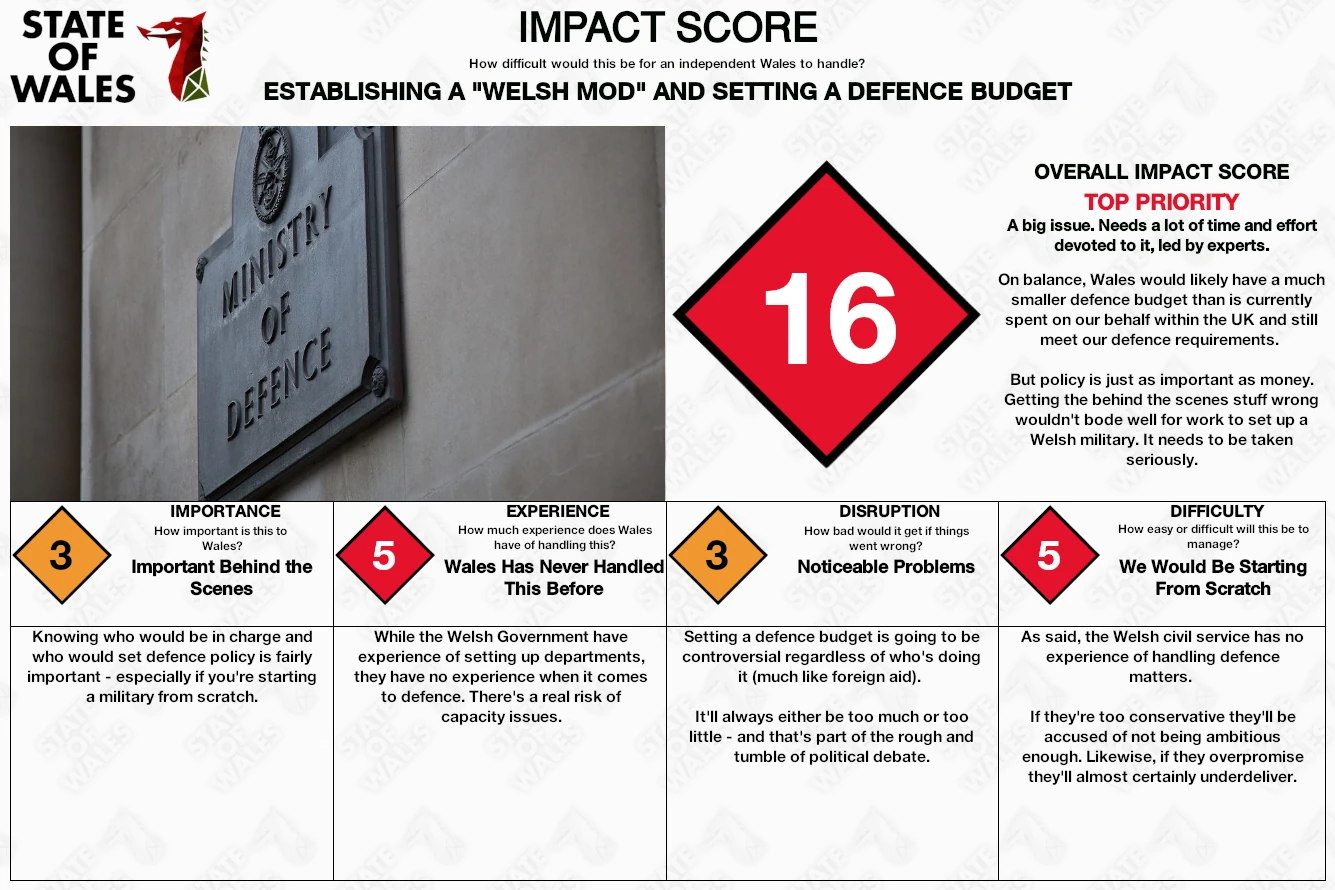
What's at Stake?

The overall score (out of 20) is the total of the scores for the four mini-categories (out of 5 each).

How Would This Be Run?

Similar to a Welsh equivalent of the Foreign Office, the department and ministers would be scrutinised by a “Senedd Committee for International Relations & Defence” or something similar.

It seems to be standard practice for countries to have a Cabinet-level advisory committee made up of politicians, civil servants and senior military officers (i.e. a “National Security Council” or alike) – this will be looked at separately.

As for who would decide Welsh defence policy: 

A dedicated Cabinet Secretary for Defence
Combine it with another Cabinet role
A US-style "State Secretary"
A dedicated Cabinet Secretary for Defence

This is what most countries do. It would mean a bigger Cabinet, but would properly spread policy portfolios around so nobody is doing too much by themselves.

Combine it with another Cabinet role

The obvious choices would be the Welsh equivalent of the Home Secretary/Internal Affairs Secretary or the Welsh Foreign Secretary. This is similar to the set-up Ireland has as of 2025.

A US-style "State Secretary"

This creates a Cabinet post responsible for foreign policy, but also some domestic policies. This could include defence, national security, managing the civil service and overseeing the drafting of laws.

How Much Will This Cost?

Headline: If Wales was to meet the current NATO spending commitment (2% of GDP), our yearly defence budget would be around £1.86 billion (revenue and capital combined) – up to £1 billion less than what’s currently spent on Wales’ behalf within the UK.

The civil service/defence department spending is likely to take up a small fraction of defence spending overall, as most of the money would go towards the military itself. 

Here are some examples below based on per-head spending on defence in other countries. This would give you an idea of what range you would expect a Welsh defence budget to lie within.

The most likely scenarios would put the defence budget in the range of £682 million to £2 billion a year, depending on the level of capability we expect the military to have. Being an active NATO member would mean spending more; focusing on home defence and peacekeeping means spending less.

For reference, Welsh GDP in 2023 was estimated by the Office of National Statistics to be £92.8 billion10 ($115 billion at 2023 average exchange rates). In order, from lowest spending to highest spending scenario:

Match Ireland’s spending-per-head (Low Armed Neutrality)
Match New Zealand's spending-per-head (non-neutral, non-NATO member)
Match’s Czech spending-per-head (NATO member without conscription)
Match Switzerland's spending-per-head (High Armed Neutrality with conscription)
2% of GDP (current NATO spending commitment)
3.1% of GDP (current “Welsh share” of UK defence spending)
3.5% of GDP (NATO commitment by 2035)
Match Finland's spending-per-head (NATO member with conscription)
Match Ireland’s spending-per-head (Low Armed Neutrality)

Ireland is set to spend €1.35 billion on defence in 20259. This works out at around €254 (£220) per head.

An equivalent Welsh figure would be approximately £682 million (around 0.7% of Welsh GDP).

Match New Zealand's spending-per-head (non-neutral, non-NATO member)

New Zealand set a defence budget of NZ$4.2 billion (£1.84 billion) for 202511. This works out to around NZ$792 (£347) per head.

An equivalent Welsh figure would be approximately £1.08 billion (1.2% of Welsh GDP).

Match’s Czech spending-per-head (NATO member without conscription)

According to NATO figures, the Czechs will spend CZK 167.8 billion (£6 billion) on defence in 202512. This works out to around CZK 15,254 (£543) per head.

A Welsh equivalent would be around £1.68 billion (1.81% of Welsh GDP).

Match Switzerland's spending-per-head (High Armed Neutrality with conscription)

Switzerland spends around CHF 5.5 billion (£5.1 billion) on defence each year13, with plans to increase it. It works out to around CHF 611 (£566) per head.

A Welsh equivalent would be approximately £1.76 billion (1.9% of Welsh GDP).

Because Switzerland has a conscription-based military, they don’t count personnel costs in the same way as countries with professional armed forces, meaning actual defence spending is probably higher than the reported figure.

2% of GDP (current NATO spending commitment)

Approximately £1.86 billion, or £600 per head.

3.1% of GDP (current “Welsh share” of UK defence spending)

Approximately £2.84 billion, or £916 per head. Though this is based on a straight Barnett formula-style allocation for Wales (normally around 5% of UK spending). 

3.5% of GDP (NATO commitment by 2035)

Approximately £3.25 billion (by 2035).

The exact figure would depend on what Welsh GDP is at the time. This new NATO commitment is for core defence spending alone, with member states expected to spend an additional 1.5% of GDP on top of this on general national security.

Match Finland's spending-per-head (NATO member with conscription)

According to NATO figures, Finland will spend €7.97 billion (£6.9 billion) on defence in 202511. This works out to around €1,410 (£1,220) per head. Much like Switzerland, Finland has a mainly conscription-based armed forces.

A Welsh equivalent would be around £3.78 billion (just under 4.1% of Welsh GDP).

Would any new taxes need to be introduced?

No.

Who will pay for this? 

General taxation (all taxpayers).

How Long Would This Take?

A government department would need to be set up before work can start properly on establishing a Welsh military.

So it would likely be set up as a shadow department (a government department with no powers, for want of a better description) during an independence transition period, then be ready to go from day one. 

People & Work

Who does this impact?

Indirectly, everyone resident in Wales as defence is about keeping us safe.

Directly, civil servants, military advisors and senior military officers would be the ones doing most of the work in terms of drafting a defence strategy and leading defence reviews.

Would any jobs be created or lost?

A Welsh defence department (or equivalent) wouldn’t create anywhere near as many jobs as a Welsh foreign department.

Based on examples listed earlier, you would expect a Welsh equivalent of the MoD to employ at most 150-200 civil servants. The bulk of any new jobs created in Wales would be through setting up a Welsh military itself.

You Might Also Like....
What civil emergencies would an independent Wales need to prepare for?
I+ Defence

What civil emergencies would an independent Wales need to prepare for?

by Owen Donovan
January 19, 2026
0

...

Read moreDetails
How would an independent Wales buy new military equipment?

How would an independent Wales buy new military equipment?

November 26, 2025
How would a Welsh military recruit & train new personnel?

How would a Welsh military recruit & train new personnel?

November 26, 2025
What are the options for an independent Wales’ military?

What are the options for an independent Wales’ military?

November 26, 2025
What defence assets might an independent Wales “inherit” from the UK?

What defence assets might an independent Wales “inherit” from the UK?

November 26, 2025
How would an independent Wales join NATO (if we wanted to)?

How would an independent Wales join NATO (if we wanted to)?

October 27, 2025
NATO

NATO

October 26, 2025
What would a Welsh military be expected to do?

What would a Welsh military be expected to do?

September 30, 2025
What would Wales’ defence policy be?

What would Wales’ defence policy be?

September 30, 2025
How and when would a Welsh armed forces be deployed?

How and when would a Welsh armed forces be deployed?

September 29, 2025
What would Welsh independence mean for defence and national security in the rest of Britain?

What would Welsh independence mean for defence and national security in the rest of Britain?

September 29, 2025
Would people from Wales serving in the British military have to join a Welsh armed forces?

Would people from Wales serving in the British military have to join a Welsh armed forces?

September 29, 2025
What military threats does Wales need defending from?

What military threats does Wales need defending from?

September 29, 2025
What makes the military unique?

What makes the military unique?

September 29, 2025
Hard Power & Soft Power

Hard Power & Soft Power

June 29, 2025
Load More
  1. UK Government, Ministry of Defence. “About us”.

  2. UK Ministry of Defence (2023-24), “Written Evidence submitted to (unspecified) Committee”.

  3. UK Government, HM Treasury (20th November 2024). “Country and regional analysis: 2024, A-tables. Table A.6, Identifiable expenditure on defence 2019-20 to 2023-24″ A proportional Barnett Formula-style 5% of total identifiable expenditure (£56,763 million) works out at £2.84 billion.

  4. UK Parliament, Defence Committee (17th July 2023). “Defence Committee publishes highly critical report on UK defence procurement”.

  5. Government of Ireland, Department of Defence (24th October 2024). “Annual Report 2023” (p 107).

  6. Government of Finland, “Ministry of Defence“.

  7. Government of Switzerland, Federal Department of Defence, Civil Protection & Sport (31st January 2025). “The VBS in Figures” (translated from German into English).

  8. New Zealand Public Service Commission. “Workforce data – workforce size”.

  9. Government of Ireland, Department of Defence (1st October 2024). “Record allocation of €1.35 billion in Defence funding in Budget 2025”

  10. Welsh Government (23rd April 2025). “Regional gross domestic product and gross value added: 1998 to 2023”.

  11. Government of New Zealand. “Budget 2025 Factsheet: Budget 2025 Defence Funding“.

  12. NATO. “Defence expenditure of NATO countries 2014-2025” (p7, Table 1)

  13. Alexandra Andrist, Swissinfo.ch (26th April 2024) “Switzerland’s fiscal policy: defence spending tug-of-war”.

Use of AI

No AI tools were used to draft this post.

Donations Welcome
Tags: Civil DefenceCivil ServiceConscriptionDF 103FinlandGovernment SpendingIcelandIrelandMilitaryNational SecurityNATONew ZealandPublic SectorSeneddSwitzerlandUK GovernmentWelsh Government
Previous Post

What would a Welsh military be expected to do?

Next Post

If an independent Wales joined the EU, what would that mean for Welsh defence policy?

Owen Donovan

Owen Donovan

Archive

Categories

Copyright

Creative Commons Licence

State of Wales by Owen Donovan is licensed under a Creative Commons Attribution-NonCommercial-NoDerivatives 4.0 International License.

Subscribe by Email

Search

No Result
View All Result
No Result
View All Result
  • Go To Senedd Home
  • Go To Oggy Bloggy Ogwr
  • About & Contact
    • About State of Wales
    • Comments Policy
    • Complaints Policy
    • Contact & Subscribe by Email
    • Disclaimer
  • Features
    • After the UK
    • Chinny Reckon
    • Devil’s Advocate
    • How Wales Works
    • Road to Brexit
  • The Independence Index
    • The Independence Index (full)
    • Economics & Money
      • Business & Economy
      • Currency
      • Tax & Spending
      • Transport & Infrastructure
    • Society
      • Communities & Housing
      • Culture & Sport
      • Education
      • Health
      • Media & Communications
      • Science & Technology
    • The State
      • Environment & Natural Resources
      • Justice
      • Local Government
  • Elections Centre
  • Wales FAQ
    • How is Wales funded?
    • How are laws in Wales made?
  • Support & Donate