Senedd Home
Oggy Bloggy Ogwr
State of Wales
Sunday, September 13, 2026
  • About & Contact
    • About State of Wales
    • Comments Policy
    • Complaints Policy
    • Contact
    • Disclaimer
  • Elections Centre
  • The Independence Index
    • The Independence Index (Full)
    • Foreign Policy
      • Relations with the former UK & Ireland
      • Relations with Europe
      • Foreign Policy (General)
      • International Organisations & Law
      • Overseas Aid
    • Defence
      • Defence Policy
      • NATO
      • Armed Forces
      • National Security
      • Civil Defence
    • Rules & Regulations
      • Safety & Standards
      • Intellectual Property
    • Economics & Money
      • Business & Economy
      • Currency
      • Tax & Spending
      • Transport & Infrastructure
    • Society
      • Communities & Housing
      • Culture & Sport
      • Education
      • Health
      • Media & Communications
      • Science & Technology
    • The State
      • Environment & Natural Resources
      • Justice
      • Local Government
  • Support & Donate
No Result
View All Result
  • About & Contact
    • About State of Wales
    • Comments Policy
    • Complaints Policy
    • Contact
    • Disclaimer
  • Elections Centre
  • The Independence Index
    • The Independence Index (Full)
    • Foreign Policy
      • Relations with the former UK & Ireland
      • Relations with Europe
      • Foreign Policy (General)
      • International Organisations & Law
      • Overseas Aid
    • Defence
      • Defence Policy
      • NATO
      • Armed Forces
      • National Security
      • Civil Defence
    • Rules & Regulations
      • Safety & Standards
      • Intellectual Property
    • Economics & Money
      • Business & Economy
      • Currency
      • Tax & Spending
      • Transport & Infrastructure
    • Society
      • Communities & Housing
      • Culture & Sport
      • Education
      • Health
      • Media & Communications
      • Science & Technology
    • The State
      • Environment & Natural Resources
      • Justice
      • Local Government
  • Support & Donate
No Result
View All Result
State of Wales
No Result
View All Result
Home Defence Armed Forces

How would a Welsh military recruit & train new personnel?

Owen Donovan by Owen Donovan
November 26, 2025
in Armed Forces, Defence
How would a Welsh military recruit & train new personnel?

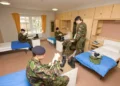
RAF Regiment Recruitment via Facebook

Share on FacebookShare on TwitterShare on RedditShare on BlueskyShare by email

Image Source: RAF Regiment Recruitment via Facebook

This site is best viewed in landscape mode on smartphones.
Support IndyWales? Support State of Wales!

Donations keep this site going. If you like what I’m doing here and think this work is important to the independence movement, consider a donation. One-off or monthly; as little or as much as you want. Click the links below, or full details are available here.

What Happens Now?

12,850 people joined the UK armed forces in 2024, while 14,830 left1.

The UK’s armed forces have long been said to face a “recruitment and retention crisis” that has lasted for at least a decade2.

Military recruitment – particularly recruitment to the British Army – has been outsourced to companies such as Capita and Serco. The RAF and Royal Navy still have an element of in-house recruitment.

Capita’s 10-year recruitment contract with the British Army, signed in 2012, faced strong criticism from the UK Parliament’s Public Accounts Committee3. Capita’s performance is described as “abysmal”, and the company failed to meet recruitment targets during a single year of the contract.

The UK military (particularly the Army) is one of the few employers left that accepts applications for enlisted roles from people with either no qualifications or a criminal record; though all recruits need to meet minimum physical fitness standards.

Certain technical roles (i.e. engineering) may require minimum qualifications, and some officers may be recruited directly as professionals (i.e. doctors, dentists, vets, solicitors). In all cases, potential recruits are normally tested or interviewed beforehand to determine which roles they are best suited to.

Enlisted personnel undertake their basic training, which lasts between 10 (Royal Navy) and 32 weeks (Royal Marines), at designated training centres. These include Catterick, Pirbright & Winchester (Army), Halton (RAF), Torpoint (Navy) and Lympstone (Royal Marines).

Once basic training is completed, enlisted personnel will undertake detailed technical training with their corps, squadron or regiment (usually called Phase 2 or equivalent). They then undertake further training to gain promotion to higher non-commissioned ranks.

In the case of the Army, advanced infantry training is undertaken at the Infantry Battle School in Brecon and Sennybridge. Fast-jet and helicopter training for the RAF is undertaken at RAF Valley on Anglesey.

Officer cadets, who usually (but not always) require a degree, undertake a longer course. This lasts for between 24 (RAF) and 42 weeks (Army). After this, they’ll undertake specialist training for their particular role.

Officer training is undertaken at the Royal Military Academy, Sandhurst (Army), RAF Cranwell, BRNC Dartmouth (Royal Navy) and Lympstone (Royal Marines).

Does This Work for Wales?

If the UK military hasn’t met its recruitment targets, then by extension, that affects Wales because it impacts the defensive capabilities of the UK as a whole. Despite this, internationally, the UK still has a proportionally large military (despite its gradual decline).

Wales has long been a keenly targeted recruitment ground for the UK’s armed forces (particularly the Army) to mixed success.

It’s previously been estimated that up to 9% of the UK’s armed forces have been recruited from Wales4. Military training in the UK is often done to a very high standard, too.

However, the military does have a reputation of being an “employer of last resort” (called “Military Keynesianism”, “economic conscription” or “spending on the military creates jobs”5), underlining the economic underperformance, lack of investment and lack of suitable alternative job opportunities in Wales.

So you can make an argument that a high proportion of the UK military coming from Wales isn’t something to be boastful about. It’s just another economic “push factor” that drives more skilled and driven young people out of Wales to benefit the rest of the UK. A “Welsh” military would partially reverse that.

The UK military (particularly the Army) faced criticism during the Third Senedd (2011-2016) for targeting schools in less well-off areas in Wales for recruitment and promotional purposes6.

The UK is also one of the only countries in Europe that allows people who are legally children (16-17-year-olds) to join the military as full-time/regular recruits (with parental consent). Though this is usually for training only, such as at the Army Foundation College or Military Preparation College/MCPT in the case of the Army.

Independence & Military Recruitment/Training: Pros & Cons

Pros of Independence
Cons of Independence
Pros of Independence

We would be able to rethink how we recruit to the military and why. This could mean a greater focus on quality of recruits rather than quantity, as well as ensuring recruitment is done “in-house” wherever possible and suitable, instead of being contracted out.

We could introduce new ethical standards to military recruitment and training so that potential recruits know what they should expect when joining the armed forces. Also, to address long-standing issues such as bullying and sexual harassment.

Qualifications gained through military training in Wales could be better aligned with civilian ones, making it easier for service leavers to find equivalent civilian work.

Our “officer class” could be more representative of Welsh society. In 20197, 49% of British Army officer cadets and up to 36% of Royal Navy officer cadets were privately educated (RAF unknown). A proportion of these will come from military families who are entitled to receive private education funded by the MoD. However, we could improve opportunities for promotion from within (i.e. moving from an enlisted rank to commissioned officer).

We could overhaul the pay and pensions package. For example, raising salaries for senior NCOs (corporals, petty officers, sergeants) and junior officers to encourage both the retention of skilled military personnel and ongoing professional training.

The “bounty” for reservists could also be increased to boost personnel numbers and the number of people with military training (without introducing conscription/national service).

Creating a new military, even a small one, would create or replicate (potentially) thousands of jobs in Wales that are currently based (mainly) in England and Scotland.

Instead of having a small proportion of Welsh members of the armed forces based all around the UK and abroad (only 1.7% of the UK armed forces are stationed in Wales), 100% of the Welsh armed forces would be based here (unless on deployment). This could provide an economic boost to local communities, particularly rural areas, if there are more permanent residents.

Wales would have control over immovable military assets in Wales, including training grounds, training operations and military bases.

If we were ambitious, Wales could gradually build a “21st century military capability” from the ground up, with heavy emphasis on cyberwarfare, automation and using “big data” to predict or identify major domestic security or defence vulnerabilities and deal with them early.

Cons of Independence

The Welsh Government has no experience of defence and a very limited experience of foreign policy. The number of options may be overwhelming, and there’s a risk we end up making the wrong choices.

We would be recruiting from a smaller pool. Even the UK has failed to hit recruitment targets (a problem for militaries based on voluntary enlistment across the world), so there may be a bigger problem trying to hit recruitment targets for a standalone Welsh armed forces.

If we decide to set higher requirements for joining (i.e. a degree for officer cadets; a minimum of A-Levels or equivalent for enlisted personnel; clean criminal records), it could further restrict the recruitment pool. This may lead to lowering the standard of recruits to meet targets (i.e. lower fitness requirements). It could also push Welsh residents to join foreign militaries.

Setting up military training programmes would require a big up-front investment and careful planning.

Regardless of what we do around pay, there will always be a limited number of spots for promotion of NCOs and commissioned officers – probably far fewer than the UK military.

Stationing more military personnel closer to home in Wales would require a big investment in military housing (which could be considered a pro) and military bases/stations. This might not be done quickly enough to match the pace of recruitment, so it needs careful planning.

There’s a strong possibility that many Welsh residents serving in (what would become) the English armed forces wouldn’t want to transfer to a Welsh military. There may be experience and skills gaps that we would find much harder to fill from a smaller population and recruitment pool.

It’s likely that the development of a full Welsh military – capable of deployment overseas, if necessary – may take the best part of a decade. There would need to be an “interim/bare bones” Welsh military to cover the gap.

What Do Other Countries Do?

Ireland
Denmark
Finland
New Zealand
Ireland

  • The age for military recruitment is 18-39 (with some exceptions).
  • No formal qualifications are needed for enlisted personnel, while officer candidates are expected to have at least the equivalent of A-Levels (or a relevant degree).
  • Basic (enlisted) training is the same for all branches of the military and lasts for around 12 weeks. Further training (the equivalent of Phase 2) lasts for another 12 weeks for enlisted personnel.
  • Army and basic training (all branches) are undertaken at the Defence Forces Training Centre and Military College (Curragh Camp), though the Air Corps and Navy have their own training colleges.
  • Officer training lasts between 15 and 21 months, with places awarded based on scores in a competition.
  • There’s a target to recruit around 800 people per year8.
Denmark

  • Denmark (not including Greenland and the Faroe Islands) has mandatory conscription for males and females from the age of 18, though taking part is voluntary. There are a limited number of places available drawn by lot, and conscripts make up around 4-5,000 military personnel in total each year9. There seems to be no formal upper age limit for recruitment.
  • Conscription lasts for 11 months, with those completing it remaining on active reserve for 5 years, receiving more advanced training if needed (i.e. armoured vehicles).
  • Basic training (all branches) lasts for 16 weeks, with training regiments based around the country (13x army, 2x navy, 1x air force). This counts as basic training for full-time/regular personnel if conscripts decide to join the military as a career.
  • Training for senior NCOs (i.e. corporals, sergeants) and commissioned officers is delivered by the Danish Military Academy, with branch-specific schools located around the country. There are also dedicated schools for Emergency Management and Languages.
  • Officer training courses last for between 2 years, 4 months (army, air force) and 4 years (navy)10.
Finland

  • Finland has mandatory conscription for males aged 18 (women can take part voluntarily). Around 21,000 people are conscripted each year11.
  • Conscription lasts for between 6 months and 1 year, with conscripts moving to active reserve (with periodic refresher training) until the age of 50 (60 for senior NCOs and officers).
  • Basic training takes place in four phases lasting 6 weeks each (24 weeks in total).
  • NCO and commissioned officer training lasts for between 9 and 14 weeks. This takes place after someone has completed their basic training.
  • Conscript training takes place at the brigade level (so it’s done regionally).
  • Professional/full-time positions appear to be applied for directly (much like a normal job). Full-time officers are trained at Finland’s National Defence University.
New Zealand

  • The military recruitment age is 18, though 17-year-olds can apply if they will graduate from their recruitment course after they’ve turned 18.
  • Enlisted recruits usually need an equivalent of GCSEs to apply. Officer candidates are expected to have at least the equivalent of AS-Levels, though some positions (i.e. engineering) require a degree or a military-sponsored scholarship.
  • Basic training for enlisted recruits lasts 12-16 weeks (depending on the branch)12, followed by role-specific technical training/corps training. Officer training can take up to a year (the longest course seemingly being for army officers) and is split into two or more phases.
  • Each branch of the armed forces trains recruits separately at three designated training centres.
  • As of 2025, the New Zealand Defence Forces’ annual recruitment target is 1,000 new personnel. They haven’t met the target in any year since 2019, and barely reached 50% of the target in 202413.

What Options Does Wales Have?

Military Recruitment

Raise the (regular/full-time) recruitment age to 18
Allow reservists to join at 16
Fitness Requirements
Nationality
Education
Criminal Records
Raise the (regular/full-time) recruitment age to 18


This would be in line with most countries. This shouldn’t impact military-related training schemes aimed at 16-18 year olds (i.e. MCPT) or cadets.

Allow reservists to join at 16


As above, with an exception for reservists. The pros would be that it would give 16-17-year-olds a more realistic idea of what military life is like (and they would be paid the standard reservist rates) before they decide to join full-time. This may make their transfer from civilian to military life go a bit smoother. The big drawback would be that reservist time commitments may clash with full-time education.

Fitness Requirements

Males and females now need to meet the same fitness standards (it used to be the case that females had slightly more relaxed requirements). We can continue with that, or reintroduce relaxed fitness requirements for non-combat roles.

Nationality

Preference would likely be given to Welsh citizens and permanent residents. We would have the option of opening recruitment to Commonwealth citizens (if Wales joins the Commonwealth) and people living in the Common Travel Area (including Ireland) in line with current UK recruitment policies. It could also be open to anyone who has been resident in Wales for a certain length of time (for at least 1-2 years before applying).

FYI: Refugees and asylum seekers are banned from joining the military of their host country.

Education

The proportion of people leaving full-time education without any qualifications is falling. It’s reasonable to expect anyone applying to join the Welsh armed forces to have minimum qualifications: GCSEs, A-Levels or vocational qualifications for enlisted personnel; a relevant degree for officers.

Criminal Records

Would we prefer military recruits to have clean criminal records? If we’re going for quality (of personnel) over quantity, then it may lean towards “yes”. We should at the very least expect officer candidates to have no criminal convictions.

Military Training

Joint or Branch-Specific Basic Training?
Do we train our officers in England (or elsewhere)?
Do we need a dedicated Military Academy?
Joint or Branch-Specific Basic Training?

Currently, basic training in the UK armed forces is undertaken by the separate branches. We could continue to do this. The alternative is that – as happens in Ireland – enlisted recruits to all branches of the armed forces undertake their basic training jointly (usually lasting 8-12 weeks), before they start their technical/role-based training with their branch or corps.

The pros are that we would probably only need a single centre for basic training (the best option perhaps being the current Infantry Battle School in Brecon), reducing duplication. The cons are that some skills that are branch-specific (i.e. water survival for Navy recruits) may be taught later than usual.

Do we train our officers in England (or elsewhere)?
Some Commonwealth countries send their army officer cadets to Sandhurst, which has a reputation for producing high-quality officers in a short time. However, the course is combat-focused. If Wales is to play an international role in international peacekeeping or disaster relief, it’s perhaps not the best training environment.
Do we need a dedicated Military Academy?

The goal of this would be to bring together all elements of military training – officer and technical/specialist – under a single umbrella. This could be as a stand-alone institution (which is what happens in most countries), a satellite of an existing university or FE College (the University of South Wales would be a good choice as it has experience delivering vocational degrees), or a standalone university/degree-awarding body in its own right.

A Military Academy would draft course content/syllabus for each speciality and deliver the training itself. Courses could be delivered by both experienced military personnel and civilian academics. Some of this training would need to be delivered locally (i.e. pilot training, naval training).

It may also make it easier for NCOs to transfer to commissioned officers, as well as opening up an academic/teaching career path for experienced officers.

What's at Stake?

The overall score (out of 20) is the total of the scores for the four mini-categories (out of 5 each).

How Would This Be Run?

The overall responsibility for training would likely fall on senior military commanders (and/or a Military Academy) and, in some cases, Qualifications Wales (the qualifications regulator in Wales). The Senedd would certainly have a say on recruitment policy (if laws need to be passed or changed).

As for recruitment itself, there are three broad options.

  • The first is that Wales follows what the UK does and privatises military recruitment, outsourcing it to an external provider (currently Serco).
  • The second is that recruitment is handled “in-house” – whether as a single military recruitment service (which would probably make more sense for a country of Wales’ size), or branch-by-branch.
  • The third is a mixed approach (similar to the RAF and Royal Navy) where most of the recruitment process is handled “in-house”, but a private contractor may handle certain elements of it (for example, application processing, websites, advertising). 

How Much Will This Cost?

Headline: If Wales commits 3% of our expected defence budget towards training, the training budget would likely be around £57 million per year. This is based on an expected Welsh defence budget being around £1.9 billion.

The UK armed forces spent up to 0.7% of its total budget on recruit and technical training (Phase 1 & Phase 2) as of 2023-2414.

As Wales would be building a military from scratch, we would need a higher training budget at the start.

In the previous post on the structure of the armed forces, three potential budget ranges were listed: Low, Medium and High.

So the training budget could range from as low as £33 million (Welsh defence budget: £1.1 billion), to as high as £87 million (defence budget: £2.9 billion).

The exact cost of recruitment and training will be different depending on the role. Training a fighter jet pilot can cost up to £5.4million15 (and takes up to four years), while the current cost of training a UK soldier is around £48,00016.

Would any new taxes need to be introduced? 

No.

Who will pay for this?

General taxation (all taxpayers).

How Long Would This Take?

Pre-independence/transition period
Years 1 to 5
Years 5 to 10
Year 10 +
Pre-independence/transition period

Interim/provisional defence and security policy to ensure Wales has a military capable of basic home defence duties and is secure from civil threats (i.e. terrorism, extremism, organised crime).

Years 1 to 5

Establishment of military training facilities and the recruitment and training of junior officers would likely be undertaken across the first 2 years (supported by reservists). The first cohorts of Wales-trained full-time enlisted personnel would come through during years 2-5. A military academy (if we want one) should be in place by Year 3.

An Armed Forces Act (or equivalent) and/or Veterans Act would be drafted and passed by the Senedd by this point if we decide we need one.

Years 5 to 10

The goal would be to set a stable yearly recruitment target. If we want to reach a Level Two or Level Three capability (as the first step towards NATO membership), we would probably need to recruit around 1,000 new personnel every year during this period.

During Years 5-7, the first cohort of officers trained in Wales post-independence should be reaching higher ranks (captain, major in the case of the army).

Wales would probably be able to take part in the first overseas deployments during this period (likely as UN peacekeepers).

Year 10 +

Wales-trained officers should be reaching general staff ranks (colonel, brigadier). Recruitment targets could drop back (600-700 recruits per year) depending on whether we’ve hit our desired level of capability.

People & Work

Who does this impact?

The likely target age for military recruitment would be 18-44-year-olds. As of mid-year 202317, the number of people in this age group is estimated at just over 1.04 million, or 32% of the Welsh population.

Assuming 35-40% of these are unsuitable for military recruitment (i.e. obesity, limiting disability), the potential absolute maximum military recruitment pool in Wales would have been between 624,000-676,000 people (312,000-344,000 for males only) as of 2023.

To put that into context, around 275,000 people from Wales served in the armed forces during each of the world wars.

Would any jobs be created or lost?

The entire post is effectively about job creation. The exact number depends on the structure of our military.

There would be a need to recruit experienced instructors and academics to deliver training courses, some of whom would be civilians.

You Might Also Like....

What would independence mean for war memorials and Remembrance events?
Armed Forces

What would independence mean for war memorials and Remembrance events?

by Owen Donovan
November 26, 2025
0

...

Read moreDetails
How could an independent Wales support veterans and service-leavers?

How could an independent Wales support veterans and service-leavers?

November 26, 2025
How would an independent Wales buy new military equipment?

How would an independent Wales buy new military equipment?

November 26, 2025
What could the command structure of a Welsh military look like?

What could the command structure of a Welsh military look like?

November 26, 2025
What are the options for an independent Wales’ military?

What are the options for an independent Wales’ military?

November 26, 2025
Veterans in Wales

Veterans in Wales

November 26, 2025
What would independence mean for existing MoD contracts with Welsh suppliers?

What would independence mean for existing MoD contracts with Welsh suppliers?

November 26, 2025
What defence assets might an independent Wales “inherit” from the UK?

What defence assets might an independent Wales “inherit” from the UK?

November 26, 2025
Military Law & Independence

Military Law & Independence

November 26, 2025
Would NATO membership mean NATO bases or forces being stationed in Wales?

Would NATO membership mean NATO bases or forces being stationed in Wales?

October 27, 2025
If an independent Wales joined the EU, what would that mean for Welsh defence policy?

What would an independent Wales’ defence budget and equivalent of the MoD be?

September 30, 2025
What would a Welsh military be expected to do?

What would a Welsh military be expected to do?

September 30, 2025
How and when would a Welsh armed forces be deployed?

How and when would a Welsh armed forces be deployed?

September 29, 2025
Would people from Wales serving in the British military have to join a Welsh armed forces?

Would people from Wales serving in the British military have to join a Welsh armed forces?

September 29, 2025
What military threats does Wales need defending from?

What military threats does Wales need defending from?

September 29, 2025
What makes the military unique?

What makes the military unique?

September 29, 2025
Hard Power & Soft Power

Hard Power & Soft Power

June 29, 2025
Load More
    1. UK Government, Ministry of Defence (28th August 2025). “Quarterly service personnel statistics: 1 January 2025“

    2. UK House of Commons (30th April 2025). “Written Questions – Armed Forces: Recruitment”

    3. UK House of Commons, Public Accounts Committee (1st March 2019). “Capita’s Contract with the Ministry of Defence“.

    4. Nation.Cymru (5th October 2021). “Mark Drakeford calls for more Welsh troops to be based in Wales”

    5. M. Harrison, University of Warwick. “Military Keynesianism“.

    6. Senedd Cymru Research Service (29th September 2015). “Armed forces recruiting in schools?”

    7. Jonathan Beale, BBC News (15th June 2019). “Are too many Army officers privately educated?”

    8. Oirachtas, Dail Eireann Debate (26th February 2025). “Written Question: Defence Forces“

    9. Danish Defence. “Conscription (translated from Danish)“.

    10. Danish Defence. “Education (translated from Danish)“

    11. Finnish Defence Forces. “Conscription“.

    12. New Zealand Defence Forces. “Education & Training“.

    13. Freedom of Information Request (14th October 2024). “Recruitment Targets“.

    14. UK House of Commons (20th January 2025). “Three Separate Written Questions – Air Force: Training, Navy: Training, Army: Training“. The total amount spent on Phase 1 and Phase 2 training for all three branches (£304 million) works out at approximately 0.627% of the UK’s military expenditure for the 2023-24 financial year (£48.5 billion).

    15. UK House of Commons (10th March 2025). “Written Questions – Air Force: Training“

    16. UK House of Commons (17th October 2024). “Written Questions – Army: Training”

    17. StatsWales. “Population estimates by local authority and year (mid-year 2023)“. 16 and 17-year-olds have been discounted from the totals for Wales in the 16-24 and 25-44 age groups.
Use of AI

No AI tools were used to draft this post.

Donations Welcome
Tags: Common Travel AreaCommonwealthConscriptionDenmarkDF 303Employment & SkillsFinlandImmigrationIrelandMilitaryNew ZealandPacifismPolitical TheoryQualificationsUK GovernmentUK ParliamentUniversities
Previous Post

What could the command structure of a Welsh military look like?

Next Post

How would an independent Wales buy new military equipment?

Owen Donovan

Owen Donovan

Archive

Categories

Copyright

Creative Commons Licence

State of Wales by Owen Donovan is licensed under a Creative Commons Attribution-NonCommercial-NoDerivatives 4.0 International License.

Subscribe by Email

Search

No Result
View All Result
No Result
View All Result
  • Go To Senedd Home
  • Go To Oggy Bloggy Ogwr
  • About & Contact
    • About State of Wales
    • Comments Policy
    • Complaints Policy
    • Contact & Subscribe by Email
    • Disclaimer
  • Features
    • After the UK
    • Chinny Reckon
    • Devil’s Advocate
    • How Wales Works
    • Road to Brexit
  • The Independence Index
    • The Independence Index (full)
    • Economics & Money
      • Business & Economy
      • Currency
      • Tax & Spending
      • Transport & Infrastructure
    • Society
      • Communities & Housing
      • Culture & Sport
      • Education
      • Health
      • Media & Communications
      • Science & Technology
    • The State
      • Environment & Natural Resources
      • Justice
      • Local Government
  • Elections Centre
  • Wales FAQ
    • How is Wales funded?
    • How are laws in Wales made?
  • Support & Donate