Quick Reaction Alert (aka "Buzzing")
State-backed Cyberattack
State-backed attack on Undersea Infrastructure
Conventional attack on Energy Infrastructure
Assassination
War abroad that disrupts the Global Economy
War in Europe (Non-NATO)
War in Europe (Involving NATO)
Conventional military attack on Wales
Quick Reaction Alert (aka "Buzzing")
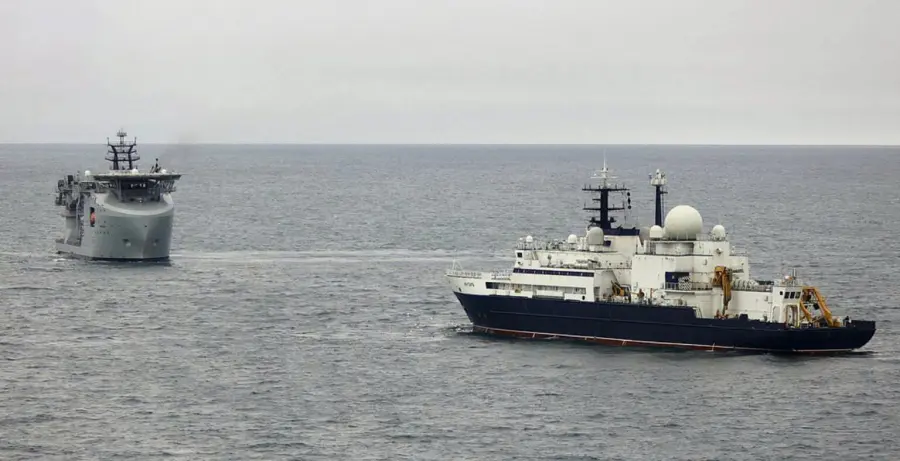
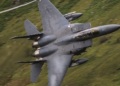
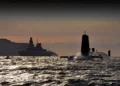
A standard tactic of the Russian military in Europe whereby they’ll fly long-range bombers, or sail submarines or frigates, near the territorial waters or airspace of other countries to test their defences (pictured above in the Irish Sea).
While this is more of an annoyance than a genuine threat, an independent Wales may be seen as a tempting backdoor into England.
State-backed Cyberattack
This threat would come from a state-sponsored hacking group or the cyberwarfare arm of a foreign military.
The most likely targets would be infrastructure (such as the electricity grid or transport), telecommunications, or financial institutions (more likely to be based in England or Scotland than in Wales).
State-backed attack on Undersea Infrastructure
Several undersea cables run through Welsh territorial waters. Physically attacking them could cause internet or energy transmission problems, which could take months to repair.
Russia has already been accused of doing this in the Baltic Sea and North Sea as part of a “hybrid war” against NATO2.
Conventional attack on Energy Infrastructure
The threat would come from foreign sabotage agents or locally-recruited assets. At a low level, this might not go much further than arson. At a higher level, it might include drones or even missiles targeted at larger facilities like oil refineries or power stations.
Assassination
The threat would come from foreign intelligence agencies and would aim to murder prominent people in politics or business. The most likely scenario for Wales would be a political dissident living in Wales being targeted by the government they are challenging.
Recent examples in the UK include the murder of Russian defector Alexander Litvinenko in 2006, and the failed assassination of Sergei Skripal in Salisbury in 2018.
Countries known to do this (openly and in secret) include Russia, the United States, North Korea, Saudi Arabia, Iran and Israel.
War abroad that disrupts the Global Economy
War abroad that disrupts the global economy – More often or not this happens in the Middle East, but (hypothetically) this could include tensions between India and Pakistan escalating into something more violent, or the on-off discussion of a future Chinese invasion of/attack on Taiwan.
There’s always the potential for Welsh citizens to be caught up in these conflicts. After independence, it would fall upon the Welsh Government to arrange for evacuations.
War in Europe (Non-NATO)
This is already happening in Ukraine. Even if the UK hasn’t been directly involved in the war, it’s had an impact here economically. It’s also prompted a rethink of UK defence strategies with a (seemingly successful) push for more money to be spent on defence at the expense of international development/foreign aid.
War in Europe (Involving NATO)
The likely scenario would be a Russian attack on one of the bordering eastern NATO member states. I would be surprised if (as of 2025) governments in Europe aren’t preparing for this behind the scenes.
Even if an independent Wales remained out of NATO, or was neutral or pacifistic, a conventional war in Europe would have a massive impact economically, socially and politically. Also, any war involving NATO has the potential to escalate to a nuclear war.
Conventional military attack on Wales
This could happen as a series of one-off “punitive” strikes (likely to be sea-launched missiles) on infrastructure or populated areas (if you want to get an idea of what that would look like, then listen to Sky News’ recent “The Wargame“ podcast series).
This would most likely happen as part of a broader war in Europe rather than a one-off, so it would fall under “War in Europe involving NATO” but on a local scale. Wales hasn’t faced anything on this level since the 1940s.
The likelihood of Wales being a target for a direct military attack may increase if we joined NATO. Though in the same way, NATO membership offers protection (in principle) due to strength in numbers.