Senedd Home
Oggy Bloggy Ogwr
State of Wales
Sunday, August 9, 2026
  • About & Contact
    • About State of Wales
    • Comments Policy
    • Complaints Policy
    • Contact
    • Disclaimer
  • Elections Centre
  • The Independence Index
    • The Independence Index (Full)
    • Foreign Policy
      • Relations with the former UK & Ireland
      • Relations with Europe
      • Foreign Policy (General)
      • International Organisations & Law
      • Overseas Aid
    • Defence
      • Defence Policy
      • NATO
      • Armed Forces
      • National Security
      • Civil Defence
    • Rules & Regulations
      • Safety & Standards
      • Intellectual Property
    • Economics & Money
      • Business & Economy
      • Currency
      • Tax & Spending
      • Transport & Infrastructure
    • Society
      • Communities & Housing
      • Culture & Sport
      • Education
      • Health
      • Media & Communications
      • Science & Technology
    • The State
      • Environment & Natural Resources
      • Justice
      • Local Government
  • Support & Donate
No Result
View All Result
  • About & Contact
    • About State of Wales
    • Comments Policy
    • Complaints Policy
    • Contact
    • Disclaimer
  • Elections Centre
  • The Independence Index
    • The Independence Index (Full)
    • Foreign Policy
      • Relations with the former UK & Ireland
      • Relations with Europe
      • Foreign Policy (General)
      • International Organisations & Law
      • Overseas Aid
    • Defence
      • Defence Policy
      • NATO
      • Armed Forces
      • National Security
      • Civil Defence
    • Rules & Regulations
      • Safety & Standards
      • Intellectual Property
    • Economics & Money
      • Business & Economy
      • Currency
      • Tax & Spending
      • Transport & Infrastructure
    • Society
      • Communities & Housing
      • Culture & Sport
      • Education
      • Health
      • Media & Communications
      • Science & Technology
    • The State
      • Environment & Natural Resources
      • Justice
      • Local Government
  • Support & Donate
No Result
View All Result
State of Wales
No Result
View All Result
Home Indy Index Plus I+ Defence

Extremism in Wales

Owen Donovan by Owen Donovan
January 19, 2026
in I+ Defence, Indy Index Plus
Extremism in Wales

Counter Terrorism Policing UK

Share on FacebookShare on TwitterShare on RedditShare on BlueskyShare by email

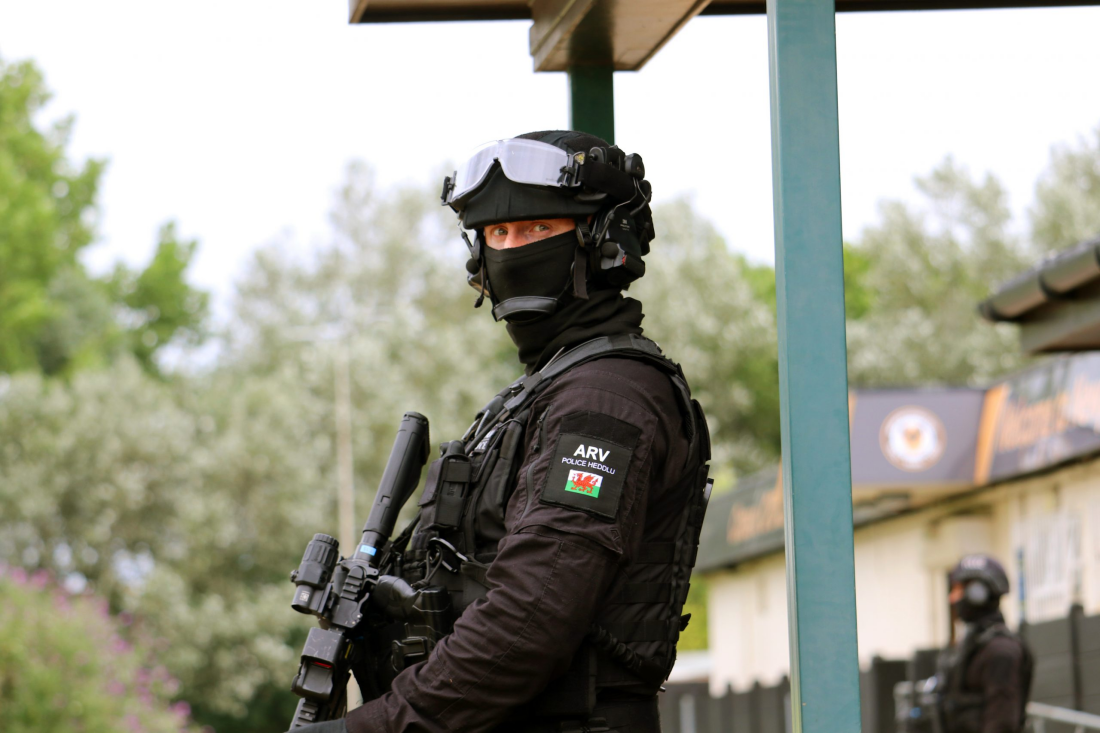
Image Source: Counter Terrorism Policing UK

This site is best viewed in landscape mode on smartphones.
Support IndyWales? Support State of Wales!

Donations keep this site going. If you like what I’m doing here and think this work is important to the independence movement, consider a donation. One-off or monthly; as little or as much as you want. Click the links below, or full details are available here.

How is Extremism Defined?

Holding a particular belief – even actively/vocally supporting one, or opposing a particular group or ideology – isn’t considered extremism in itself by the UK Government.

The UK Government’s definition of extremism was updated in 20241. It includes the “promotion of an ideology, violence, hatred or intolerance”, or a pattern of behaviour, that aims to achieve at least one of three things:

  1. Negate or destroy the fundamental rights and freedoms of others. This includes threats of violence or intimidation towards certain groups so that they don’t use their legal rights or freedoms.
  2. Undermine, overturn or replace the UK’s system of liberal parliamentary democracy and democratic rights. This would include things like supporting a dictatorship, preventing or discouraging people from voting, entryism (joining a group or institution in big numbers to force a change in its ideology), threats towards public servants, or supporting violence to change the political system.
  3. Intentionally creating a permissive environment for others to achieve the results of either of the above. This includes platforming extremists, producing or spreading extremist propaganda, fundraising for extremist causes or attempting to radicalise others.

Why are people driven towards extremism?

There’s no single answer. There’s been some research into this question, with some theories having stronger support behind them than others.

According to a literature review undertaken by the United Services Institute in 20152, the main drivers of extremism, with the strongest evidence supporting them, include:

  • Organised political and social groups which have failed to achieve any meaningful change through peaceful means, so they turn to violence.
  • A person wrapping themselves in an identity, group or religion too strongly because they’ve been left behind or are scared about rapid social/cultural changes and are seeking a sense of stability, belonging or purpose.
  • Religious or ethnic identities which compete with attachment to the country.
  • A sense of shared grievance – including discrimination or marginalisation.
  • Failure by the government to provide basic services means extremist groups step in to take advantage of the “gap”.
  • Poverty and underemployment (not being able to find jobs at a person’s skill level); many extremists are relatively well-educated, and extremist groups tend to recruit from amongst the unemployed and low-paid.

Other common causes3 are said to include bullying, behavioural and mental health issues, social isolation (which may drive people to spend too much time online, which is a fertile ground for extremism and conspiracy theories) and going through sudden major life changes.

What does extremism in Wales look like?

According to statistics tied to the UK Government’s counter-extremism Prevent programme, during 2024-25 in Wales4:

  • There were 398 referrals (4.5% of the EnglandandWales total, roughly in line with our population share).
  • 84 (2.1%) of the Welsh referrals involved a confirmed or unconfirmed mental health or neurodiversity disorder.
  • Recording of ethnicity/race data isn’t mandatory, but of those who were recorded, the majority of people referred in Wales (83 out of 102) were white.
  • The age group with the largest number of referrals (115) were 11-15 year olds, and the majority of all referrals were for people aged under 40.
  • At least 82% of Welsh referrals involved males.
  • The majority of Welsh referrals come either through the education system or via the police.
  • Of those referrals which involve the individual having a clear extremist ideology, the most common Welsh referrals were for right-wing extremism (82), Islamist extremism (20) and a general fascination with violence (18). There were only 2 recorded referrals for far-left extremism and 2 for “Incels”/extreme misogynists.
  • Extreme right-wing extremism is by far the most common single ideological reason for a referral across EnglandandWales (1,778), being more than double the number of Islamist referrals (870) and dwarfing both left-wing and anarchist extremists (34) and Northern Irish dissident Republicans (16).

You Might Also Like....

Civil Contingencies Act
I+ Defence

Civil Contingencies Act

by Owen Donovan
February 9, 2026
0

...

Read moreDetails
Would an independent Wales share security intelligence with other countries?

Would an independent Wales share security intelligence with other countries?

January 19, 2026
What would be an independent Wales’ policy towards extremism?

What would be an independent Wales’ policy towards extremism?

January 19, 2026
Would an independent Wales have its own security service?

Would an independent Wales have its own security service?

January 19, 2026
What would be an independent Wales’ national security policy?

What would be an independent Wales’ national security policy?

January 19, 2026
The Security Services

The Security Services

January 19, 2026
What civil emergencies would an independent Wales need to prepare for?

What civil emergencies would an independent Wales need to prepare for?

January 19, 2026
Veterans in Wales

Veterans in Wales

November 26, 2025
What would independence mean for existing MoD contracts with Welsh suppliers?

What would independence mean for existing MoD contracts with Welsh suppliers?

November 26, 2025
What defence assets might an independent Wales “inherit” from the UK?

What defence assets might an independent Wales “inherit” from the UK?

November 26, 2025
Military Law & Independence

Military Law & Independence

November 26, 2025
Could NATO membership commit Wales to taking part in military operations we don’t agree with?

Could NATO membership commit Wales to taking part in military operations we don’t agree with?

October 26, 2025
NATO

NATO

October 26, 2025
How and when would a Welsh armed forces be deployed?

How and when would a Welsh armed forces be deployed?

September 29, 2025
What would Welsh independence mean for defence and national security in the rest of Britain?

What would Welsh independence mean for defence and national security in the rest of Britain?

September 29, 2025
Would people from Wales serving in the British military have to join a Welsh armed forces?

Would people from Wales serving in the British military have to join a Welsh armed forces?

September 29, 2025
What military threats does Wales need defending from?

What military threats does Wales need defending from?

September 29, 2025
What makes the military unique?

What makes the military unique?

September 29, 2025
Load More
    1. UK Government, Ministry of Housing, Communities & Local Government (14th March 2024). “New definition of extremism (2024)“

    2. Royal United Services Institute (16th October 2015). “Drivers of Violent Extremism: Hypotheses and Literature Review“

    3. Action Counter Terrorism. “What are the causes of extremism?“

    4. UK Government, Home Office (6th November 2025). “Individuals referred to and supported through the Prevent Programme, April 2024 to March 2025”

Use of AI

No AI tools were used to draft this post.

Donations Welcome
Tags: Civil LibertiesCourt System & JudiciaryDemocracyEnglandExtremismIP-DF 14Mental HealthNational SecurityPolicing & Law EnforcementPolitical TheoryPublic SafetyRace & RacismReligion & BeliefTerrorismUK Government
Previous Post

The Security Services

Next Post

What would be an independent Wales’ national security policy?

Owen Donovan

Owen Donovan

Archive

Categories

Copyright

Creative Commons Licence

State of Wales by Owen Donovan is licensed under a Creative Commons Attribution-NonCommercial-NoDerivatives 4.0 International License.

Subscribe by Email

Search

No Result
View All Result
No Result
View All Result
  • Go To Senedd Home
  • Go To Oggy Bloggy Ogwr
  • About & Contact
    • About State of Wales
    • Comments Policy
    • Complaints Policy
    • Contact & Subscribe by Email
    • Disclaimer
  • Features
    • After the UK
    • Chinny Reckon
    • Devil’s Advocate
    • How Wales Works
    • Road to Brexit
  • The Independence Index
    • The Independence Index (full)
    • Economics & Money
      • Business & Economy
      • Currency
      • Tax & Spending
      • Transport & Infrastructure
    • Society
      • Communities & Housing
      • Culture & Sport
      • Education
      • Health
      • Media & Communications
      • Science & Technology
    • The State
      • Environment & Natural Resources
      • Justice
      • Local Government
  • Elections Centre
  • Wales FAQ
    • How is Wales funded?
    • How are laws in Wales made?
  • Support & Donate