Senedd Home
Oggy Bloggy Ogwr
State of Wales
Sunday, August 9, 2026
  • About & Contact
    • About State of Wales
    • Comments Policy
    • Complaints Policy
    • Contact
    • Disclaimer
  • Elections Centre
  • The Independence Index
    • The Independence Index (Full)
    • Foreign Policy
      • Relations with the former UK & Ireland
      • Relations with Europe
      • Foreign Policy (General)
      • International Organisations & Law
      • Overseas Aid
    • Defence
      • Defence Policy
      • NATO
      • Armed Forces
      • National Security
      • Civil Defence
    • Rules & Regulations
      • Safety & Standards
      • Intellectual Property
    • Economics & Money
      • Business & Economy
      • Currency
      • Tax & Spending
      • Transport & Infrastructure
    • Society
      • Communities & Housing
      • Culture & Sport
      • Education
      • Health
      • Media & Communications
      • Science & Technology
    • The State
      • Environment & Natural Resources
      • Justice
      • Local Government
  • Support & Donate
No Result
View All Result
  • About & Contact
    • About State of Wales
    • Comments Policy
    • Complaints Policy
    • Contact
    • Disclaimer
  • Elections Centre
  • The Independence Index
    • The Independence Index (Full)
    • Foreign Policy
      • Relations with the former UK & Ireland
      • Relations with Europe
      • Foreign Policy (General)
      • International Organisations & Law
      • Overseas Aid
    • Defence
      • Defence Policy
      • NATO
      • Armed Forces
      • National Security
      • Civil Defence
    • Rules & Regulations
      • Safety & Standards
      • Intellectual Property
    • Economics & Money
      • Business & Economy
      • Currency
      • Tax & Spending
      • Transport & Infrastructure
    • Society
      • Communities & Housing
      • Culture & Sport
      • Education
      • Health
      • Media & Communications
      • Science & Technology
    • The State
      • Environment & Natural Resources
      • Justice
      • Local Government
  • Support & Donate
No Result
View All Result
State of Wales
No Result
View All Result
Home Indy Index Plus I+ Defence

Military Law & Independence

Owen Donovan by Owen Donovan
November 26, 2025
in I+ Defence, Indy Index Plus
Military Law & Independence

UK Government, Open Government Licence

Share on FacebookShare on TwitterShare on RedditShare on BlueskyShare by email

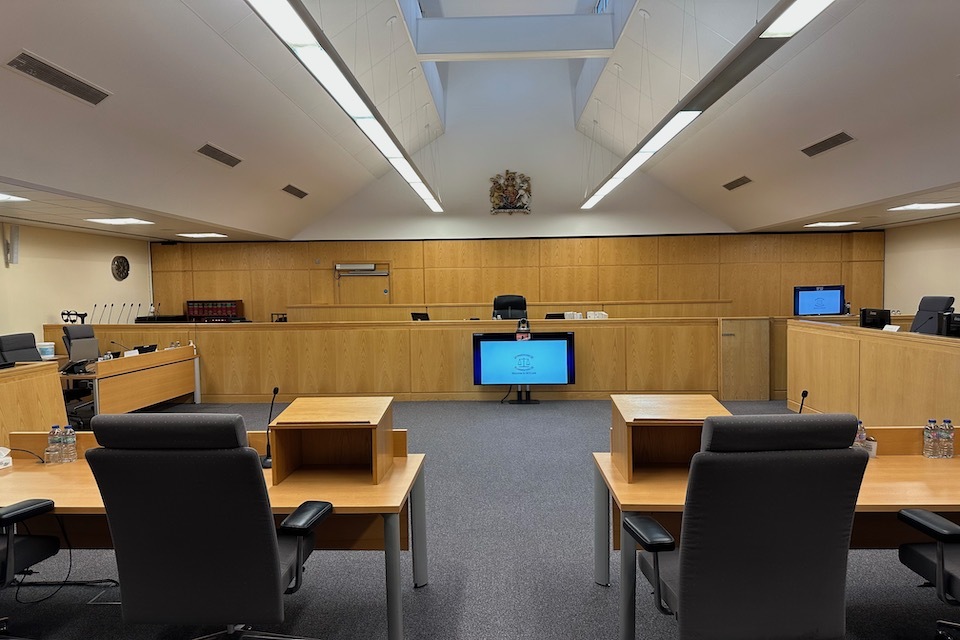
Image Source: UK Government, Open Government Licence/Crown Copyright

This site is best viewed in landscape mode on smartphones.
Support IndyWales? Support State of Wales!

Donations keep this site going. If you like what I’m doing here and think this work is important to the independence movement, consider a donation. One-off or monthly; as little or as much as you want. Click the links below, or full details are available here.

The Current System of Military Justice

The military has a unique justice system. This shouldn’t come as a surprise because the military operates in a very different environment from civilians.

Several criminal offences can only be committed by members of the armed forces1. These include desertion, absence without leave (AWOL), insubordination/mutiny, assisting an enemy, looting, malingering (pretending to be ill) and reckless flying (amongst others).

The UK military has its own equivalent of the Director of Public Prosecutions/CPS (the Director of Service Prosecutions), its own court system (Court Martial), its own judges and legal professionals (Judge Advocate General), its own police force (Royal Military Police) and its own prison system (Military Corrective Training Centre).

One key difference between military and civilian courts is that juries aren’t used at court martials. Instead of a jury, there’s a selection of several commissioned officers and warrant officers called a board.

Senior military officers can deal with low-level offences themselves (summary hearings).

Until 2006, there were separate laws governing discipline and military law for each of the main service branches. These were brought together into a single law: the Armed Forces Act.

International Law & The Military

Some elements of military law cross into international law (the so-called “laws of war”).

Some treaties ban or limit certain weapons – such as chemical weapons – which have been looked at previously. Treaties have also (in principle) banned or limited the use of anti-personnel land mines and cluster bombs; in practice, they’re still used.

It’s highly likely that once there’s a conclusion to the Ukraine War, limitations will be brought in on the use of drones or autonomous weapons.

Perhaps the most well-known element of international law relating to warfare is the Geneva Conventions. Introduced gradually through the late 19th and early 20th centuries, they consist of four separate treaties governing the treatment of prisoners of war and non-combatants/civilians. Three protocols extending these treaties were added from the 1970s onwards.

Attacking civilians and civilian infrastructure is, under international law, a war crime. Though, as we’ve seen time and time again, it doesn’t stop hostile states and terrorist groups from targeting them.

Several countries – including the United States, Russia, Israel and Turkey – have withdrawn or not ratified protocols protecting civilians and non-combatants2.

People accused of war crimes and successfully arrested (very few are) are normally put on trial at the International Criminal Court (ICC) in The Hague, Netherlands.

Military Justice & Independence

Immediately following independence, the Armed Forces Act would continue to remain in force in Wales (due to the common law system).

Within the first few years of independence, it’s likely Wales would need to establish its own military justice system. This could be either through rewriting the Armed Forces Act, or as an entirely new law (similar to New Zealand’s Armed Forces Discipline Act, for example).

Any new or revised law could include a single unified Military Code of Conduct.

At present, the different branches of the UK military have different leadership and personnel codes. The British Army has a Leadership Code, while the Royal Navy has the Queen’s Regulations (drafted in 2019; any redraft would presumably be called King’s Regulations).

We would have an equivalent of the Judge Advocate General’s office (or another name) and probably a single military court or tribunal. They would also provide legal services to military personnel.

We would also need a military police force or equivalent (led by a Provost General, or alike) – but this is likely to be small.

As the Welsh military is likely to be small, we probably wouldn’t need a dedicated military prison. The practical option would be to set aside a secure unit on an existing military base for corrective training (short sentences).

As occurs now, any military personnel convicted of serious offences – and handed long sentences – would be dishonourably discharged and sent to civilian prisons.

You Might Also Like....

Civil Contingencies Act
I+ Defence

Civil Contingencies Act

by Owen Donovan
February 9, 2026
0

...

Read moreDetails
Extremism in Wales

Extremism in Wales

January 19, 2026
The Security Services

The Security Services

January 19, 2026
What civil emergencies would an independent Wales need to prepare for?

What civil emergencies would an independent Wales need to prepare for?

January 19, 2026
Radical Wales: No Military

Radical Wales: No Military

December 10, 2025
Radical Wales: Conscription/National Service

Radical Wales: Conscription/National Service

December 10, 2025
What would independence mean for war memorials and Remembrance events?

What would independence mean for war memorials and Remembrance events?

November 26, 2025
How could an independent Wales support veterans and service-leavers?

How could an independent Wales support veterans and service-leavers?

November 26, 2025
How would an independent Wales buy new military equipment?

How would an independent Wales buy new military equipment?

November 26, 2025
How would a Welsh military recruit & train new personnel?

How would a Welsh military recruit & train new personnel?

November 26, 2025
What could the command structure of a Welsh military look like?

What could the command structure of a Welsh military look like?

November 26, 2025
What are the options for an independent Wales’ military?

What are the options for an independent Wales’ military?

November 26, 2025
Veterans in Wales

Veterans in Wales

November 26, 2025
What would independence mean for existing MoD contracts with Welsh suppliers?

What would independence mean for existing MoD contracts with Welsh suppliers?

November 26, 2025
What defence assets might an independent Wales “inherit” from the UK?

What defence assets might an independent Wales “inherit” from the UK?

November 26, 2025
Could NATO membership commit Wales to taking part in military operations we don’t agree with?

Could NATO membership commit Wales to taking part in military operations we don’t agree with?

October 26, 2025
NATO

NATO

October 26, 2025
What would an independent Wales’ policy be towards nuclear, biological and chemical weapons?

What would an independent Wales’ policy be towards nuclear, biological and chemical weapons?

September 30, 2025
If an independent Wales joined the EU, what would that mean for Welsh defence policy?

If an independent Wales joined the EU, what would that mean for Welsh defence policy?

September 30, 2025
If an independent Wales joined the EU, what would that mean for Welsh defence policy?

What would an independent Wales’ defence budget and equivalent of the MoD be?

September 30, 2025
What would a Welsh military be expected to do?

What would a Welsh military be expected to do?

September 30, 2025
What would Wales’ defence policy be?

What would Wales’ defence policy be?

September 30, 2025
How and when would a Welsh armed forces be deployed?

How and when would a Welsh armed forces be deployed?

September 29, 2025
What would Welsh independence mean for defence and national security in the rest of Britain?

What would Welsh independence mean for defence and national security in the rest of Britain?

September 29, 2025
Would people from Wales serving in the British military have to join a Welsh armed forces?

Would people from Wales serving in the British military have to join a Welsh armed forces?

September 29, 2025
What military threats does Wales need defending from?

What military threats does Wales need defending from?

September 29, 2025
What makes the military unique?

What makes the military unique?

September 29, 2025
Load More
    1. Armed Forces Act 2006, Part 1

    2. Geneva Convention, Protocol 1 (1977)

Use of AI

No AI tools were used to draft this post.

Donations Welcome
Tags: Access to JusticeCourt System & JudiciaryInternational LawIP-DF 08MilitaryPrison SystemProbation ServicesTreaties
Previous Post

Would Wales as a NATO member need to provide forces under “Article 5”?

Next Post

What defence assets might an independent Wales “inherit” from the UK?

Owen Donovan

Owen Donovan

Archive

Categories

Copyright

Creative Commons Licence

State of Wales by Owen Donovan is licensed under a Creative Commons Attribution-NonCommercial-NoDerivatives 4.0 International License.

Subscribe by Email

Search

No Result
View All Result
No Result
View All Result
  • Go To Senedd Home
  • Go To Oggy Bloggy Ogwr
  • About & Contact
    • About State of Wales
    • Comments Policy
    • Complaints Policy
    • Contact & Subscribe by Email
    • Disclaimer
  • Features
    • After the UK
    • Chinny Reckon
    • Devil’s Advocate
    • How Wales Works
    • Road to Brexit
  • The Independence Index
    • The Independence Index (full)
    • Economics & Money
      • Business & Economy
      • Currency
      • Tax & Spending
      • Transport & Infrastructure
    • Society
      • Communities & Housing
      • Culture & Sport
      • Education
      • Health
      • Media & Communications
      • Science & Technology
    • The State
      • Environment & Natural Resources
      • Justice
      • Local Government
  • Elections Centre
  • Wales FAQ
    • How is Wales funded?
    • How are laws in Wales made?
  • Support & Donate