Extreme weather & flooding
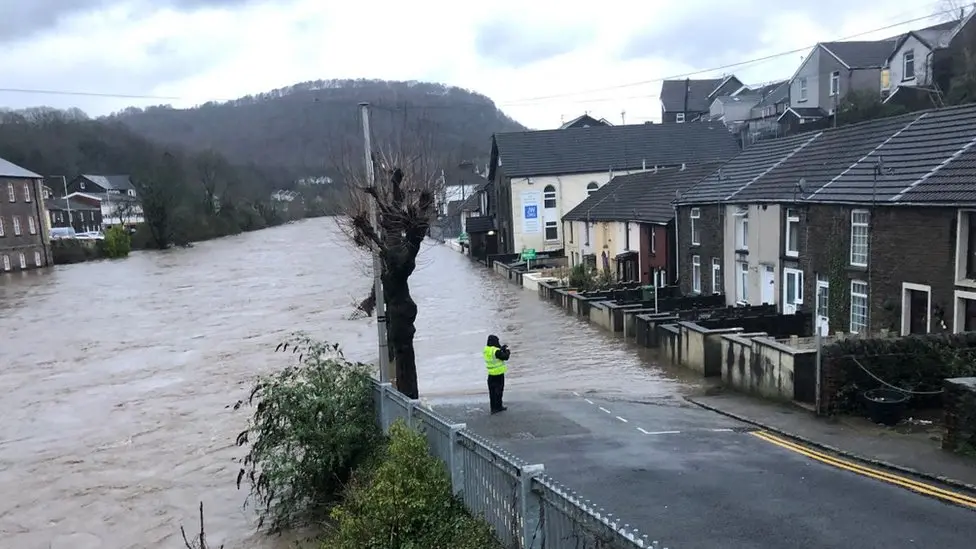
This is probably the most common civil threat Wales currently experiences and needs no detailed explanation. Some parts of Wales are more prone to flooding than others. While there are engineering solutions to flooding, more often than not, the best defence is a proper warning beforehand so people can prepare.
This is in addition to ensuring floodplains aren’t built on in the first place. As a result of climate change, Atlantic storms are already showing signs of increased intensity.
Mass casualty accidents
Pile-ups, explosions, plane crashes, train crashes – are rare in Wales. However, Trans-Atlantic flights routinely pass over the country, and we have some of the most dangerous stretches of road in Great Britain.
The emergency services will have plans for such events, but any big incident of that kind would put pressure on local services.
Disease/Pandemics
We have recent experience of this in the form of the COVID-19 pandemic, which was the first global pandemic of its kind since the 1910s. What lessons will be learned remains to be seen, though the Covid response by both the Welsh and UK governments has been criticised.
It’s not just big pandemics which cause concern, of course. The poor uptake of vaccinations (driven partially by disinformation) and increased antibiotic resistance are seeing diseases that were once kept under control make a comeback.
Agricultural pandemics (like bovine TB, blue tongue and bird flu) continue to be a problem as well, while ash dieback disease has seemingly become rampant over the last few years.
Environmental & industrial disasters
This is a broad category, ranging from localised pollution incidents (such as poor air quality), right through to chemical/industrial, biological and nuclear accidents. There are ongoing concerns as of the 2020s about the release of sewage into rivers by water companies.
Meanwhile, the issue of disused coal tips has been one of the major environmental policy concerns of the Sixth Senedd (2021-2026).
“Forever chemicals” are likely to be one of the issues in the Seventh Senedd (2026-2030)
Interruption to utilities
This includes interruption to water, oil, gas and electricity supplies. The energy grid infrastructure will need to be upgraded to cope with increased electrification as we switch to renewables, but in the meantime, current infrastructure may not cope with sudden fluctuations in demand.
Anecdotally, the number of short blackouts has increased over the last few years (or it’s just better reporting/monitoring) and not just because of extreme weather. It’s an inconvenience for most people, but for businesses and individuals who need a reliable supply of water, electricity or whatever, it could be serious.
Serious and organised crime
Wales is relatively safe, but it’s not as if we’re immune from this. For one, there’s the cross-border “county lines” drug trade that’s been on the radar of the police for a decade or more.
More recently, there have been issues around business properties acting as a front for money laundering by criminal gangs (barber shops and American sweet shops).
There have been investigations tying some street-level drug trade in the UK (including some towns and cities in Wales) to Russian intelligence agencies as part of a wider Russian destabilisation policy in Western Europe.
Civil Disorder
Even if Wales is less likely to see rioting than more built-up areas, we’re clearly not immune to it.
Serious and long-running strikes could be considered a form of civil disorder, while protests against controversial issues have seen violence too.
Political & Religious Extremism
This will be looked at in more detail separately. It would include anyone actively planning or advocating violently overthrowing the state, abandoning democracy or undermining national security. In an even narrower definition, some secessionist/pro-independence movements may count as “extremist”.
At the start of the century, the focus would have been on Islamists (and they still are a threat), though increasingly the attention is turning more towards the far-right and so-called “Christian nationalists” (something I picked up on following the 2021 Census results).
Terrorism
Usually defined as the use of (or threat to use) violence to force political or social change. It ranges from various “lone-wolf plots” to more organised terrorism deliberately concocted to cause mass casualties (such as the 9/11 or 7/7 attacks).
Wales is unlikely to be a target for a terror attack, but terror plots have either been foiled or originated in Wales (i.e. the 2017 Finsbury Park mosque attack).
This is tied to extremism, with terror plots far more likely to come from Islamists and the far-right than more dormant groups such as dissident Irish paramilitaries, animal rights campaigners or campaigns tied to the far-left.
Migration Crises
Large movements of people can cause problems. The vast majority of refugees are peaceful, but there’ll always be a few whose behaviour ends up incorrectly tarring all foreigners with the same brush. The biggest migration problem in Wales is the movement of retirees to rural areas where public services (particularly health) are already difficult to deliver. That doesn’t mean it can or should be stopped, but it needs to be acknowledged as an issue and properly addressed.
Not taking immigration planning and border controls seriously, or failing to carefully monitor the background or specific needs of people moving to Wales (whether permanently or as a refugee), is naïve and dangerous, no matter what the circumstances are of those on the move.
There’s also the opposite problem of political extremists seeking to use migration to undermine democracy, social cohesion or government policies.
Spying/Espionage
Gathering information/intelligence in secret. Wales would likely do this in addition to having it done to us, though on a much smaller scale than happens in/to the UK. Sometimes, there may be well-meaning reasons behind it (i.e. collecting information for business and trade deals).
Though there are plenty of less well-meaning reasons (i.e. data breaches, gathering intelligence on military sites, seeking to derail policies).