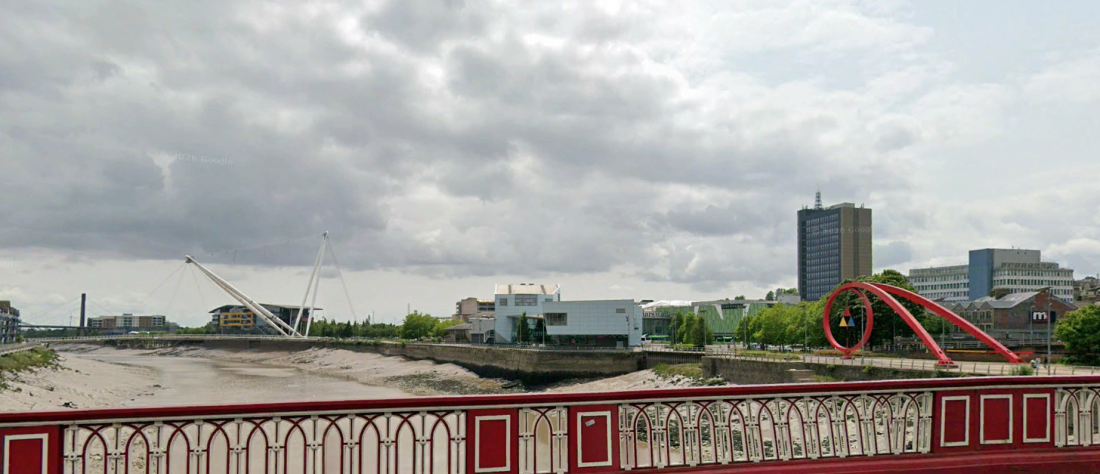
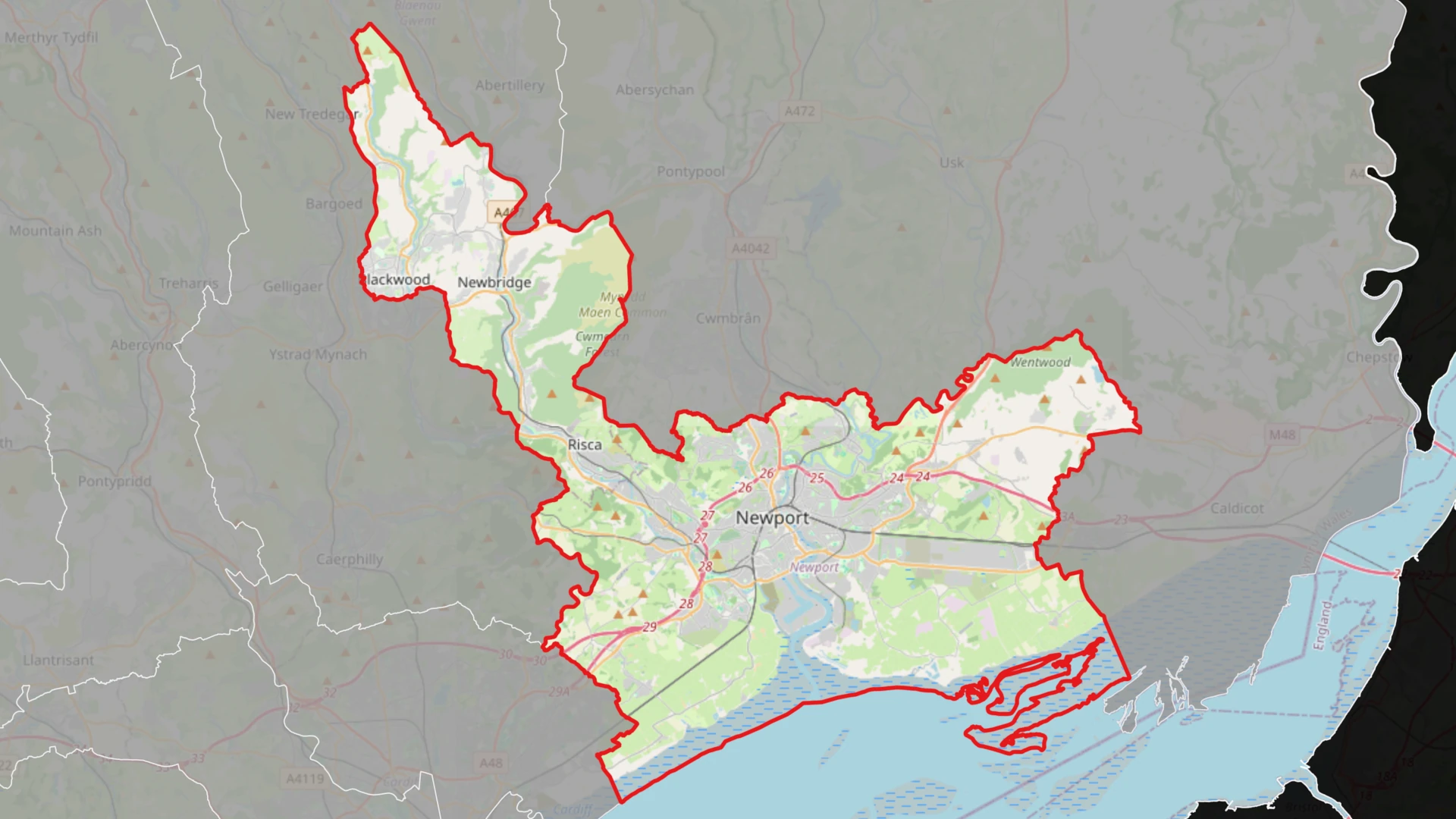
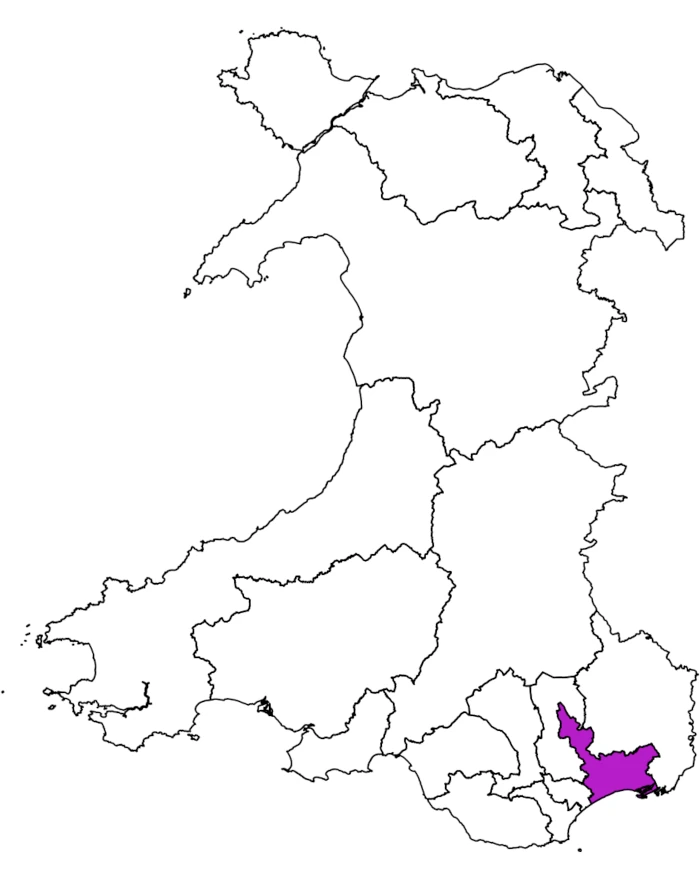

Image Source: Google Earth (taken June 2025)
Map data from OpenStreetMap under Open Data Commons Open Database Licence. Senedd constituency borders provided by DataMapWales under Crown Copyright.
Data Overview
| Measure | Value | Rank |
|---|---|---|
| % population aged 65 or over | 17.9% | 14th |
| Average Life Expectency at Birth (Male) | 78 | 12th |
| Average Life Expectency at Birth (Female) | 81.9 | 13th |
| Employment Rate | 74.0% | 6th |
| Economic Inactivity Rate | 23.3% | 10th |
| Median Weekly Earnings | £729.90 | 4th |
| % of Secondary school pupils entitled to free school meals | 20.0% | 6th |
| People employed by businesses headquartered in this constituency | 44,300 | 3rd |
| % population aged 3 and over who can speak Welsh | 7.8% | 16th |
| Adult population with a limiting long-term illness | 31.0% | 16th |
*Constituencies are ranked from 1 to 16 based on Senedd Cymru constituency data.
Source: Welsh Government, Data for the Senedd Constituency Areas (28th January 2026). https://www.gov.wales/data-senedd-cymru-constituency-areas-2026
Geographic Profile
Urban – Most people live in (or close to) a single, densely-populated built-up area.
WISERD Understanding Welsh Places Settlement Profiles
Scroll to the notes section for a full explanation.
Independent (1), Interdependent (5), Dependent (1)
Local Government Political Control
Caerphilly (Labour), Newport (Labour)
Candidates
Confirmed as of 09/04/2026
Unlike previous Senedd elections, you will have one vote (for a party, not a candidate) and one ballot paper at this election. A full explanation of how the new new voting system works is avalable in the video to the left.
Candidates will be elected in the order they appear on their party lists. Sitting MSs seeking re-election are in italics.
If you can view this correctly (desktop/landscape view), the six parties expected to win seats are are listed from left to right. Firstly, by the number of seats they won at the 2021 Senedd election; secondly, by the number of votes they received at the 2021 Senedd election. Click on the mini party logos below to open/close the drop down tab.
Labour
- Jayne Bryant
- Rhianon Passmore
- Chris Carter
- Rhian Howells
- Julie Sangani
- Stephen Marshall
- David Chinnick
Liberal Democrats
- Mike Hamilton
- John Miller
- Nurul Islam
- Hurun Rashid
- Mary Lloyd
- Jeff Evans
Conservatives
- Natasha Asghar
- Toby Jones
- Jake Enea
- Georgina Webb
- Adam Morris
- Rebecca Mamhende
Greens
- Lauren James
- Phil Davies
- Zaynab Greengrass
- Kerry Vosper
- David Mayer
- Andrew Were
Plaid Cymru
- Peredur Owen Griffiths
- Lyn Ackerman
- Rhys Mills
- Josh Rawcliffe
- Jonathan Clark
- Sarah Henton
Reform UK
- Dan Thomas
- Art Wright
- Marie-Claire Lea
- Nick Jones
- Rebecca Senior
- Tomos Llewelyn
Independents & Other Parties
- Heritage Party: Mike Ford
- Independent: Taran Clayton
Open Party
- Justna Muhith
- John Horan
Favourability
Demographics
The population in this constituency leans younger than the Welsh average, which is likely to favour parties focused on cost-of-living, climate change and issues such as housing and childcare. You would expect this to favour parties on the left (Labour, Plaid Cymru, Greens).
Education
The proportion of people with Level 4 (the equivalent of the first year of university) qualifications is lower than the Welsh average, which could be linked to higher levels of support for populist parties like Reform UK. Those with no qualifications are around the Welsh average. There is a satellite campus of a university in the constituency (University of South Wales, Newport).
Employment
Average levels of economic inactivity are unlikely to correlate with support for any particular party, or would lean towards support for keeping things as they are. High average earnings will also likely lead to greater support for more conservative parties, but the high proportion of children eligible for free school meals may mask in-work poverty.
Health
The population is generally healthier than the Welsh average. This doesn’t mean that issues such as health and social care won’t matter, but they may be lower priorities if local services are running well.
Geographic Make-Up
Urban areas with a youthful population usually trend with stronger support for liberal and progressive parties, such as the Greens, Lib Dems, Labour and Plaid Cymru. Islwyn has historically strongly supported Labour, but will likely be high up the target list for Reform UK.
Identity & Language
A low proportion of Welsh-speakers would normally disadvantage Plaid Cymru. The Newport area has historically fallen under “British Wales”– which may favour pro-Union parties such as the Lib Dems, Conservatives, Reform and Labour.
Brexit
The area leans towards Leave in the 2016 referendum, which would favour the Conservatives and Reform UK.
Election Ratings
- Labour
- Conservatives
- Plaid Cymru
- Liberal Democrats
- Reform UK
- Greens
- Others
1+1
1
1+1
0
2+1
0+1
0
Expected to win 1 seat, could win a second if they overperform.
Expected to win 1 seat.
Expected to win 1 seat, could win a second if they overperform.
Unlikely to win a seat.
Expected to win 2 seats, could win a third if they overperform.
Could win a seat if they overperform.
Unlikely to win a seat.
Notes
WISERD Understanding Welsh Places Model (link)
Independent – An independent place (including the independent to interdependent category) has many important things such as hospitals, businesses, and community facilities. It also has a mix of different kinds of jobs. People living there can easily go to work or use services nearby, and people from other communities go there too. Constituencies with a large number of independent places are likely to have stronger local economies and act as important regional centres.
Dependent – A dependent (including the dependent to interdependent category) place has fewer important things like hospitals, businesses, and community facilities. It may rely on one kind of job or a single major employer. People living here are more likely to commute out of the community to work or to use services. Constituencies with a large number of dependent places are reliant on services provided in other communities.
Interdependent – An interdependent (including the interdependent to independent and interdependent to dependent categories) place is somewhere in between independent and dependent places. It has a mix of important facilities and services, but not as many as an independent place. Residents will equally commute to other settlements to work, as well as work locally. Constituencies with a large number of interdependent places are likely to have a mix of dormitory towns/villages and important local centres (i.e. industrial estates, retail parks, general hospitals).


