Image Source: BBC iPlayer
Greens
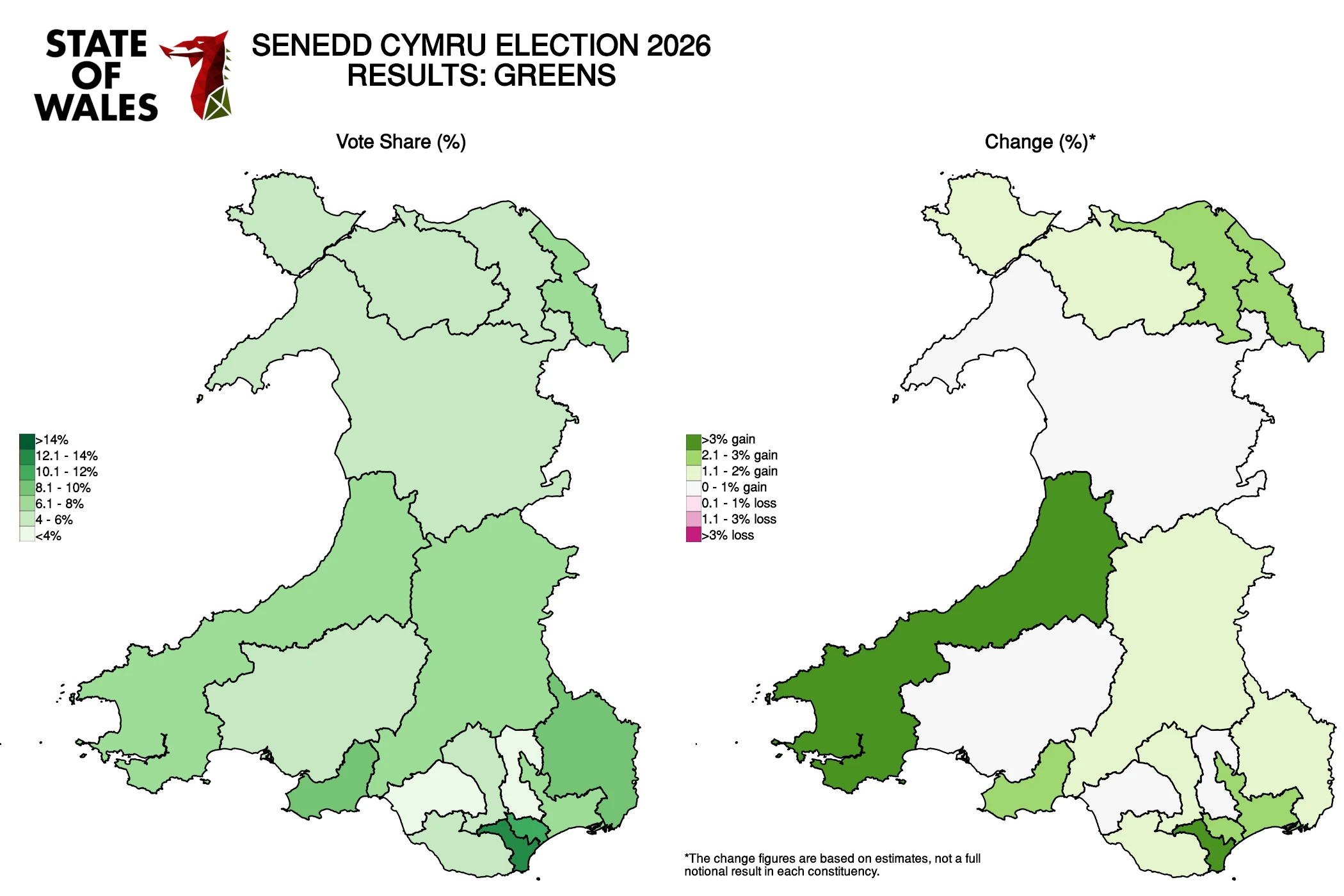
I suspect there’ll be a weird mixture of relief that they’re in the Senedd (at long last), but also disappointment that they didn’t meet polling expectations, which projected them winning up to 10 seats. By the looks of things, they only narrowly took the seat in Caerdydd Ffynon Taf.
Outside of Cardiff, their share of the vote was underwhelming if respectable: in the range of what the Lib Dems used to get.
The obvious answer as to why the Greens fell short is that they would’ve been squeezed out by Plaid’s “vote us to stop Reform” message. We all know that the Greens and Plaid tread a lot of the same political ground. So it’s likely that some Green supporters would’ve been willing to make that short step to backing Plaid (this time around at least).
But there are more positives than negatives. They have the base for staff and resources now, and can comfortably hold Plaid to account on issues like housing and climate commitments.
The next step in their growth in Wales has to be picking up council seats in every local authority next year. That’s what gave the Greens a platform to grow at a much faster pace in England.
Lib Dems
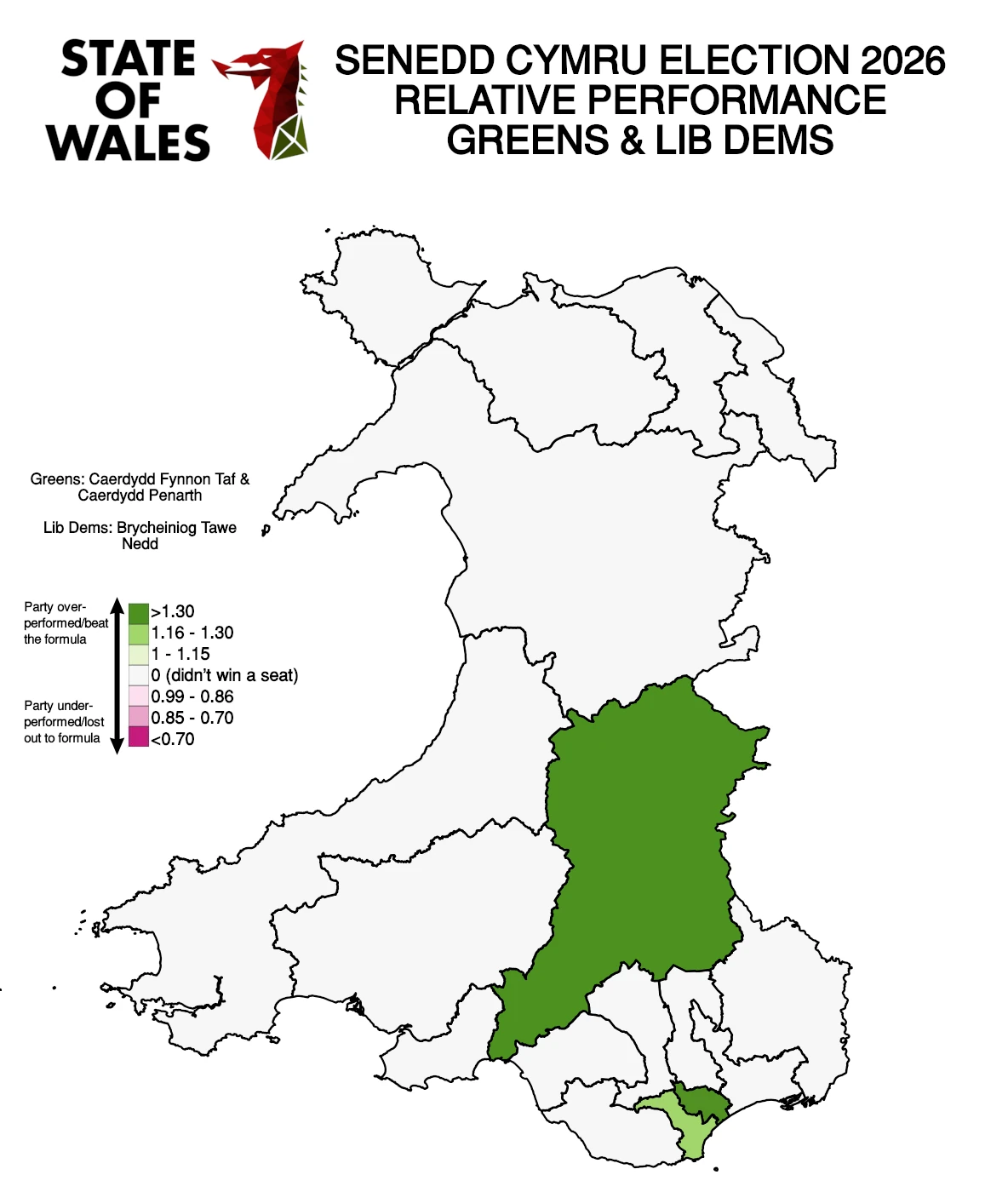
The relative performance (below) is calculated using a seats-to-votes ratio. It’s a measure of how proportional a result in a constituency is, but also gives you an idea as to whether a party has “beaten the D’Hondt formula” and over-performed (or the opposite).
The formula used for each constituency is:
(Seats won by a party ÷ 6*) ÷ (Votes received by a party ÷ total votes cast)
*Number of seats available in each constituency.
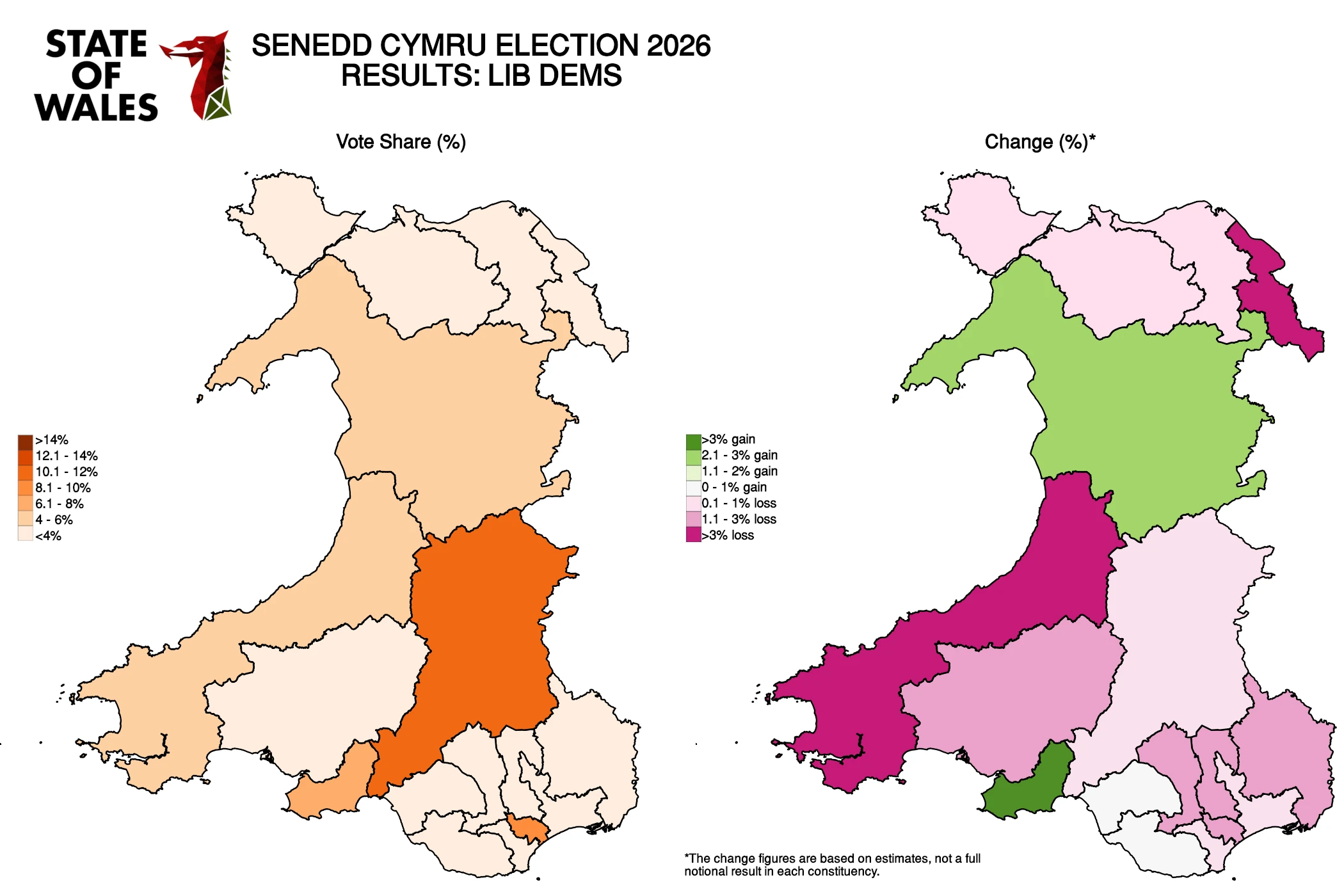
This wasn’t a great election for the Lib Dems (again), though they’ll be relieved to have retained their seat at least (and fairly comfortably in the end). It’s better than nothing.
Other than that, it’s mostly disappointment. On the surface, they didn’t come close to winning a seat anywhere outside Brycheiniog Tawe Nedd. They also finished behind the Conservatives in Caerdydd Ffynnon Taf (which is probably where the Lib Dems were projected to stand the best chance of picking up a second seat).
They also finished behind the Greens in Ceredigion Penfro (another part of Wales with a history of Lib Dem representation).
One bright spot is their performance in Gwyr Abertawe, but even then they finished just behind the Greens.
You would put the “natural Lib Dem voter” down as being reasonably informed. So, of any group willing to switch to Plaid Cymru to stop a Reform-led government, lapsed Lib Dem supporters would be my guess of being towards the top of the list.
So putting the “Stop Independence” front and centre of their campaign was a strange decision, and I still don’t know what they were thinking; it might’ve worked in 2021, but not now. I’m willing to bet that nobody behind the scenes in the Lib Dems is going to interpret Plaid’s strong showing as an endorsement of independence anyway. Surely, they’re not massive hypocrites?
Smaller Parties & Independents
Propel performed the best of the minor parties, taking 3.9% of the vote in Caerdydd Penarth. Could that have cost one of the other parties an extra seat (or first in the case of the Conservatives)?
The only stand-out results for Independents were Beth Winter (2,229 votes in Pontypridd Cynon Taf) and Russell George (2,862 votes in Gwynedd Maldwyn). Though neither of them came anywhere near what they needed to challenge for the sixth seat (as expected).
Gwlad technically did a bit better in terms of vote share than in 2021, but the results remain in the ballpark of being a rounding error.
As expected, the Heritage Party didn’t do anything of real note and finished behind the Monster Raving Loony Party in Bangor Conwy Môn – a terminal diagnosis for any political party. Time to let the Heritage Party cross the rainbow bridge.


