
Senedd Home
Oggy Bloggy Ogwr
State of Wales
Monday, September 28, 2026
  • About & Contact
    • About State of Wales
    • Comments Policy
    • Complaints Policy
    • Contact
    • Disclaimer
  • Elections Centre
  • The Independence Index
    • The Independence Index (Full)
    • Foreign Policy
      • Relations with the former UK & Ireland
      • Relations with Europe
      • Foreign Policy (General)
      • International Organisations & Law
      • Overseas Aid
    • Defence
      • Defence Policy
      • NATO
      • Armed Forces
      • National Security
      • Civil Defence
    • Rules & Regulations
      • Safety & Standards
      • Intellectual Property
    • Economics & Money
      • Business & Economy
      • Currency
      • Tax & Spending
      • Transport & Infrastructure
    • Society
      • Communities & Housing
      • Culture & Sport
      • Education
      • Health
      • Media & Communications
      • Science & Technology
    • The State
      • Environment & Natural Resources
      • Justice
      • Local Government
  • Support & Donate
No Result
View All Result
  • About & Contact
    • About State of Wales
    • Comments Policy
    • Complaints Policy
    • Contact
    • Disclaimer
  • Elections Centre
  • The Independence Index
    • The Independence Index (Full)
    • Foreign Policy
      • Relations with the former UK & Ireland
      • Relations with Europe
      • Foreign Policy (General)
      • International Organisations & Law
      • Overseas Aid
    • Defence
      • Defence Policy
      • NATO
      • Armed Forces
      • National Security
      • Civil Defence
    • Rules & Regulations
      • Safety & Standards
      • Intellectual Property
    • Economics & Money
      • Business & Economy
      • Currency
      • Tax & Spending
      • Transport & Infrastructure
    • Society
      • Communities & Housing
      • Culture & Sport
      • Education
      • Health
      • Media & Communications
      • Science & Technology
    • The State
      • Environment & Natural Resources
      • Justice
      • Local Government
  • Support & Donate
No Result
View All Result
State of Wales
No Result
View All Result
Home Elections Centre

Senedd 2026 Constituency Profiles: Clwyd

Owen Donovan by Owen Donovan
April 17, 2026
in Elections Centre, Senedd 2026
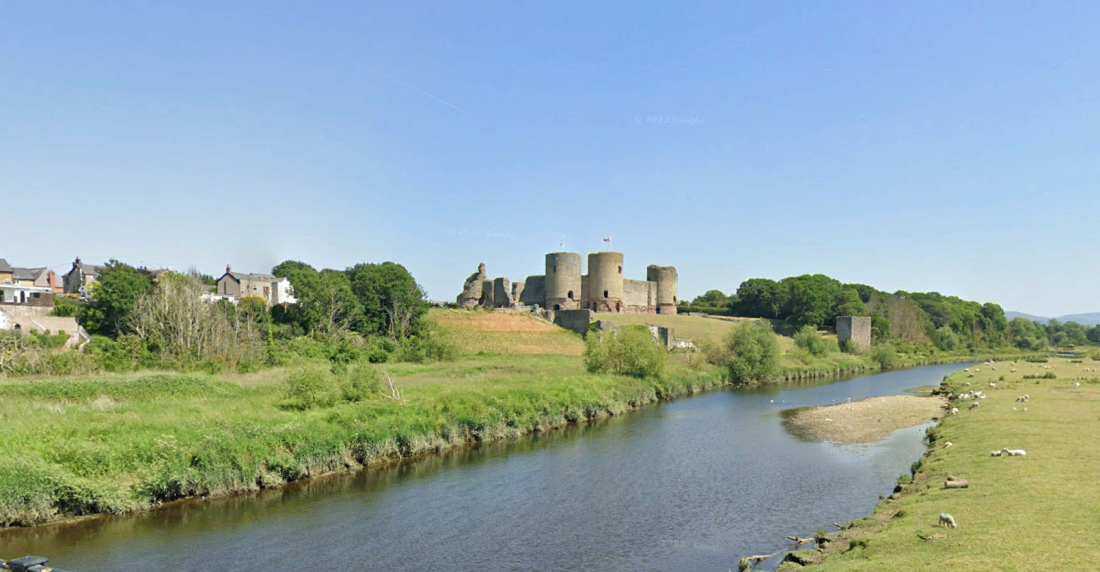
Senedd 2026 Constituency Profiles: Clwyd

Google Earth (taken June 2023)

Share on FacebookShare on TwitterShare on RedditShare on BlueskyShare by email

Image Source: Google Earth (taken June 2023)

This site is best viewed in landscape mode on smartphones.
Support State of Wales

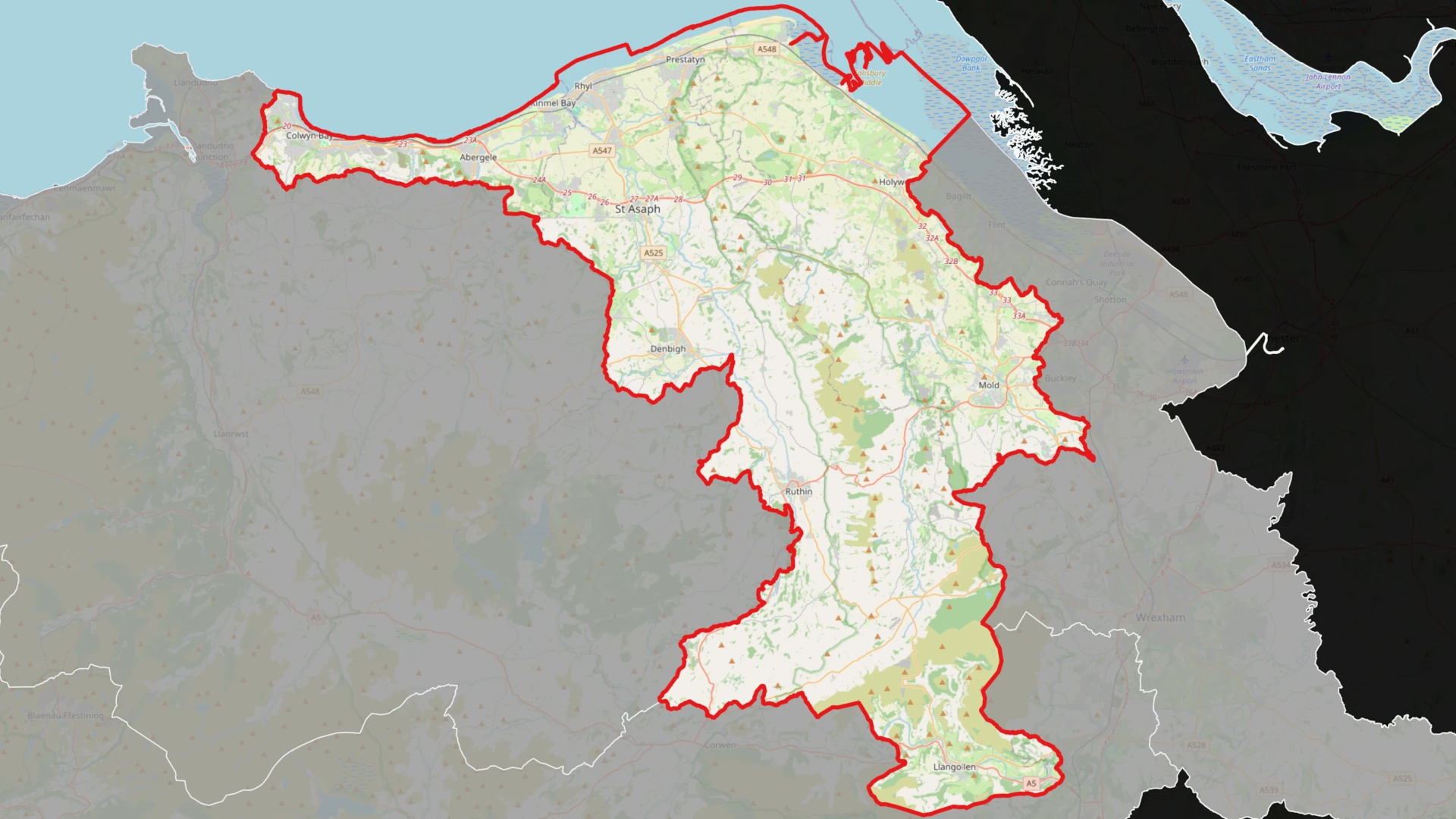
Map data from OpenStreetMap under Open Data Commons Open Database Licence. Senedd constituency borders provided by DataMapWales under Crown Copyright.

Data Overview

MeasureValueRank
% population aged 65 or over 25.9%2nd
Average Life Expectency at Birth (Male) 7811th
Average Life Expectency at Birth (Female) 829th
Employment Rate 76.1%4th
Economic Inactivity Rate 21.0%13th
Median Weekly Earnings £681.6010th
% of Secondary school pupils entitled to free school meals 19.0%7th
People employed by businesses headquartered in this constituency40,7006th
% population aged 3 and over who can speak Welsh 18.4%5th
Adult population with a limiting long-term illness43.0%2nd

*Constituencies are ranked from 1 to 16 based on Senedd Cymru constituency data.
Source: Welsh Government, Data for the Senedd Constituency Areas (28th January 2026). https://www.gov.wales/data-senedd-cymru-constituency-areas-2026

Geographic Profile

Urban-Rural Mix – The population is split between those living in a few urban areas/large towns, and those living in smaller villages and towns surrounded by countryside.

WISERD Understanding Welsh Places Settlement Profiles

Scroll to the notes section for a full explanation.

Independent (5), Interdependent (6), Dependent (2)

Local Government Political Control

Conwy (Ind–Plaid–Lab–Green coalition), Denbighshire, (Labour–Plaid Cymru coalition), Flintshire (Labour–Independent coalition)

Candidates

Confirmed as of 09/04/2026

Unlike previous Senedd elections, you will have one vote (for a party, not a candidate) and one ballot paper at this election. A full explanation of how the new new voting system works is avalable in the video to the left.

Candidates will be elected in the order they appear on their party lists. Sitting MSs seeking re-election are in italics.

If you can view this correctly (desktop/landscape view), the six parties expected to win seats are are listed from left to right. Firstly, by the number of seats they won at the 2021 Senedd election; secondly, by the number of votes they received at the 2021 Senedd election. Click on the mini party logos below to open/close the drop down tab.

Labour

  1. Hannah Blythyn
  2. Carolyn Thomas
  3. Crispin Jones
  4. Ellen Jones
  5. Raj Metri
  6. Catherine Claydon
  7. Arran Fearn
  8. Cheryl Williams

Liberal Democrats

  1. David Wilkins
  2. Bobby Feeley
  3. Nanette Davies
  4. Simon Croft
  5. Jason Higgins
  6. Keith Kirwan

Conservatives

  1. Darren Millar
  2. Gareth Davies
  3. Gareth Williams
  4. Justine Evans
  5. Sylvia Clough-Hughes
  6. Damon Richards-Gwilliam
  7. Mike Gebreyohanes

Greens

  1. Martyn Hogg
  2. Carly Murdoch-Dyson
  3. Lucy Sutton
  4. Karl McNaughton
  5. David Blainey
  6. Cheryl Buxton-Sait

Plaid Cymru

  1. Llŷr Gruffydd
  2. Becca Martin
  3. Oli Bradley-Hughes
  4. Paul Penlington
  5. Delyth Jones
  6. Abdul Khan

Reform UK

  1. Adrian Mason
  2. Louise Emery
  3. Thomas Montgomery
  4. David Smith
  5. Kristian Salkeld
  6. Anthony Thomas

Independents & Other Parties

  1. Heritage Party: Rob Redhead

Favourability

Demographics

The population in this constituency leans older than the Welsh average, which is likely to favour parties focused on issues such as energy costs, health, social care and fear of crime. You would expect this to favour parties on the right (Conservatives, Reform UK).

Education

The proportion of people with Level 4 (the equivalent of the first year of university) qualifications is around the Welsh average, which likely won’t advantage or disadvantage any of the parties.

Employment

Lower than average levels of economic inactivity would likely result in stronger support for more conservative, lower-tax parties, or parties that support stability (Conservatives, Labour). However, the area has median weekly earnings below the Welsh average, which may mask higher levels of in-work poverty.

Health

Although life expectancy is around the Welsh average, the levels of poor health are well above the Welsh average. This has traditionally advantaged Labour or any party with health/NHS at the top of its policy platform. Reform UK have performed well in similar areas in England.

Geographic Make-Up

Most of the population live in larger towns along the coast (such as Colwyn Bay, Rhyl and Prestatyn). Some of these towns have long leant towards the Conservatives, while parts of Rhyl have often topped the list of the most deprived areas of Wales.

Identity & Language

A higher-than-average proportion of Welsh-speakers favours Plaid Cymru. However, the constituency lies within “British Wales”, has long attracted retirees from England, and has historically leaned towards more conservative parties (aka. the “Costa Geriatrica”).

Brexit

The area leans towards Leave in the 2016 referendum, which would favour the Conservatives and Reform UK.

Election Ratings

  • Labour
  • Conservatives
  • Plaid Cymru
  • Liberal Democrats
  • Reform UK
  • Greens
  • Others

1

1+1

1+1

0

2+1

0

0

Expected to win 1 seat.
Expected to win 1 seat, could win a second if they overperform.
Unlikely to win a seat.
Expected to win 2 seats, could win a third if they overperform.
Unlikely to win a seat.

Notes

WISERD Understanding Welsh Places Model (link)

Independent
– An independent place (including the independent to interdependent category) has many important things such as hospitals, businesses, and community facilities. It also has a mix of different kinds of jobs. People living there can easily go to work or use services nearby, and people from other communities go there too. Constituencies with a large number of independent places are likely to have stronger local economies and act as important regional centres.

Dependent – A dependent (including the dependent to interdependent category) place has fewer important things like hospitals, businesses, and community facilities. It may rely on one kind of job or a single major employer. People living here are more likely to commute out of the community to work or to use services. Constituencies with a large number of dependent places are reliant on services provided in other communities.

Interdependent – An interdependent (including the interdependent to independent and interdependent to dependent categories) place is somewhere in between independent and dependent places. It has a mix of important facilities and services, but not as many as an independent place. Residents will equally commute to other settlements to work, as well as work locally. Constituencies with a large number of interdependent places are likely to have a mix of dormitory towns/villages and important local centres (i.e. industrial estates, retail parks, general hospitals).

Senedd 2026

Senedd 2026 After Action Report: Greens, Lib Dems & Others

Senedd 2026 After Action Report: Greens, Lib Dems & Others

May 15, 2026
Senedd 2026 After Action Report: Conservatives

Senedd 2026 After Action Report: Conservatives

May 15, 2026
Senedd 2026 After Action Report: Plaid Cymru

Senedd 2026 After Action Report: Plaid Cymru

May 14, 2026
Senedd 2026 After Action Report: Reform UK

Senedd 2026 After Action Report: Reform UK

May 14, 2026
Senedd 2026 After Action Report: Labour

Senedd 2026 After Action Report: Labour

May 13, 2026
Senedd 2026: What will be the key issues?

Senedd 2026: Results & Reaction

May 9, 2026
Senedd 2026 Constituency Profiles: Pen-y-bont Bro Morgannwg

Senedd 2026 Constituency Profiles: Pen-y-bont Bro Morgannwg

May 2, 2026
Senedd 2026 Constituency Profiles: Caerdydd Penarth

Senedd 2026 Constituency Profiles: Caerdydd Penarth

May 2, 2026
Senedd 2026 Constituency Profiles: Caerdydd Ffynnon Taf

Senedd 2026 Constituency Profiles: Caerdydd Ffynnon Taf

May 2, 2026
Load More
Donations Welcome
Tags: ConwyDenbighshireFlintshireSeneddSenedd Election 2026
Previous Post

Senedd 2026 Constituency Profiles: Gwynedd Maldwyn

Next Post

Senedd 2026 Constituency Profiles: Fflint Wrecsam

Owen Donovan

Owen Donovan

Archive

Categories

Copyright

Creative Commons Licence

State of Wales by Owen Donovan is licensed under a Creative Commons Attribution-NonCommercial-NoDerivatives 4.0 International License.

Subscribe by Email

Search

No Result
View All Result
No Result
View All Result
  • Go To Senedd Home
  • Go To Oggy Bloggy Ogwr
  • About & Contact
    • About State of Wales
    • Comments Policy
    • Complaints Policy
    • Contact & Subscribe by Email
    • Disclaimer
  • Features
    • After the UK
    • Chinny Reckon
    • Devil’s Advocate
    • How Wales Works
    • Road to Brexit
  • The Independence Index
    • The Independence Index (full)
    • Economics & Money
      • Business & Economy
      • Currency
      • Tax & Spending
      • Transport & Infrastructure
    • Society
      • Communities & Housing
      • Culture & Sport
      • Education
      • Health
      • Media & Communications
      • Science & Technology
    • The State
      • Environment & Natural Resources
      • Justice
      • Local Government
  • Elections Centre
  • Wales FAQ
    • How is Wales funded?
    • How are laws in Wales made?
  • Support & Donate