Senedd Home
Oggy Bloggy Ogwr
State of Wales
Thursday, August 13, 2026
  • About & Contact
    • About State of Wales
    • Comments Policy
    • Complaints Policy
    • Contact
    • Disclaimer
  • Elections Centre
  • The Independence Index
    • The Independence Index (Full)
    • Foreign Policy
      • Relations with the former UK & Ireland
      • Relations with Europe
      • Foreign Policy (General)
      • International Organisations & Law
      • Overseas Aid
    • Defence
      • Defence Policy
      • NATO
      • Armed Forces
      • National Security
      • Civil Defence
    • Rules & Regulations
      • Safety & Standards
      • Intellectual Property
    • Economics & Money
      • Business & Economy
      • Currency
      • Tax & Spending
      • Transport & Infrastructure
    • Society
      • Communities & Housing
      • Culture & Sport
      • Education
      • Health
      • Media & Communications
      • Science & Technology
    • The State
      • Environment & Natural Resources
      • Justice
      • Local Government
  • Support & Donate
No Result
View All Result
  • About & Contact
    • About State of Wales
    • Comments Policy
    • Complaints Policy
    • Contact
    • Disclaimer
  • Elections Centre
  • The Independence Index
    • The Independence Index (Full)
    • Foreign Policy
      • Relations with the former UK & Ireland
      • Relations with Europe
      • Foreign Policy (General)
      • International Organisations & Law
      • Overseas Aid
    • Defence
      • Defence Policy
      • NATO
      • Armed Forces
      • National Security
      • Civil Defence
    • Rules & Regulations
      • Safety & Standards
      • Intellectual Property
    • Economics & Money
      • Business & Economy
      • Currency
      • Tax & Spending
      • Transport & Infrastructure
    • Society
      • Communities & Housing
      • Culture & Sport
      • Education
      • Health
      • Media & Communications
      • Science & Technology
    • The State
      • Environment & Natural Resources
      • Justice
      • Local Government
  • Support & Donate
No Result
View All Result
State of Wales
No Result
View All Result
Home Elections Centre

Senedd 2026: 10 Key Moments of the Sixth Senedd

Owen Donovan by Owen Donovan
March 31, 2026
in Elections Centre, Senedd 2026
Senedd 2026: 10 Key Moments of the Sixth Senedd

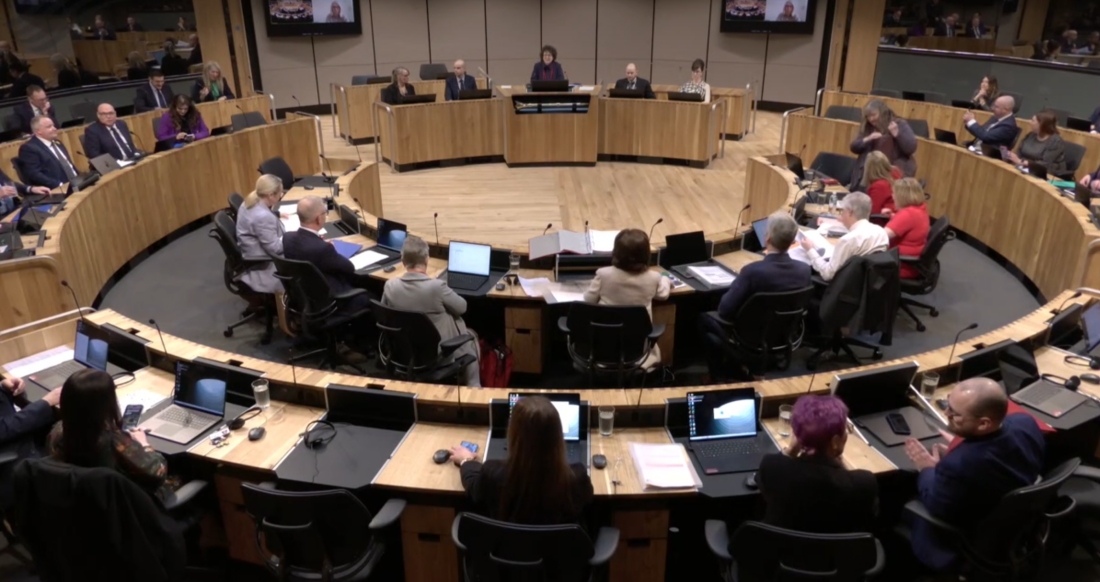
Senedd TV, Senedd Commission Copyright

Share on FacebookShare on TwitterShare on RedditShare on BlueskyShare by email

Title Image: Senedd TV, Senedd Commission Copyright

This site is best viewed in landscape mode or desktop mode on smartphones.
Support State of Wales

With the Sixth Senedd having now come to a close, it’s worth reflecting on what’s happened over the past five years.

A few ongoing issues carried over from the Fifth Senedd didn’t play as big a role in the Sixth Senedd as expected. These include the post-pandemic recovery (aside from waiting lists and the fallout from the pandemic itself; others have covered that better than I can) and some aspects of Brexit.

There have also been events to which the Senedd was an observer or passenger instead of playing an active role: the Ukraine War, the Truss mini-budget, and Trump’s re-election.

With all of that in mind, what do I believe have been the most significant events of the last Senedd term?

The 20 mph Speed Limit

The rollout of a 20mph default speed limit in built-up areas in September 2023 turned out to be one of the most controversial policies introduced since devolution.

The evidence published to date suggests that the policy has been a success. Namely, a 28% drop in serious road casualties, which will have potentially saved some lives, as well as the NHS and emergency services some money. In the longer term, it could mean that car insurance quotes in Wales fall.

While it’s refreshing to see someone at the top (Lee Waters in our case) take on our car-first attitudes, it’s right to take issue with how the policy was introduced rather than the why.

There’s no single thing you can point to and say: “This is why it blew up the way it did”. If you had to pick up on anything, it would be the absence of a credible public information campaign and differences in how the policy was applied on the ground by different councils. This was a very top-down, “We know best”, technocratic exercise.

Nonetheless, rolling it back and returning to the old way of doing things to chase votes and fund pork barrel projects – which seems inevitable, regardless of who forms the next Welsh Government – could be a generational mistake.

Why is this a key moment?

I can’t think of many policies that have raised so many issues unrelated to the policy itself: disinformation (and the negative influence of social media), how policy is made and communicated to the public, how local government delivers Welsh Government policies on the ground, and abuse of politicians using a mandate given to them by voters (20 mph was in Labour’s 2021 manifesto).

The End of Primary Steel-Making at Port Talbot

After years of uncertainty, the long-anticipated winding down of Port Talbot’s blast furnaces began in September 2024. It forms part of a shift by the plant’s Indian owners, TATA, towards an electric arc furnace.

Resultingly, up to 3,000 jobs have been lost, marking another closed chapter in the history of heavy industry in Wales.

It’s also important in the wider UK context. Not being able to produce as much fresh/primary steel (relying on imports) is a strategic loss for the UK, as fresh steel is important in military production amongst other things (given there’s a rush to improve the UK’s defences at the moment).

During the downsizing process, the question of nationalisation was raised too, including whether the UK Government showed favouritism towards other parts of the UK (British Steel is set to be fully nationalised as of March 2026).

There have been some positives. The medium-term future of the site is secure and, in the grand scheme of things, it’s better for some of the skills and jobs remain instead of losing the steelworks entirely. The air quality benefits became apparent within months as well.

Why is this a key moment?

The downgrading of Port Talbot Steelworks has been on the cards for a decade or more, but it’s still a big blow – particularly to the town itself.

It also highlights a few core issues. These include how high a priority Wales is for economic development at the UK Government level (and the limited tools available to the Welsh Government), how best to balance the environment with (polluting/heavy) industry, and the question of government intervention in the economy. In an increasingly uncertain world with countries pursuing greater protectionism, is nationalisation making a comeback?

The Crown Estate Debate

Regardless of the rights and wrongs around it, the HS2 Barnett Formula debate comes across as another “begging bowl” issue in Welsh politics. All parties do something similar; even the Tories when they moan about local government funding.

There isn’t even any concrete agreement on how much money Wales has missed out on compared to Scotland and Northern Ireland (where the necessary powers needed to receive extra funding have been devolved).

So the debate had been contained to online arguments between the usual suspects and will often devolve (heh) into finger-pointing about why rail infrastructure wasn’t devolved to Wales in the 2000s.

The debate around devolution of the Crown Estate, however, has cut through.

Every local authority in Wales has formally backed calls for devolution. That’s harder to ignore given the number of high-profile leases for offshore renewable energy projects over the last few years. Tie that to the, at best, dismissive attitude the Labour UK Government has shown towards devolution since 2024, and it’s causing a problem.

Why is this a key moment?

The amount of money raised in Wales by the Crown Estate is a pittance in the grand scheme of things, but it’s forced a lot of people who wouldn’t even consider themselves to be “nationalists” to ask that question: How much of Wales do the Welsh control?

Labour's Post-Mark Drakeford Leadership Crisis

Mark Drakeford made his intentions clear early into his premiership that he would stand down as First Minister at some point during the Sixth Senedd.

The leadership contest that followed his formal resignation announcement in 2023 ended up being unexpectedly close and divisive.

The then Economy Minister, Vaughan Gething, narrowly won ahead of Education Minister Jeremy Miles. Revelations around donations from a businessman convicted of environmental offences – and leaks suggesting that Gething had deleted important texts during his time as Health Minister during the Covid-19 pandemic – immediately undermined his credibility.

Gething’s refusal to resign following a successful no-confidence vote in June 2024 (he wasn’t obligated to do so, but it was a bad idea to carry on) made matters worse. It was only a coordinated mass Cabinet resignation a few weeks later – undertaken mainly by ministers who backed Jeremy Miles in the leadership contest – that sealed Vaughan Gething’s fate.

Eluned Morgan’s coronation provided some immediate stability. However, she’s always been prone to foot-in-mouth; the recent stuff about Netflix, for example, and going further back, the likes of proto-Tik Tok brainrot “Aneurin Glyndwr” (which involved David Taylor).

Additionally, having to draft Mark Drakeford back into the government as Finance Minister underlined a serious talent shortage on the Labour benches.

Why is this a key moment?

Labour in Wales need a First Minister who’s as good in defence as they are on the attack, but the damage has been done. Certainly, for the first time since devolution, Labour can’t message as being the “safe pair of hands”.

The Return of New Labour (but not "Clear Red Water")

One unwelcome trend of the 2020s is the pumping out of cheap, landfill knockoff political sequels that nobody asked for. We have the Poundland Caligula (Trump), the B&M Hitler (Putin), the Shein King Herod (Netanyahu), the Temu Enoch Powell (Farage) and the Home Bargains Blair (Starmer).

Some core tenets of Blairism include: “devolve and forget” and “forget to devolve”, sacrificing civil liberties for security, Atlanticism, public-private partnerships and “making tough decisions” and “having difficult conversations” (roughly translated as meaning Labour making decisions that are unpopular with Labour voters).

There are some key differences between New Labour under Blair and “New New Labour” under Starmer. For one, Starmer doesn’t seem as opposed to state intervention in the economy. He’s also a less gifted communicator, and a more high-handed technocrat, than Blair ever was.

Standing opposed to First Wave Blairism was Rhodri Morgan’s (c/o Mark Drakeford) “Clear Red Water”. Devolution gave Labour in Wales enough wriggle room to offer old school socialist red meat to the Labour bloc in Wales to keep them onboard (universal benefits like free prescriptions being a poster boy for that).

Elsewhere, Labour under Blair were free to introduce centrist and market-led reforms in England and in non-devolved policy areas without pissing off voters in their safe Welsh (UK Parliament) constituencies.

Despite attempts by Eluned Morgan to forge a “Red Welsh Way”, it’s a pale imitation of Clear Red Water. Labour in Wales has less wriggle room. No majority; greater budget pressures in areas like health and local government than in the 2000s; a continued weaker devolution settlement than Scotland, with the novelty of devolution having long worn off.

In some cases – free childcare, for example – the Welsh offer is less generous than England’s. That’s exactly the situation “Clear Red Water” was supposed to avoid.

Why is this a key moment?

Following the 2024 UK General Election, with Labour governments at both ends of the M4, there were hopes that Wales would be higher up the in-tray at 10 Downing Street. It hasn’t turned out like that at all. After 100+ years of electoral success, at little cost to themselves, Labour may have finally given up on Wales.

The Sustainable Farming Scheme

The loss of UK access to European Union farming payments and subsidies (Common Agricultural Policy) following the completion of the Brexit process meant an alternative needed to be created.

Agriculture is devolved. So any replacement for the EU programme would need to be developed and delivered by the Welsh Government and Senedd. The scheme has since been developed to balance food production (mainly livestock in the case of Wales) and the environment.

The initial proposals – which set controversial environmental targets for farmers, such as setting aside up to 10% of their land for trees – weren’t warmly received.

A similar debate was being had in the rest of the UK (England’s Sustainable Farming Initiative, for example), leading to the “No Farmers, No Food” campaign and, resultingly, one of the largest protests held outside the Senedd.

Years of talks and consultation resulted in a final version being ready for introduction in January 2026. Like any compromise, it doesn’t seem to have pleased anybody: environmental campaigners believe it’s been watered down; farmers don’t think it’s backed by enough money.

The irony? It’s very similar to proposed changes to EU agricultural funding post-2027. So it probably would’ve happened anyway if the UK voted Remain.

Why is this a key moment?

It’s one of the most significant changes to devolved policy directly tied to Brexit. We won’t know whether it’s better or worse than the EU programmes it replaces for some time, but it’s likely to cause a big headache for the incoming Welsh Government if the farming community doesn’t take to it.

Scrutiny of Standards of Conduct (& the “Ban on Lying”)

Compared to the Fifth Senedd, there have been noticeably fewer high-profile standards investigations. This is likely because the main characters involved in the last set of dramas weren’t in the Senedd anymore.

Despite this, the handling of the serious standards breaches that have occurred this term raises questions.

Firstly, how to deal with very serious standards breaches which don’t cross the threshold to force a disqualification?

The case in question is the suspension of Rhys ab Owen for a record 42 days for sexual harassment. Yet again, it’s another incident involving drunkenness, but we’ve been told for years and years that the Senedd/Bay Bubble “doesn’t have a drinking culture”.

That suspension would’ve triggered a recall if he were an MP, but there was no such mechanism for MSs at the time; it’s prompted the inclusion of a recall mechanism in the Member Accountability Bill (at time of posting this it was awaiting Royal Assent).

Secondly, the independence of the complaints system. As things stand, MSs largely police themselves through the Standards Committee. Soon-to-be-introduced reforms will add “lay members” to the Committee in a similar way that local authority standards committees operate.

Finally, attempts to tackle misinformation. Plaid Cymru’s Adam Price has led the charge on this, and while the proposals included in the Member Accountability Bill don’t go as far as a “ban on lying“, it does strengthen rules about publishing or promoting false information during an election campaign. How this will be policed and defined, while carefully balancing freedom of speech, is yet to be explained convincingly.

Why is this a key moment?

You would’ve expected those in charge to have gotten a grip on this by now. We can’t have confidence in MSs’ if the system policing them is broken, or if they are left to police themselves. The “ban” on lying during an election campaign seems like one of these attention-grabbing, back-slapping, “put Wales on the map”, gesture policies which could be hard to enforce in practice.

Senedd & Elections Act 2024 (Senedd Expansion & Electoral Reform)

At the forthcoming election, the Senedd will become the second legislature in the UK – after the Northern Irish Assembly – to be elected entirely by proportional representation.

Additionally, the Senedd will be expanded by 60%, forcing through a refurbishment of the main chamber, prompting MSs to briefly decamp to the old chamber.

At this election, we should end up electing a Senedd whose members reflect the number of votes their parties receive. The trade-off for that new system has meant that voters have lost the ability to vote for specific candidates.

With all MSs elected in the order they’re placed on lists, the parties retain a lot of control over who stands. It also means that someone’s chances or getting elected or re-elected largely depend on the goodwill of the party and the party’s selection policies (i.e. seeking gender balance). This has already led, in some cases, to experienced or highly thought of MSs facing difficulty getting re-elected because they’ve been bumped down the lists.

Why is this a key moment?

Your vote will actually matter. There are fewer safe seats. Whether this will encourage people to actually bother to vote this time (Senedd election turnouts often hover around the 40-45% mark) is another thing entirely.

Disused Mines & Quarry Tips Act 2025

There are over 2,500 coal tips dotted around Wales, and over 300 of them are considered to pose a risk to public safety. Extreme shifts in weather patterns brought about by climate change – wetter autumns and winters combined with drier springs and summers – affect the stability of these tips.

Given longstanding fears of a repeat of the Aberfan disaster – and several smaller landslips – a law was passed in the Senedd to create a new inspection and tip safety agency (Disused Tips Authority).

The powers to deal with coal tips are split. Coal tip safety is devolved. But coal tips pre-date devolution, and some of the land itself and other functions are the responsibility of the Mining Remediation Authority (formerly the Coal Authority), which isn’t devolved.

While some funding has been made available by the UK Government to begin the process of tip removal or remediation, the total cost is estimated at anything up to £600 million.

Why is this a key moment?

It’s an example of Wales putting law-making powers to good use, even if it took a long time to get to that point. We’re still going to be living with the legacy of deep coal mining for decades to come. It’s also likely to mean that attention turns to other forms of industrial pollution in the next term.

2025 Caerphilly By-Election

The circumstances surrounding the death of Dr Hefin David were horrific and tragic enough for everyone involved. There’s not much more you can say about it.

The resulting by-election was perhaps the first Senedd-related election that captured the attention of the UK media. Though, as usual, that wasn’t because of what the eventual winners Plaid Cymru were doing, but the narrative around Labour’s expected under-performance and the (at some points certain) expected victory for Reform UK.

You should never read too much into by-elections. The voting patterns probably won’t be repeated in the same way. Even if they were, the new voting system would guarantee Reform seats, instead of the “winner-takes-all” of a first-past-the-post by-election.

It did prove that even if Reform are riding on a wave of populist anger, they have a ceiling and can be beaten back. While there are plenty of people out there who like what Farage and Co. have to say, there are at least as many, if not more, who don’t. That’s not a foundation for long-term success.

Why is this a key moment?

As a tragedy, two suicides by sitting Senedd members in the space of a decade isn’t something that should be brushed off. We hear a lot of talk about men and mental health, but we clearly need something more meaningful than words and hashtags.

As a dry run for the Senedd election, it fired a very loud warning shot to Labour, underlined how much work on the ground Plaid Cymru will need to do perform as strongly the polls expect them to, and exposed Reform’s strengths and weaknesses (giving them enough time to address the latter).

Senedd 2026

Senedd 2026 After Action Report: Greens, Lib Dems & Others

Senedd 2026 After Action Report: Greens, Lib Dems & Others

May 15, 2026
Senedd 2026 After Action Report: Conservatives

Senedd 2026 After Action Report: Conservatives

May 15, 2026
Senedd 2026 After Action Report: Plaid Cymru

Senedd 2026 After Action Report: Plaid Cymru

May 14, 2026
Senedd 2026 After Action Report: Reform UK

Senedd 2026 After Action Report: Reform UK

May 14, 2026
Senedd 2026 After Action Report: Labour

Senedd 2026 After Action Report: Labour

May 13, 2026
Senedd 2026: What will be the key issues?

Senedd 2026: Results & Reaction

May 9, 2026
Senedd 2026 Constituency Profiles: Pen-y-bont Bro Morgannwg

Senedd 2026 Constituency Profiles: Pen-y-bont Bro Morgannwg

May 2, 2026
Senedd 2026 Constituency Profiles: Caerdydd Penarth

Senedd 2026 Constituency Profiles: Caerdydd Penarth

May 2, 2026
Senedd 2026 Constituency Profiles: Caerdydd Ffynnon Taf

Senedd 2026 Constituency Profiles: Caerdydd Ffynnon Taf

May 2, 2026
Load More
Donations Welcome
Tags: BrexitBrexit Party/Reform UKCaerphillyClimate & Climate ChangeCrown EstateDemocracyEnergy Infrastructure & GridFarmingImmigrationIndustry & ManufacturingLabourMental HealthNeath Port TalbotPlaid CymruRoad SafetyRoad TransportSeneddSenedd Election 2026UK GovernmentWelsh Government
Previous Post

Senedd 2026: Did Labour Deliver?

Next Post

Senedd 2026: What will be the key issues?

Owen Donovan

Owen Donovan

Archive

Categories

Copyright

Creative Commons Licence

State of Wales by Owen Donovan is licensed under a Creative Commons Attribution-NonCommercial-NoDerivatives 4.0 International License.

Subscribe by Email

Search

No Result
View All Result
No Result
View All Result
  • Go To Senedd Home
  • Go To Oggy Bloggy Ogwr
  • About & Contact
    • About State of Wales
    • Comments Policy
    • Complaints Policy
    • Contact & Subscribe by Email
    • Disclaimer
  • Features
    • After the UK
    • Chinny Reckon
    • Devil’s Advocate
    • How Wales Works
    • Road to Brexit
  • The Independence Index
    • The Independence Index (full)
    • Economics & Money
      • Business & Economy
      • Currency
      • Tax & Spending
      • Transport & Infrastructure
    • Society
      • Communities & Housing
      • Culture & Sport
      • Education
      • Health
      • Media & Communications
      • Science & Technology
    • The State
      • Environment & Natural Resources
      • Justice
      • Local Government
  • Elections Centre
  • Wales FAQ
    • How is Wales funded?
    • How are laws in Wales made?
  • Support & Donate