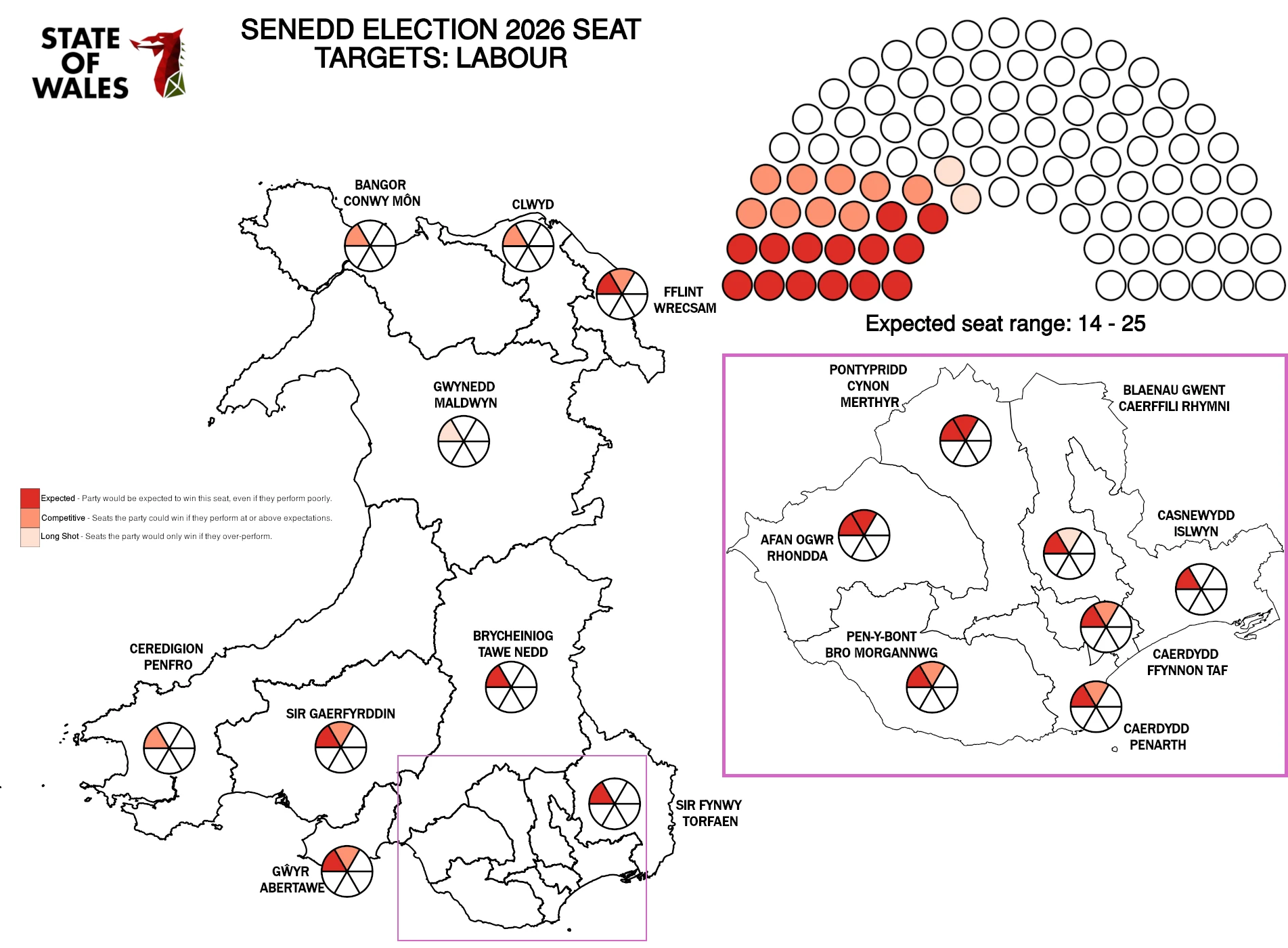
Labour has historically performed well in Senedd elections and they still have a high floor. Even if they underperform by 10% or so from their usual vote share (from the mid to high 30s), they should still expect to win a significant number of seats – just not as many as they’re used to.
The incumbency factor. For better and for worse, we know what we’re going to get from Labour. All other options are untried and untested. The typical Welsh voter tends to verge on the side of (small-c) conservatism, which benefits an established party with a record in government they can point towards.
Despite their support slipping away over the last few years, Labour has long had the most effective on-the-ground operation in Wales. If they can mobilise to “get out the vote”, they might be able to do better than the polls suggest.
Similarly, they can rely on institutional support. Working with Labour has long been the default for the civil service, charities/third sector, local government (where Labour is currently involved in running at least half of Wales’ local authorities). That’s before factoring in the trade unions. It’s unlikely any of them want the boat rocked too much, and they could prove to be powerful allies if Labour ends up in opposition.
There are some successful “little win” policies they can point towards, particularly when it comes to the environment. Also, despite delays, rolling out of new trains has been one of the more noticeable (and welcome) policies as well.
The new voting system means Labour stands a better chance of winning seats outside of its heartland areas. For example, in places like the north-west (Bangor Conwy Môn and Gwynedd Maldwyn constituencies).
Some (but not all) recent polling suggests they’ve recovered a little bit. While they’re unlikely to be the lead partner in a coalition as things stand, they could still yet win enough seats to be a more equal partner, rather than a very junior one.
While they delivered the majority of their 2021 manifesto commitments, their record on service delivery is patchy. Labour have had 27 years to get to grips with “bread and butter” issues. Despite some recent improvements to waiting times, the NHS and Wales’ economic record remain burdens.
Similarly, any policies they propose now can be met with a simple question: “You’ve been in power for decades. Why haven’t you done this sooner?”
They’re facing threats from all sides: from Plaid Cymru and the Greens on the left, and from Reform UK on the populist right. This isn’t going to be a “business as usual” election for Labour.
Labour has benefited strongly from first-past-the-post, often needing under 40% of the vote in constituencies to secure a large number of seats. The new voting system no longer provides that level of certainty. Technically, all of their seats are up for grabs (if in practice that’s not the case).
There are a lot of sitting members standing down. There’s decades worth of government experience being lost (for better and for worse). The argument that they have the necessary experience to run Wales may not hold up
Will they throw their toys out of the pram if they don’t win? It’s hard to picture Labour accepting a (potential) role as junior partner in a coalition. There may be pressure from the UK party/MPs to avoid doing so in order to put an alternative Welsh Government under more pressure (from London).
While several unpopular policies have been introduced by the outgoing Welsh Government (20 mph being a case in point), the election is just as likely to be portrayed in the UK media as a referendum on Keir Starmer’s record as Prime Minister. That doesn’t bode well for Labour, given Starmer’s unpopularity.
Regardless of what happens – including the outside chance of Eluned Morgan losing her seat – the leadership is likely to be revisited during the next term, with a smaller pool of potential candidates.
David Taylor/Chinese “spying ring”. It’s come at the worst possible time for Labour. Those involved are innocent until proven guilty. Though this should be a far bigger story than it has been, given how closely those involved have worked with the Welsh Government (and as lobbyists).