Senedd Home
Oggy Bloggy Ogwr
State of Wales
Monday, October 5, 2026
  • About & Contact
    • About State of Wales
    • Comments Policy
    • Complaints Policy
    • Contact
    • Disclaimer
  • Elections Centre
  • The Independence Index
    • The Independence Index (Full)
    • Foreign Policy
      • Relations with the former UK & Ireland
      • Relations with Europe
      • Foreign Policy (General)
      • International Organisations & Law
      • Overseas Aid
    • Defence
      • Defence Policy
      • NATO
      • Armed Forces
      • National Security
      • Civil Defence
    • Rules & Regulations
      • Safety & Standards
      • Intellectual Property
    • Economics & Money
      • Business & Economy
      • Currency
      • Tax & Spending
      • Transport & Infrastructure
    • Society
      • Communities & Housing
      • Culture & Sport
      • Education
      • Health
      • Media & Communications
      • Science & Technology
    • The State
      • Environment & Natural Resources
      • Justice
      • Local Government
  • Support & Donate
No Result
View All Result
  • About & Contact
    • About State of Wales
    • Comments Policy
    • Complaints Policy
    • Contact
    • Disclaimer
  • Elections Centre
  • The Independence Index
    • The Independence Index (Full)
    • Foreign Policy
      • Relations with the former UK & Ireland
      • Relations with Europe
      • Foreign Policy (General)
      • International Organisations & Law
      • Overseas Aid
    • Defence
      • Defence Policy
      • NATO
      • Armed Forces
      • National Security
      • Civil Defence
    • Rules & Regulations
      • Safety & Standards
      • Intellectual Property
    • Economics & Money
      • Business & Economy
      • Currency
      • Tax & Spending
      • Transport & Infrastructure
    • Society
      • Communities & Housing
      • Culture & Sport
      • Education
      • Health
      • Media & Communications
      • Science & Technology
    • The State
      • Environment & Natural Resources
      • Justice
      • Local Government
  • Support & Donate
No Result
View All Result
State of Wales
No Result
View All Result
Home Foreign Policy

Would an independent Wales join the United Nations and other international organisations?

Owen Donovan by Owen Donovan
July 29, 2025
in Foreign Policy, International Organisations & Law
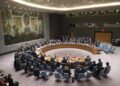
Would an independent Wales join the United Nations and other international organisations?

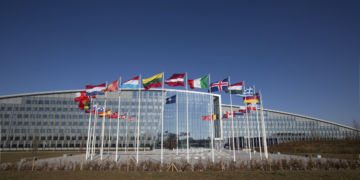
Karl Davison via Flickr under Creative Commons Licence BY-NC-SA-2.0

Share on FacebookShare on TwitterShare on RedditShare on BlueskyShare by email

Image Source: Karl Davison via Flickr under Creative Commons Licence BY-NC-SA-2.0

This site is best viewed in landscape mode on smartphones.
Support IndyWales? Support State of Wales!

Donations keep this site going. If you like what I’m doing here and think this work is important to the independence movement, consider a donation. One-off or monthly; as little or as much as you want. Click the links below, or full details are available here.

What Happens Now?

With few exceptions, Wales is represented at international organisations by the UK. As foreign policy is non-devolved, the UK decides what position to take when decisions are made.

The UK is currently a member of, or observer at, at least 70 separate international organisations. Perhaps the most important or well-known ones (in foreign policy and trade terms) are:

  • United Nations (UN)
  • World Bank
  • International Monetary Fund (IMF)
  • World Trade Organisation (WTO)
  • World Health Organisation (WHO)
  • Council of Europe
  • Organisation for Economic Cooperation & Development (OECD)
  • Commonwealth of Nations

Many other organisations – such as specialised UN agencies – set international standards or guidelines. This includes the International Labour Organisation (ILO), International Maritime Organisation, Universal Postal Group and International Civil Aviation Organisation (amongst others)

The UK hosts some international organisations. Aside from the Commonwealth, these include trade bodies, sports governing bodies and major international charities/NGOs. Nearly all of these are based in London.

Does This Work for Wales?

Apart from one or two exceptions (like the British-Irish Council), Wales isn’t a member of any international organisations.

Therefore, in terms of Welsh interests being fully represented, the answer is “no”. The UK speaks on our behalf in all things foreign policy, even if we might disagree with it.

When the UK was a member of the European Union, the Welsh Government sometimes “sat in” or made representations on decisions that would affect devolved policy areas (i.e. farming). Still, we couldn’t take part in meetings or make any decisions for ourselves.

Membership of International Organisations: Pros & Cons

Pros of Independence
Cons of Independence
Pros of Independence

Wales would have a seat at most of the top tables and would have a voice in global affairs.

We would be able to take part in important decisions, including voting on UN resolutions. For “small countries”, this is vital.

The general principle that international organisations make it easier for governments to work together on common causes.

A Welsh representative could chair, or be elected to, major international forums like the UN Security Council.

There’s an opportunity for Wales to host more summits and conferences, playing a part in boosting our “soft power”.

Full membership of the Council of Europe would protect current human rights laws, which are currently under threat from those in the conservative British political and media establishment who wish to withdraw the UK from the European Convention on Human Rights (ECHR).

Cons of Independence

It would be very odd for Wales not to join certain international organisations, so we don’t have much of a choice in this.

Most international organisations are funded by contributions from member states (more on this later). We would have to cover those costs ourselves.

Some international organisations are driven by the interests of more economically and politically powerful countries. The UK just about remains one of these, with Wales benefiting indirectly from that.

An independent Wales may not be a member of as many international organisations as the UK. Some we wouldn’t meet the membership requirements of (such as not trading in certain things); some might not be relevant.

No longer being part of the UK means Wales losing “our” permanent seat on the UN Security Council.

There’s a broader question on whether international organisations are effective. Some have a poor reputation as well.

What Do Other Countries Do?

I’m not trying to be funny, but countries are either members of international organisations or they’re not. There’s very little to compare other than how influential different countries are within those organisations or how closely they work with them.

What Options Does Wales Have?

Join them? There’s not much else to say, is there?

Different organisations will have different membership rules.

You would expect one of the first things the Senedd would do after independence would be to vote to join the United Nations. This would need UN Security Council and UN General Assembly approval.

At the very least, you would expect Wales to join the Council of Europe, OECD, World Bank, IMF, World Trade Organisation (WTO) and World Health Organisation (WHO) as well.

There are other important ones of note, such as Interpol.

The Commonwealth is another one, which will be looked at separately, as will potential Welsh membership of NATO. Welsh membership of the EU has already been looked at too.

What's at Stake?

How Would This Be Run?

Each international organisation has its own rules.

In some cases, it would mean Wales appointing an ambassador (i.e. to the UN) and a permanent mission. In other cases, it may mean the relevant Welsh Government minister taking part in meetings (i.e. the Council of Europe’s Committee of Ministers).

For parliamentary assemblies, Wales would be represented by several Members of the Senedd. If Wales rejoined the EU, we would directly elect Members of the European Parliament (MEPs). 

How Much Will This Cost?

Headline: For the seven international organisations mentioned at the top, around £27 million a year (combined); the IMF is more complicated. Others may cost more. This would come out of the budget for a foreign office.

UN & UN Agencies
WTO, World Bank & IMF
World Health Organisation
Council of Europe & OECD
Commonwealth
UN & UN Agencies


Contributions to the UN are based on the size of a member state’s economy. In 20251, the UK contribution was $137 million (£101 million); a proportional Welsh share of this (5%) works out to around $6.9 million (£5.1 million) before staffing costs. With staffing costs, this would likely increase to around £6 million.

Funding contributions to UN agencies, like UNESCO, are made up of member state contributions and voluntary donations. A proportional Welsh share of UK funding to UNESCO as of the start of 20252 would work out to around £1.4 million.

Voluntary contributions to UN programmes and taking part in UN peacekeeping missions count as part of a country’s foreign aid spending.

WTO, World Bank & IMF

The World Trade Organisation is funded by member state contributions based on their share of international trade. To get a ballpark figure, countries with a similar value of exports as Wales in 20243 ($21 billion) – such as Latvia4 – contributed around 200,000 CHF (£185,000). This figure will be higher once international trade with the rest of the UK is included.

World Bank members have a different number of votes based on their contributions to the bank’s capital funds. This is built up over time and changes year-to-year5. You would expect a country of Wales’ size to invest around $10-15 million (£7-11 million) a year, which would count towards Welsh foreign aid spending.

The IMF is more complicated. They set a quota based on the size of a member state’s economy and international reserves. This quota determines the amount of money they pay as a subscription to the IMF, the amount they can borrow (if they need to) and their voting power. Quotas are issued in Special Drawing Rights (SDRs). As of July 2025, 1 SDR is worth $0.736. You would expect an economy of Wales’ size to have around 800million SDR, which works out at around $584million (£430million).

World Health Organisation

There’s an annual member state fee, plus voluntary contributions. Wales is already a member of the Regions for Health Network (which is a WHO committee for self-governing regions and federal states). The UK’s assessed contribution to the WHO is set to be $27.5 million (£20.1 million) for 2026-27 ( paid half in dollars, half in Swiss francs)7. Proportionally, a Welsh fee to be in the region of $1.4 million (£1 million) with possibly up to £1 million in voluntary donations. So, a ballpark figure of £2 million per year.

Council of Europe & OECD

The Council of Europe is funded by voluntary contributions. The UK’s contribution in 2024 was €45.5 million (£33.3 million)8. A proportional Welsh contribution would be €2.3 million (£2 million).

OECD contributions are based on the size of member state economies. You would expect Wales to pay around 1% of the OECD’s budget, based on the table of contributions from other countries9. In 2025, this would works out to €3.6 million (£3.1 million).

Commonwealth

The Commonwealth Secretariat’s budget in 2023-24 was £46million10. Most of this funding comes from the UK, Australia and Canada.

The combined contribution from the UK to the Commonwealth Secretariat, Commonwealth Youth Programme and Commonwealth Technical Support Fund in 2023-24 was £10.3 million11. You would therefore expect a Welsh contribution to be similar to New Zealand’s, which was just over £1 million.

Would any new taxes need to be introduced? 

No, though the decisions of certain international organisations may set trade terms (I.e WTO rules) that affect prices.

Who will pay for this? 

General taxation (all taxpayers).

How Long Would This Take?

It’ll take a different amount of time for each organisation.

The four most recent member states of the UN:

  • Switzerland (6 months, following a referendum in March 2002).
  • Timor Leste (4 months, though it was a UN protectorate between 1999-2002).
  • Montenegro (around 3 weeks).
  • South Sudan (5 days). 

People & Work

Who does this impact?

Mainly politicians, charities/NGOs and policy experts. Businesses would be impacted by World Trade Organisation rules, while the NHS would be the relevant authority when it comes to the World Health Organisation.

Would any jobs be created or lost?

There would be some posts created at permanent missions to international organisations, though these would count as part of the diplomatic service.

You Might Also Like....

How would an independent Wales join NATO (if we wanted to)?
Defence

How would an independent Wales join NATO (if we wanted to)?

by Owen Donovan
October 27, 2025
0

...

Read moreDetails
NATO

NATO

October 26, 2025
Would an independent Wales join the Commonwealth?

Would an independent Wales join the Commonwealth?

July 29, 2025
Would Wales cope being outside of the G7 & G20?

Would Wales cope being outside of the G7 & G20?

July 29, 2025
Would an independent Wales have a seat on the UN Security Council?

Would an independent Wales have a seat on the UN Security Council?

July 29, 2025
The Commonwealth

The Commonwealth

July 26, 2025
United Nations (UN)

United Nations (UN)

July 26, 2025
Council of Europe

Council of Europe

July 26, 2025
What would a Welsh foreign policy look like after independence?

What would a Welsh foreign policy look like after independence?

June 30, 2025
Our Global Twins: Which independent countries are like Wales?

Our Global Twins: Which independent countries are like Wales?

May 17, 2025
The British-Irish Council

The British-Irish Council

May 17, 2025
The European Union (EU)

The European Union (EU)

May 17, 2025
The European Free Trade Association (EFTA)

The European Free Trade Association (EFTA)

May 17, 2025
Load More
      1. United Nations, Committee on Contributions, “Honor Roll (2025)”.
      2. UNESCO (Q1 2025). “Sources of Funding, United Kingdom“. 5% share of the UK’s $28.9 million contribution, converted to pounds sterling.
      3. Welsh Government. “International goods trade: interactive dashboard (2024)”
      4. World Trade Organisation, WTO Stats Dashboard. “Total trade in merchandise, 2024”.
      5. World Bank (March 2022). “Contributions to the 20th Replenishment”.
      6. International Monetary Fund (July 2025). “SDRs per Currency Unit“
      7. World Health Organisation (9th May 2024). “Notice of Assessment for 2026-27, UK”.
      8. Council of Europe. “Programme and Budget 2024-2027”, Table 2 (pdf link).
      9. OECD. “Member countries’ budget contributions 2025”
      10. Commonwealth of Nations. “Annual Results Report 2023-24” (p6-8).
      11. Financial Statements for the Commonwealth of Nations (2023-24)

Use of AI

No AI tools were used to draft this post.

Donations Welcome
Tags: CommonwealthCouncil of EuropeDiplomacyFP 401Global SecurityInternational DevelopmentInternational OrganisationsNATOOECDTradeUnited NationsWorld Health Organisation
Previous Post

The Commonwealth

Next Post

Would an independent Wales have a seat on the UN Security Council?

Owen Donovan

Owen Donovan

Archive

Categories

Copyright

Creative Commons Licence

State of Wales by Owen Donovan is licensed under a Creative Commons Attribution-NonCommercial-NoDerivatives 4.0 International License.

Subscribe by Email

Search

No Result
View All Result
No Result
View All Result
  • Go To Senedd Home
  • Go To Oggy Bloggy Ogwr
  • About & Contact
    • About State of Wales
    • Comments Policy
    • Complaints Policy
    • Contact & Subscribe by Email
    • Disclaimer
  • Features
    • After the UK
    • Chinny Reckon
    • Devil’s Advocate
    • How Wales Works
    • Road to Brexit
  • The Independence Index
    • The Independence Index (full)
    • Economics & Money
      • Business & Economy
      • Currency
      • Tax & Spending
      • Transport & Infrastructure
    • Society
      • Communities & Housing
      • Culture & Sport
      • Education
      • Health
      • Media & Communications
      • Science & Technology
    • The State
      • Environment & Natural Resources
      • Justice
      • Local Government
  • Elections Centre
  • Wales FAQ
    • How is Wales funded?
    • How are laws in Wales made?
  • Support & Donate