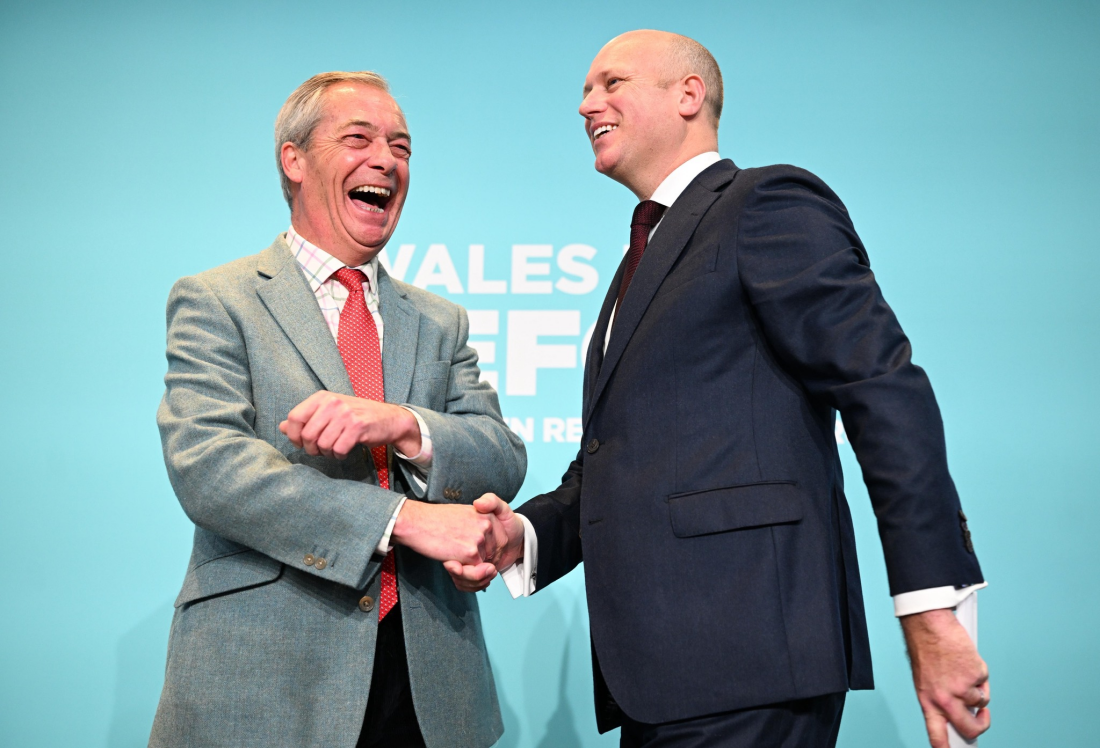
Rightly or wrongly, Nigel Farage is treated as box office by the UK media. Of the leaders heading up the parties standing in May (regardless of Dan Thomas’ appointment to the position, Farage is in charge), he will be the most well-known of all of them.
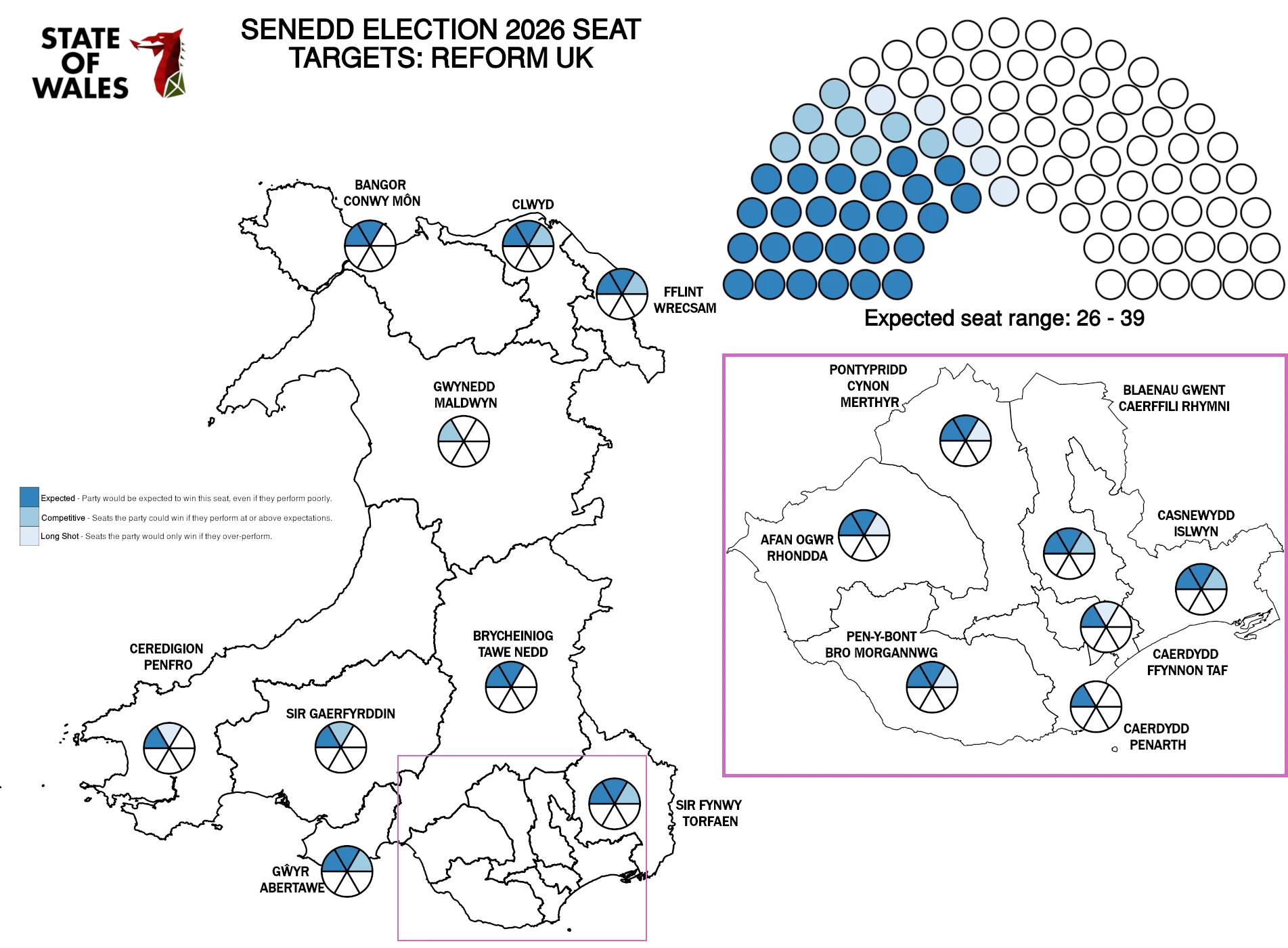
They are definitely going to win seats – the question is how many.
They won’t face the same situation they did at the Caerphilly by-election – voters switching to Plaid Cymru to stop them – because tactical voting won’t work in the same way under the new voting system. It may only stop Reform from winning a second or third seat in some constituencies (in a worst-case scenario).
Reform are the main anti-establishment “disruptor” party (though the Greens could claim to be one in England at least). Strong opposition and pushback often serves them well, as populists thrive on polarisation and creating a “them against us” effect.
There’s likely to be a pretty large bloc of voters in Wales (particularly in the south and north-east) who would never consider voting Tory, but would be willing to vote for Reform despite being very similar.
None of the various other UKIP splinter and legacy parties (Heritage Party at this election) is a serious threat to Reform and might only cost less than 1% of the vote at most. Abolish the Assembly’s decision not to stand helps Reform too, as there’s likely to be quite a bit of overlap in support.
Their manifesto is almost identical to the Tories (this could be considered a bad thing too). That at least suggests they’re acting a bit more professionally than they did as UKIP.
At heart, they’re still UKIP. But they’ve successfully managed to swap “brands” and attract a lot of former UKIP supporters and Tories without much effort.
Dan Who?
Reformers: Tories in Disguise. Despite going to great lengths to put it out there that they’re “not the Tories”, they’ve put an ex-Tory in the post of leader in Wales, have a UK front bench full of ex-Tories, have selected a load of former Conservatives to stand for the Senedd, and their Welsh manifesto is suspiciously similar to the Conservative one.
Populists have to be popular. Has Reform peaked? They’re still polling well overall, but it’s slipped since the start of 2026. IIRC, the same thing happened to UKIP just before the 2016 Senedd election. They were projected to win up to 10+ seats at one point, but in the end, they only won 7.
Reform (former UKIP and lapsed Tory) voters have, historically, not turned out to vote in Senedd elections in great numbers. A low turnout would seriously hurt them under this voting system, as every vote counts in a way that it didn’t in previous Senedd elections.
Reform UK is not a traditional political party (it has a corporate-style structure with a board of directors). Nigel Farage retains a great deal of control, even if some of this has been ceded to the membership since 2025. What he says goes and some (now former) Reform candidates in Wales are finding out what that means.
Nathan Gill. Yes, it does matter and has certainly caused damage. Isn’t it funny how it’s always the out-and-proud “patriots” who are the fastest to sell their country out? It seems as though Reform got caught up in the Wales-based Chinese “spying ring” accusations, too.
If the expected intake is anything like the 2016 UKIP intake, then it’s going to be a clown car. The in-fighting has already started over the candidate selection process, and we now know at least one of their previous dead certs to be elected is an edgelord. I’m rubbing my hands, as will any political journalist or commentator, but the joke will be on all of us.
Some of the old UKIP/Reform/Brexit Party Senedd Members swapped parties multiple times during the Fifth Senedd (Caroline Jones and Mark Reckless did three or four times each). This has already happened in Reform-run councils in England. So, what song should be played for the inevitable musical chairs?