Image Source: Jim Linwood via Flickr under Creative Commons Licence BY-SA-2.0
Donations keep this site going. If you like what I’m doing here and think this work is important to the independence movement, consider a donation. One-off or monthly; as little or as much as you want. Click the links below, or full details are available here.
In terms of defence/military, it shouldn’t be much of an issue.
National security (counter-terrorism, counter-extremism, security agencies) would be a bit more complicated.
The Defence Implications
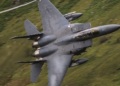
Perhaps the biggest contributions Wales makes to the UK armed forces (and NATO) are personnel and training.
The flow of Welsh and Scottish recruits to (what would become) the English military would likely fall but not stop completely; though the English military would have to make up any shortfall in headcount themselves.
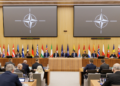
You would expect a high level of cooperation (up to and including a formal defence pact) between the former nations of the UK, even more so if England, Scotland and Wales were all NATO members.
This could lead to joint training exercises (or first refusal to use training areas), joint territorial water and fisheries patrols and an agreement on joint air defences and air patrols.
Defence issues that would become more different over time include:
- Overseas deployments (where, why and the number of personnel).
- Civil defence policies.
- Defence procurement (buying and selling equipment).
- Power projection (aka “hard power“) and what each country would expect its military to do.
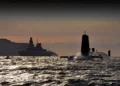
- Specific defence policy issues, such as support or opposition to nuclear weapons.
These issues would be decided in Cardiff instead of London when it comes to Wales.
Strategically, Wales isn’t that important in UK defence terms because it’s naturally defendable and (for once) benefits from geography.
We don’t have much in the way of territorial waters to protect (hence why the Royal Navy is almost completely absent from Wales). Our airspace is similarly small, even if it’s important for transatlantic flights. No major power with an ounce of common sense would attempt a land invasion of Wales because of the difficult terrain, and we also have few strategic military targets of note.
Any military attack on Great Britain would likely come from the North Sea/the east or north-east and would target areas in England and Scotland first of all. The risk would be a curveball where an attack comes “over” Wales (such as launching missiles towards Royal Navy bases along the southern English coast from the north-west or west).
Another risk, more reputational than anything, would be an accusation of “freeloading” or “hiding behind England and NATO” (similar accusations have been labelled at Ireland) if we had an underdeveloped military, adopted a policy of neutrality or didn’t have a military at all.
The National Security Implications
A lot of these issues will be looked at separately, but the key things to consider would include:
- Cross-border policing – including counter-terrorism, trafficking and organised crime investigations.
- What the Common Travel Area would mean in terms of movement of foreign nationals within Great Britain & Ireland (and how it relates to immigration and crime). This may mean that the Common Travel Area would need a common immigration/border control policy.
- Cybersecurity & communications intelligence – Wales may become a target of GCHQ and English military cyberwarfare units instead of a “beneficiary” via the UK.
- Security clearance – What independence would mean for Wales-based businesses currently supplying services to the (what would become) English Ministry of Defence, and vice versa. Similarly, foreign citizens (including the English) may be barred from applying for security-sensitive posts in Wales and vice versa.
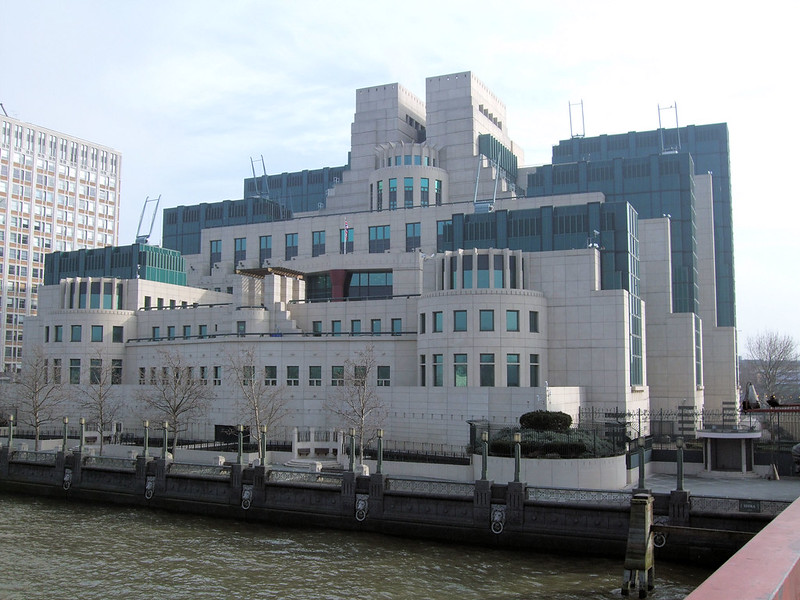
- Intelligence sharing between the nations of Great Britain & Ireland – the English security services (currently GCHQ, MI5 & MI6) probably wouldn’t want to share intelligence unless there was an immediate risk or a threat to both Wales and England. Routine intelligence may be off limits as England focuses on the “Five Eyes” alliance (unless Wales and Scotland joined it).
Some of the above can be addressed through formal agreements and negotiation.
Military cooperation and cross-border policing would likely be easier to negotiate than things like intelligence-sharing (because by its very nature it’s secretive).
You Might Also Like....

No AI tools were used to draft this post.