Image Source: © Copyright Kevin Williams and licensed for reuse under Creative Commons Licence BY-SA-2.0
Donations keep this site going. If you like what I’m doing here and think this work is important to the independence movement, consider a donation. One-off or monthly; as little or as much as you want. Click the links below, or full details are available here.
Like any “divorce”, a settlement would need to be negotiated as Wales leaves the UK (or EnglandandWales).
The piece of international law governing this is the Vienna Convention on Succession of States in respect of State Property, Archives and Debts1.
While the UK hasn’t signed the treaty, this is likely to be the starting base for negotiations based on international precedents.
Assets are generally divided into “immovable assets” and “moveable assets”.
Immovable assets cannot be physically moved from Wales. As the name suggests, moveable assets can be moved around.
As a starting point in negotiations, Wales would be “due” between 4-5% of the UK military’s equipment (because Wales makes up between 4-5% of the UK’s population).
Immovable Assets
Most of this is made up of buildings and land. Within Wales, this includes:
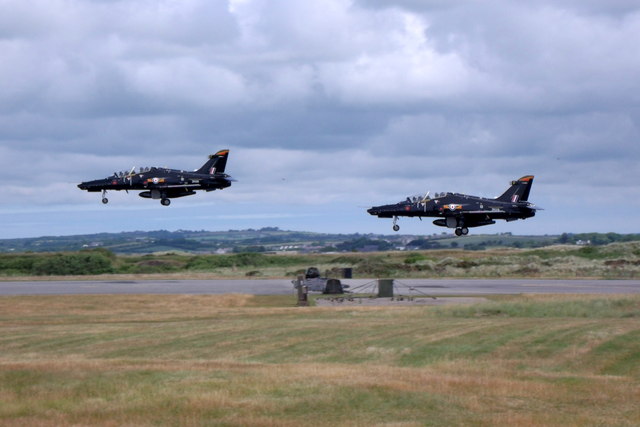
- RAF Valley, Anglesey ✈︎
- MoD St. Athan, Vale of Glamorgan ✈︎
- Cawdor Barracks, Pembrokeshire+
- The Barracks, Powys
- MoD Sealand, Flintshire
- MoD Aberporth, Ceredigion* ✈︎
- Caerwent Barracks, Monmouthshire**
✈︎ Includes a working airfield/runway (or one nearby).
+Earmarked for closure by the UK MoD in 2028; currently proposed as a deep space radar station (DARC).
*Managed/operated by QinetiQ.
**Set to open in 2027, currently used as a training area.
- Joint Service Mountain Training Centre, Anglesey
- Infantry Training School, Powys
- Sennybridge Training Area, Powys
- Cwrt-y-Gollen, Powys*
- MoD Pendine, Carmarthenshire**
- Castlemartin Range, Pembrokeshire**
* Also used as an Army Reserve centre
**Managed/operated by QinetiQ
Major
- HMS Cambria, Cardiff (Royal Navy Reserve); satellite unit in Swansea
- Maindy Barracks, Cardiff (Army Reserve)
- Ty Llewellyn, Cardiff (Army & RAF Reserve)
- Hightown Barracks, Wrexham (Army Reserve)
- Raglan Barracks, Newport (Army Reserve)
- The Grange, Swansea (Army Reserve)
Local
Army Reserve Centres: Bridgend, Gabalfa (Cardiff), Swansea (additional x2), Carmarthen, Colwyn Bay, Cwmbran, Abertillery, Aberystwyth, Caernarfon, Pontypridd, Haverfordwest, Queensferry.
Moveable Assets
All of this would be subject to negotiation. Some of the equipment may be close to the end of its working life; some of it we might be “due” but not necessarily need or want. We might want to buy different versions altogether.
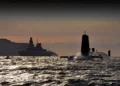
Some things we can rule out immediately. Wales doesn’t need an aircraft carrier (one of the most famous trick questions ever asked concerning Welsh independence) or a submarine fleet – though we technically “own” a 1/20th share of them.
It also goes without saying that the UK’s nuclear weapons capability would transfer to English control.
We don’t have to take all of our “share” either. We could waive a share of certain equipment in exchange for something else – like reductions in national debt or more military equipment than we would otherwise be due.
The equipment would need to match expected personnel numbers too.
For example, there’s no point in having 500 trucks if only 100 troops are expected to be qualified to drive them.
A proportional Welsh share, around 4.5%, of UK military equipment (as of 2024) looks something like this2:
- 1x Destroyer (Type 45).
- 2x Offshore Patrol Vessels (River-class).
- 1x Inshore Training or Patrol Vessel (Archer-class).
- 5x Fisheries Patrol Vessels*.
*Currently owned/operated by the Welsh Government’s Maritime & Fisheries Division.
- 1x transport aircraft; either an Airbus A400 or C017 Globemaster.
- 12x training aircraft; a mix of Hawk jets, Grob tutors and gliders.
- 6x Eurofighter Typhoon multi-role fighter jets.
- 9-10x helicopters (various).
- 8x UAVs/drones, likely to be a mix of Watchkeeper (large) and Puma (small, hand-launched) surveillance and recon drones.
The Wales Air Ambulance (5x H415 helicopters) could be folded into a Welsh air force (or equivalent).
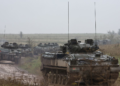
- 43x Armoured Fighting Vehicles (10x Challenger II main battle tanks, 27x Warrior AFVs; 6x Ajax AFVs. The Ajax vehicle is produced in Wales, and their numbers are likely to increase as they come into service over the next few years).
- 68x Protected Infantry Mobility Vehicles (mainly Jackal and Mastiff types).
- 38x Armoured Personnel Carriers (mainly Bulldogs).
- 9x artillery units.
- 7 pieces of combat engineering equipment (bridge launchers etc).
- 288x Logistical Support Vehicles/Rigid Lorries (6-15 tons).
- 258x Land Rovers.
- 35x Heavy equipment transporters and tankers.
What would be top of the shopping list?
This depends on what we expect a Welsh military to do. The following is only indicative of the kind of equipment we may or may not need.
It’s hard to tell what we could expect in terms of personal and field equipment (i.e. guns, helmets, tents), but we would likely continue to use whatever share of UK military equipment we receive.
It’s not as if the arms market is short of options if military planners decided something else best meets our needs. There’s an international market for second hand military equipment as well.
- At least one supply/support/sealift vessel.
- Multiple smaller landing craft (if we’re to have an amphibious/marines capability).
- A minesweeper and/or a specialist vessel focused on protecting undersea infrastructure (possibly autonomous sea drones).
- A larger training/inshore patrol vessel.
- An additional one or two “blue water” destroyers or frigates capable of operating in the North Atlantic and Mediterranean, possibly as part of an escort to an aircraft carrier (particularly useful and important if Wales were to join NATO).
- A maritime patrol/search and rescue aircraft (i.e. Embraer R-99, Boeing P-8 Poseidon).
- Additional heavy-lift transport helicopters.
- Additional utility/light transport helicopters (possibly additional Airbus H415’s; the same helicopter used by the Wales Air Ambulance and German Air Force, amongst others).
- A fighter jet squadron usually has 12 aircraft. If we want full squadron strength, we would either need (potentially) an extra 6 Eurofighters or swap them out for 12 alternative jets. This might include the likes of the F-16, Dassault Rafale or Saab Gripen.
Based on our proportional share of UK equipment, for a basic army, we would probably be covered for the short term. We would probably want to look into additional specialist engineering/combat support equipment and artillery units (heavy guns and surface-to-air capability).
Things like mobile radar stations, electronic warfare stations and drone launchers would also be worth considering.
You Might Also Like....
Vienna Convention (1983), Articles 8-15
UK Ministry of Defence (27th February 2025). “UK armed forces equipment and formations 2024“
No AI tools were used to draft this post.